Banquette Seating CAD Blocks & DWG Guide
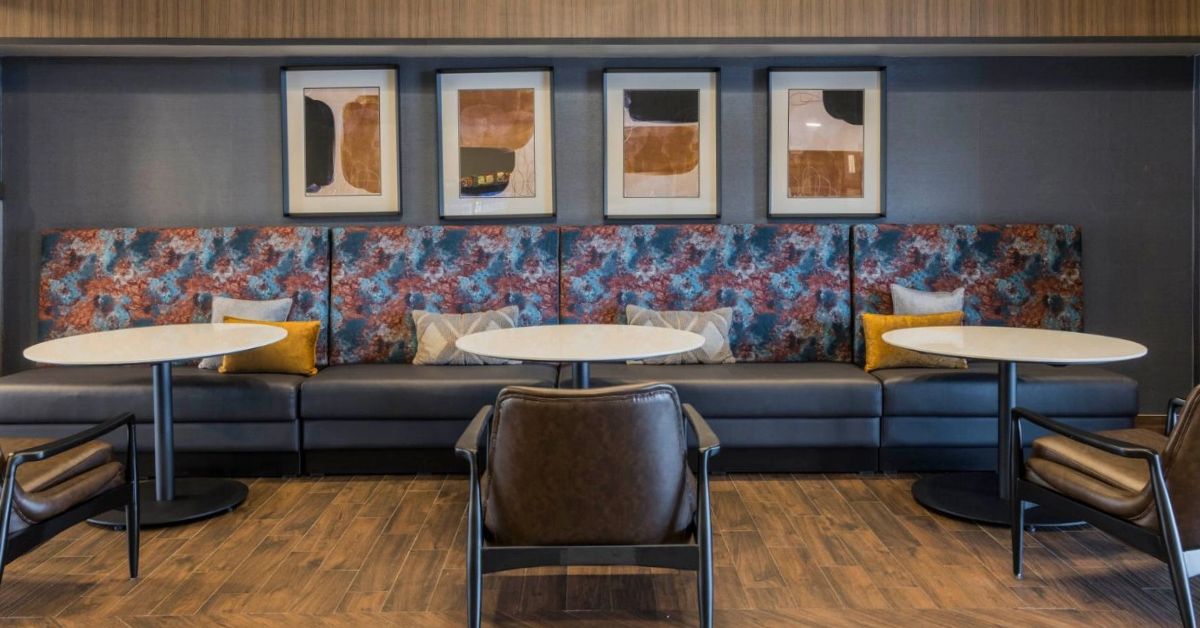
CAD Blocks for Banquette Seating: Free Downloads, Dimensions & Guide
Banquette seating CAD blocks are essential for architects, interior designers, and project managers who need precise, scalable, and consistent layouts for hospitality, restaurants, cafés, and homes. Having access to accurate CAD blocks banquette seating files can save hours of drafting time and reduce costly errors during the build phase.
This guide covers everything you need to know about banquette seating CAD files, including standard dimensions, layout rules, ADA notes, common mistakes, global standards for users across the USA, UK, UAE, Singapore, India, Australia, and Canada.
In this guide, you'll get:
- Standard dimensions and spacing rules in inches and millimeters
- A ready-to-use CAD checklist and spec PDF to reduce site errors
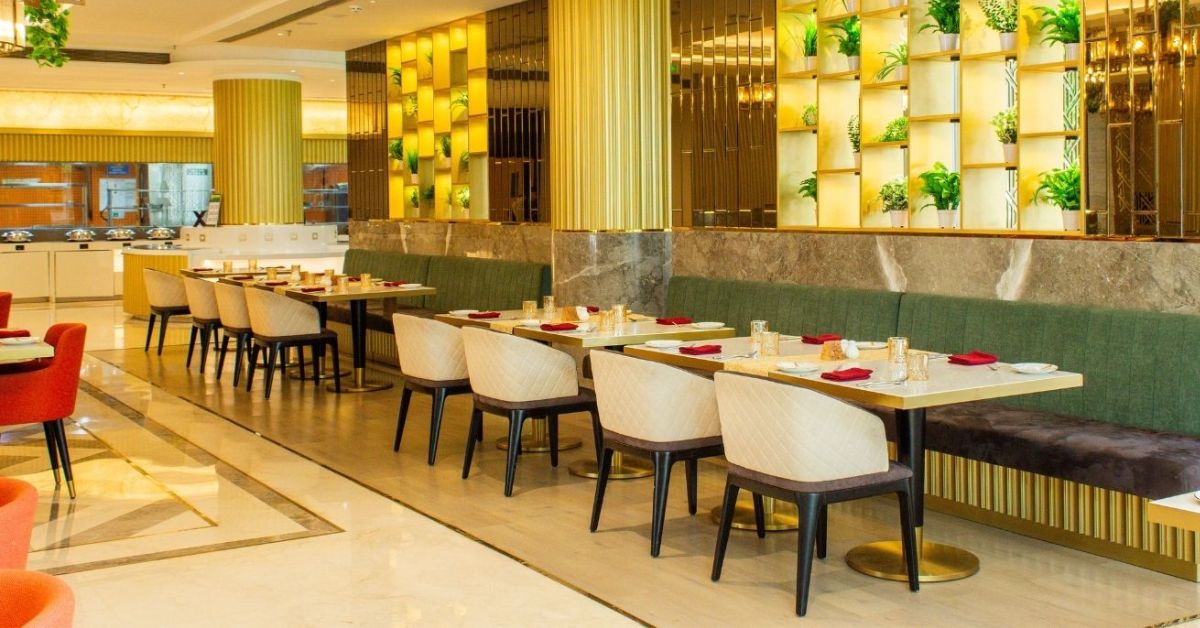
What Is Banquette Seating? (Basics for CAD Users)
Definition
Common Applications:
- Banquette seating restaurant layouts, and dining areas
- Hotel lobbies and lounges
- Co-working spaces
- Residential dining nooks
- Commercial food courts
- Bar and pub seating areas
Why CAD Blocks Matter:
Using pre-drawn CAD block dining booth files speeds up the design process, ensuring consistency and accurate coordination across project teams. They help avoid rework, save time, and facilitate easy coordination with MEP (mechanical, electrical, plumbing) consultants. Accurate banquette seating dimensions CAD blocks also help contractors understand the exact build requirements, reducing the risk of on-site modifications.
Standard Banquette Seating Dimensions (With CAD-Friendly Notes)
Getting the banquette seating dimensions right is critical. Too shallow and guests feel cramped. Too deep and the seating loses its intimacy. Below is a reference table for banquette seating dimensions CAD standards used across the US, UK, UAE, Australia, and other global markets.
Quick Answer:
Element | Dimension (inches) | Dimension (mm) | Notes |
Seat Height | 17 - 18 | 430 - 460 | Industry standard for comfort |
Seat Depth | 18 - 22 | 460 - 560 | 20" is most common for dining |
Backrest Height | 16 - 20 | 400 - 510 | Above seat surface |
Backrest Angle | 5 - 10 degrees | Slight recline | Enhances comfort without losing posture support |
Legroom (under table) | 12 - 15 | 300 - 380 | Minimum clearance for knees |
Aisle Width (minimum) | 24 - 30 | 610 - 760 | For comfortable circulation |
Wall Clearance (back) | 1 - 2 | 25 - 50 | For upholstery padding and cleaning |
36 min aisle | 915 mm | Required for accessible seating zones |
These ranges align with common restaurant booth standards used by specialist seating manufacturers, while keeping enough flexibility for different concepts and comfort levels.
These banquette seating dimensions should be used as a baseline when inserting restaurant booth seating CAD blocks into your floor plans. Always verify local building codes and accessibility standards before finalizing layouts.
Using These Banquette CAD Blocks in the US, UK, UAE, Singapore, India, Australia & Canada
The core dimensions (seat height, depth, backrest angle) work across most markets, with only minor adjustments for local comfort preferences:
- In the US and Canada, prioritize ADA-compliant aisles (36" clear) and accessible seating zones for commercial banquette seating restaurant installations.
- In the UK and EU, cross-check with relevant Building Regulations (Part M / BS standards) for circulation and accessible seating when working with CAD blocks banquette seating
- In the UAE, Singapore, India, and Australia, align your banquette seating dimensions CAD layouts with local fire-life safety codes and hospitality guidelines; the CAD blocks give you a safe starting point that can be tweaked to regional specifics.
- For global projects, always verify metric conversions and local accessibility standards before finalizing your restaurant booth seating CAD documentation.
Banquette Seating Layout Rules (Hospitality-Friendly Standards)
Proper layout planning goes beyond just placing blocks. You need to account for circulation, accessibility, and user comfort. Below are the key considerations when working with CAD blocks for dining seating in commercial spaces.
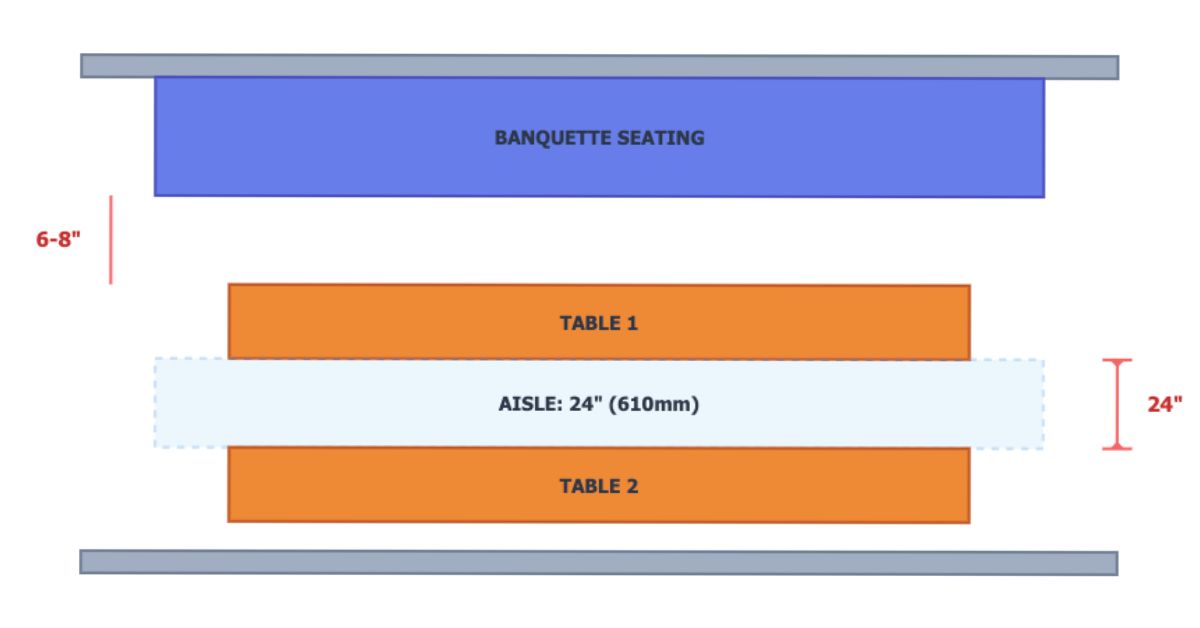
Table Spacing Rules
- Table-to-Seat Distance: Maintain 6 to 8 inches (150 to 200 mm) between the table edge and the front of the banquette seat. This allows guests to slide in and out comfortably without disrupting neighboring tables. This spacing is crucial for banquette seating restaurant layouts.
- Opposing Seating Spacing: When placing banquettes on opposite sides of a table, ensure a minimum of 24 inches (610 mm) of aisle space between the table edges. For high-traffic banquette seating restaurant areas, increase this to 30 inches (760 mm) or more.
Flow, Circulation & Fire Safety Norms
- Circulation Aisles: Main circulation paths should be at least 36 inches (915 mm) wide. Service aisles used by staff should be 42 to 48 inches (1065 to 1220 mm) to accommodate trays and trolleys.
- Fire Safety: Ensure clear egress paths as per local fire codes. In the US, refer to NFPA 101 (Life Safety Code). In the UAE, follow Civil Defense regulations. In the UK, consult Building Regulations Part B.
- ADA Compliance (US): Provide at least 5% of seating as accessible, with adjacent clear floor space of 30 x 48 inches (760 x 1220 mm) for wheelchair maneuvering.
Material & Durability Guidelines
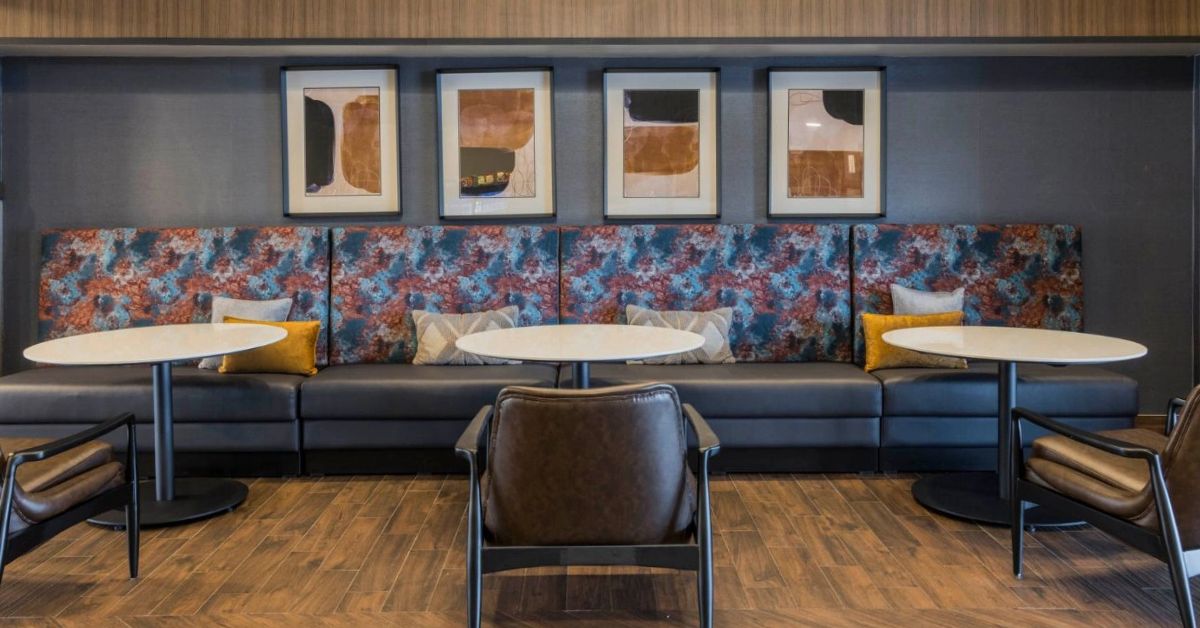
- Upholstery: Use contract-grade fabrics with a Martindale rub count of at least 50,000 cycles for banquette seating restaurant hospitality environments. Vinyl and faux leather are common for easy cleaning.
- Foam Density: Opt for high-density foam (1.8 to 2.2 lbs/ft³) to maintain shape and comfort over time. Hospitality-grade seating should use fire-retardant foam meeting CAL 117 or BS 5852 standards.
- Structural Base Support: Plywood or solid wood frames are standard. Metal frames are used in high-traffic or outdoor applications. Ensure the base is securely anchored to the wall or floor.
- Hospitality-Grade Finishes: Use stain-resistant treatments and antimicrobial coatings where required. Consider ease of reupholstering for long-term maintenance.
For example, at the Four Points by Sheraton Columbus project, we implemented custom banquette seating with contract-grade upholstery designed for high-traffic hospitality environments. This project demonstrates how proper material selection and precise CAD dimensioning result in durable, guest-friendly seating solutions.
CAD Drawing Checklist for Banquette Seating (Must-Follow)
Before issuing your drawings, run through this checklist to ensure accuracy and coordination. This list is especially useful when working with banquette seating sections, elevations, and detailed fabrication documents.
- Layer Names: Follow AIA or ISO standards (e.g., A-FURN, A-FURN-PATT)
- Correct Section Alignment: Ensure plan, section, and elevation views align on the same grid
- Clean Joinery Details: Show how corners, edges, and backs connect
- Corner Radii: Specify exact radii for curved or rounded corners
- MEP Clearance: Check for clashes with HVAC ducts, electrical outlets, or plumbing lines
- Purge Commands: Run PURGE and AUDIT before final export
- Export Quality Checks: Verify DWG version compatibility and check for missing xrefs or fonts
This checklist improves drawing handoff quality and reduces the number of RFIs (Requests for Information) during construction.
Banquette Seating Types (With CAD Examples)
Understanding the different types of banquette configurations will help you choose the right CAD block dining booth for your project.
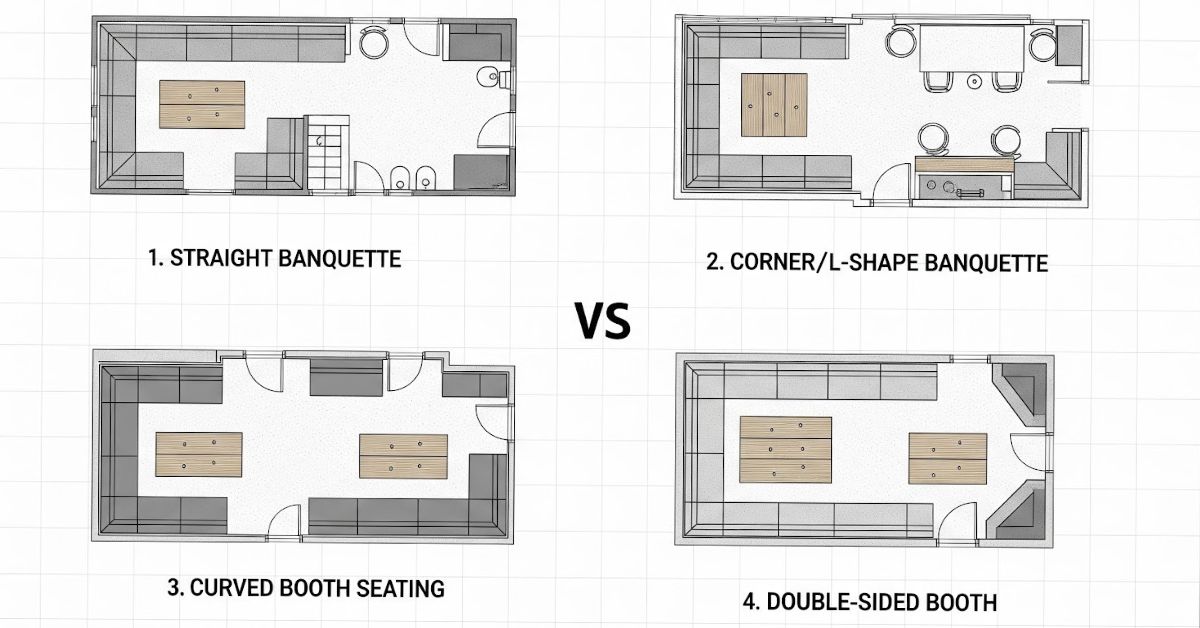
Straight Banquette
The most common type, running parallel to a wall. Ideal for narrow spaces and linear layouts. Typically paired with rectangular or round tables.
At the Taj Gandhinagar Resort & Spa, we manufactured and supplied custom straight banquette seating based on the project’s design specifications. The project required precise CAD blocks banquette seating drawings to ensure seamless integration with the luxury interior design scheme.
CAD Notes:
- Draw to the exact wall length
- Include wall attachment details
- Show backrest angle in section view
Corner/L-Shape Banquette
Wraps around a corner, creating an L-shaped seating area. Maximizes seating capacity in corner zones and provides a semi-private dining experience.
CAD Notes:
- Specify miter or radius corner treatment
- Ensure both sides have equal seat depth
- Add corner detail in the plan and section
Curved/Booth Seating
Features a curved or semi-circular plan, often freestanding. Common in upscale banquette seating restaurants and lounges for a softer, more organic aesthetic.
CAD Notes:
- Define arc radius and center point
- Show the thickness of the backrest and seat
- Include anchor points for structural support
Double-Sided Booth
Two opposing banquettes with a shared table in between. Creates a booth-like enclosure without individual chairs. Popular in diners and casual dining settings.
CAD Notes:
- Ensure symmetry in the plan
- Show table mounting detail (if fixed)
- Include aisle clearance on both sides
Modular Segments vs Custom Fabrication
Modular banquettes consist of prefabricated sections that can be arranged in various configurations. Custom fabrication involves building seating to exact project dimensions and design specifications using accurate banquette seating dimensions CAD files.
When to Choose Modular:
- Tight budgets
- Fast installation timelines
- Standardized layouts
When to Choose Custom:
- Unique layouts or curves
- Specific material or finish requirements
- High-end hospitality projects
If your project requires custom banquette seating dimensions, upholstery, or hospitality-grade manufacturing, our team can help with material sourcing, custom/contract manufacturing, QC, logistics, and installation coordination for your project requirements.
Common Mistakes in Banquette Seating CAD Drawings
Even experienced designers can overlook small details that lead to big problems on-site. Here are the most frequent errors to avoid when working with banquette seating dimensions CAD files.
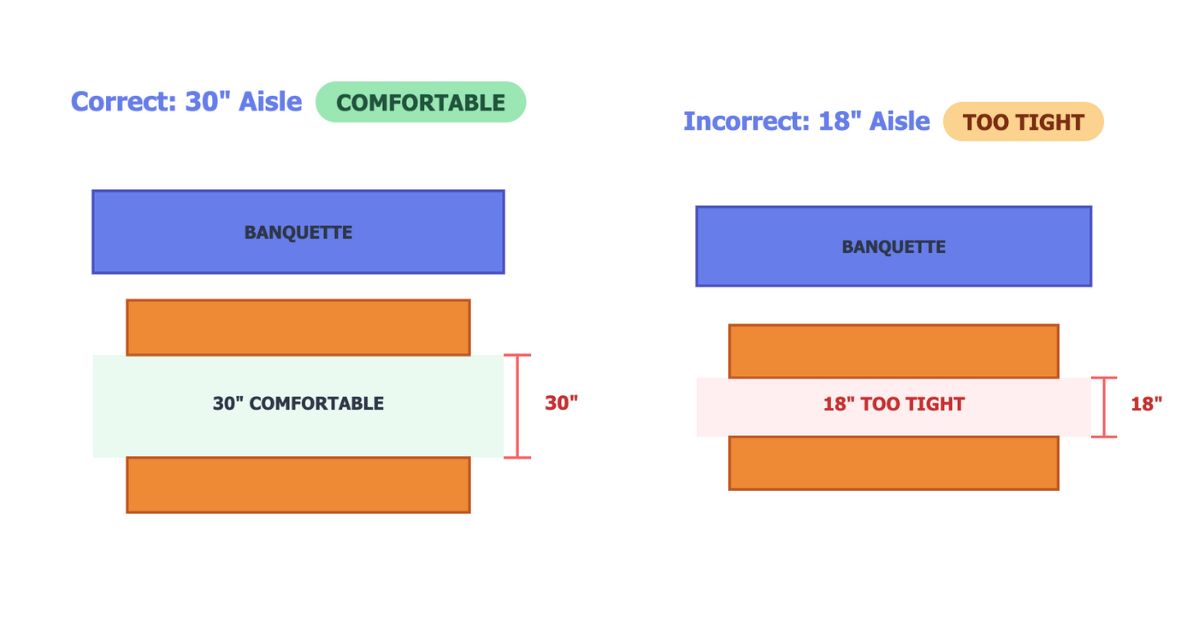
- Incorrect Seat Pitch: Spacing seats too close together reduces comfort. Always maintain at least 24 inches (610 mm) per person along the banquette length in your CAD blocks banquette seating layouts.
- Underestimated Legroom: Forgetting to account for the table base or apron thickness can result in cramped legroom. Always show the table in section view with the banquette to verify proper banquette seating dimensions.
- Misaligned Sections: Plan and section views that don't match create confusion for contractors. Use reference grids and alignment lines to keep banquette seating sections elevations drawings consistent.
- Wrong Table-Seat Pairing: Pairing a 30-inch (760 mm) high table with an 18-inch (460 mm) seat creates an uncomfortable dining experience. Verify table height before finalizing banquette seating dimensions in your CAD block dining booth files.
- No Consideration for Cleaning Gaps: Leaving no space between the wall and the banquette back makes cleaning difficult and allows debris to accumulate.
- Incorrect Corner Radius in Booths: Sharp corners can be uncomfortable and unsafe. Always specify a minimum 2-inch (50 mm) radius for upholstered corners in your restaurant booth seating CAD drawings.
Integration Tips for Contractors & Manufacturers
Accurate CAD blocks banquette seating files are only valuable if they translate correctly into the built environment. Here's how to ensure smooth integration.
Why Precise CAD Blocks Reduce Site Errors
When contractors receive well-documented banquette seating sections, elevations with accurate banquette seating dimensions CAD specifications, they can:
- Prefabricate components off-site with confidence
- Reduce material waste
- Minimize field adjustments
- Improve installation speed
Build Material Considerations
Wood: Plywood (Grade A or B) is standard for frames. Hardwood is used for exposed edges and legs.
Metal Base: Steel or aluminum tubing for structural support. Powder-coated finishes for durability.
Upholstery: Fabric, vinyl, or leather. Always specify fire ratings and cleaning codes.
Foam Selection: High-density polyurethane foam for seats. Medium-density for backrests. Include flame-retardant treatment specifications.
How Arcedior Supports Global Projects
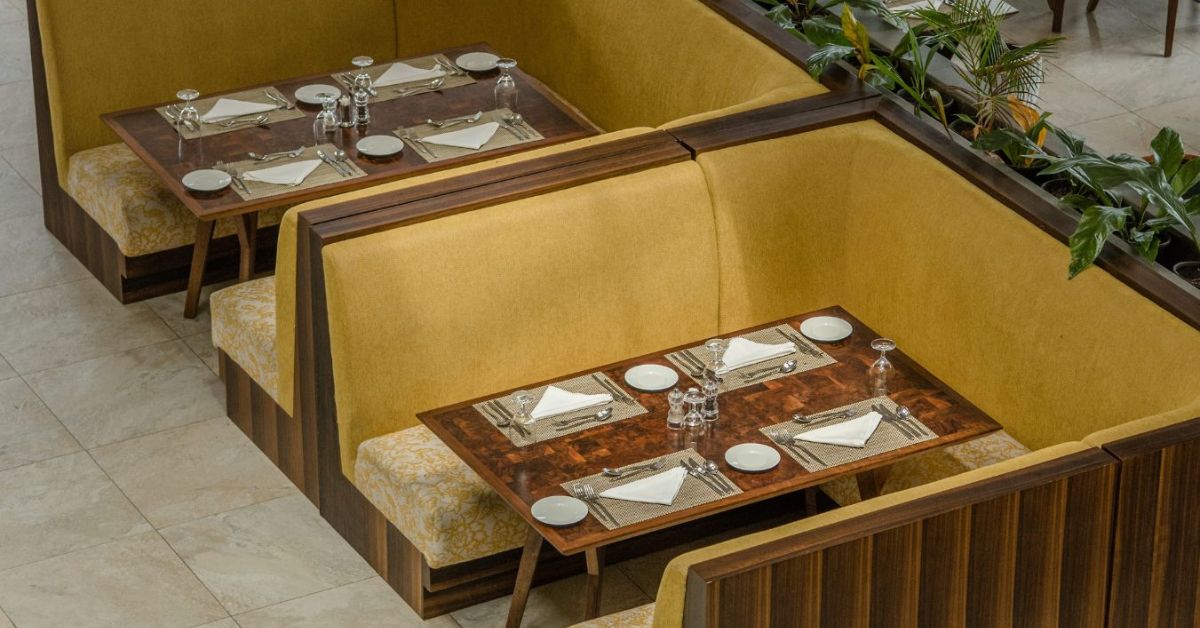
Our work on the Verde Zanzibar resort project showcases our capability in turning banquette seating CAD documentation into finished seating on site, from material sourcing and custom manufacturing to logistics and installation coordination. This tropical resort required specialized weather-resistant materials and precise banquette seating dimensions CAD drawings to accommodate the unique coastal environment while maintaining luxury standards.
At Arcedior, we bridge the gap between design documentation and physical execution. Our services include:
- Requirement Capturing: We understand your seating layout, dimensions, and performance requirements for your CAD blocks banquette seating project.
- Sourcing Materials/Options: Access to global suppliers for contract-grade fabrics, foams, and structural components for banquette seating restaurant installations.
- Custom Manufacturing: Hospitality-grade manufacturing based on your CAD drawings and banquette seating dimensions specifications.
- Quality Checks: Pre-shipment inspections and compliance checks so what arrives matches the approved banquette seating dimensions CAD drawings.
- Packing, Logistics & Installation Coordination: Coordinated shipments, export packaging, and on-ground installation support with your local teams for hospitality projects.
We work with projects across the US, UK, UAE, Singapore, India, Australia, and Canada, ensuring that restaurant booth CAD blocks Dubai, banquette seating CAD blocks USA, and other regional variations meet local standards and delivery timelines.
Conclusion
Whether you're working on banquette seating restaurant drawings for hospitality projects or residential interiors, having access to accurate, specification-ready CAD blocks banquette seating files is essential. This guide provides not only the downloads but also the banquette seating dimension standards, layout rules, and quality checks needed to ensure your project runs smoothly from design to installation.
Use the checklist, avoid the common mistakes, and always verify local codes. With the right banquette seating dimensions CAD tools, and knowledge, banquette seating becomes a powerful design element that enhances both function and aesthetics.
FAQs
What is the ideal depth for banquette seating?
For dining, the ideal seat depth for banquette seating is around 20 inches (510 mm), within a typical range of 18–22 inches (460–560 mm). For lounge seating, you can increase the depth to 24 inches (610 mm) for added comfort.
How high should a banquette seat be in CAD?
The standard seat height for banquette seating dimensions CAD files is 17 to 18 inches (430 to 460 mm) from the finished floor. This height aligns with typical dining table heights of 28 to 30 inches (710 to 760 mm).
Do these CAD blocks work for commercial projects?
Yes, all CAD blocks banquette seating files are drawn to commercial standards. They include banquette seating dimensions commonly used in hospitality, retail, and institutional projects. They comply with ADA guidelines and can be adapted to other international accessibility standards.
Can banquette seating be modular?
Yes, modular banquette systems consist of prefabricated sections that can be connected on-site. This approach is faster and more cost-effective than custom fabrication, though it may limit design flexibility for unique banquette seating restaurant layouts.
What file formats are included?
The download pack includes banquette seating DWG files compatible with AutoCAD 2010 and later. DXF versions are available upon request for use in other CAD software like DraftSight, BricsCAD, or SketchUp.
Are CAD blocks different from BIM families?
Yes, CAD blocks are 2D or simple 3D geometry used in AutoCAD and similar programs. BIM (Building Information Modeling) families are intelligent, parametric objects used in software like Revit or ArchiCAD.
Can these blocks be used globally?
Absolutely, the blocks are dimensioned in both inches and millimeters. This makes them suitable for projects in the banquette seating CAD blocks UK, banquette seating CAD blocks Australia, and other regions. Always verify local building codes and accessibility requirements.
Can I request custom sizes?
Yes. If the standard blocks don't fit your project requirements, you can modify them in CAD or contact us for custom fabrication support. We provide tailored solutions for unique layouts and material specifications.
What size is a banquette seat in CAD?
A typical banquette seat in CAD is drawn with a depth of 20 inches (510 mm) and a height of 17 to 18 inches (430 to 460 mm). Length varies depending on the layout, with 24 inches (610 mm) per person as a comfortable minimum.
How deep should banquette seating be?
Banquette seating should be 18 to 22 inches (460 to 560 mm) deep for dining use. Lounge seating can go up to 24 inches (610 mm) for added comfort.
What is the standard height for banquette seating?
The standard seat height is 17 to 18 inches (430 to 460 mm) from the floor. The backrest adds an additional 16 to 20 inches (400 to 510 mm) above the seat surface.
How do you design banquette seating in CAD?
Start by inserting a pre-drawn CAD block dining booth, or create a polyline rectangle with the correct dimensions. Add a backrest at the appropriate angle, then detail the upholstery and structural layers in section view. Use reference lines to ensure alignment with tables and circulation paths.
What is booth seating vs banquette seating?
Booth seating typically refers to freestanding, double-sided units with high backs, often found in diners. Banquette seating is usually single-sided and wall-mounted, though it can also be freestanding. Both provide continuous seating but differ in layout and enclosure.
What is the best layout for banquette seating?
The best banquette seating restaurant layout depends on space constraints and user flow. Straight banquettes work well along perimeter walls. L-shaped configurations maximize corner zones. Curved or circular banquettes create focal points in open areas. Always prioritize circulation, accessibility, and table pairing.