Best Sofa Fabric for Living Room in India: Codes + Checklist
Best Sofa Fabric for Living Room in India: Performance, Cleaning Codes, Durability and How to Pick the Right One
You narrow the sofa down to shape, colour, and leg finish. Then the vendor asks which fabric you want, and you pick something that looks good in the showroom. That one decision is what most people regret in year two.
Choosing the best sofa fabric for your living room in India is not purely about looks. It is about how the material handles a ceiling fan running eight hours a day, a toddler with juice, a dog that claims the corner cushion, and a monsoon that pushes indoor humidity past 80 percent. Indian living rooms ask a lot from upholstery, and most fabric guides do not account for any of that.
This guide covers what rub counts mean, how to read cleaning codes before you buy, how the major fabric types actually perform under Indian conditions, and how to match all of it to your city and household. By the end, you will have a clear framework instead of another round of guessing.
Quick Answer: Which sofa fabric lasts longest in living rooms across India?
Pick the Right Sofa Fabric in 3 Questions
No need to read the full guide first. Answer three questions, and you have your answer. Then come back for the details on why.
If you have kids or pets at home:
GO for Microfiber or solution-dyed acrylic. Both handle spills, pet hair, and heavy daily use without wearing out fast.
SKIP - Velvet, chenille, or any fabric with an S cleaning code. One chai spill becomes a professional-cleaning job.
If your room gets 3 or more hours of direct sunlight:
GO for Solution-dyed acrylic. The colour runs through the fibre, so the sun does not fade it the way it fades surface-dyed fabric.
SKIP - Surface-dyed cotton or standard polyester blends. They can show visible fading within 12 to 18 months near a sunny window.
If you live in a high-humidity city (Mumbai, Chennai, Kochi, Kolkata):
GO for Microfiber or tight synthetic weaves with a W or WS cleaning code.
SKIP - Velvet, PU leatherette, and untreated leather. Humidity breaks all three down faster than normal wear ever would.
If the sofa is for a formal room with low daily use:
GO for Cotton blends, chenille, or velvet (in dry cities only). When a sofa sees guests once or twice a week, maintenance is manageable.
SKIP - Overspecifying. You do not need a 1,00,000-rub fabric for a drawing room nobody sits in daily.
What Is a Rub Count and Why Should You Ask for It?
Definition
Most mid-range sofas sold in Indian furniture stores carry fabric rated between 15,000 and 30,000 rubs. That seems reasonable until you factor in a household with two kids, a pet and daily use on the same cushion. For that kind of traffic, 15,000 rubs is gone inside three years.
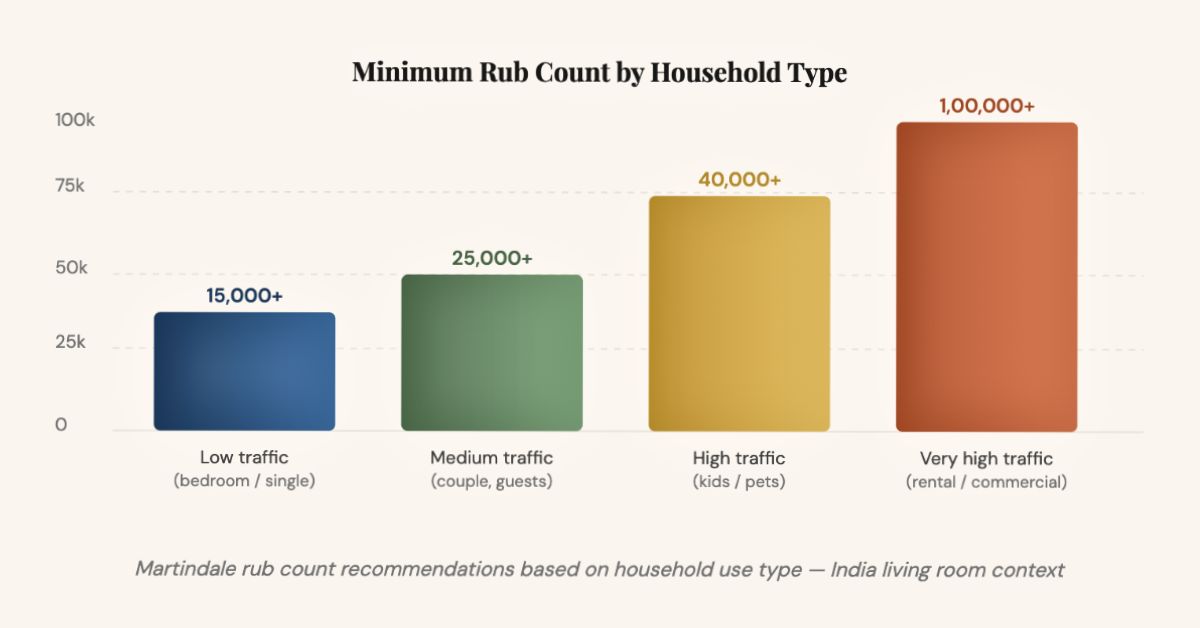
Always ask for the Martindale rating in writing. If the vendor cannot provide it, treat that as useful information about the sourcing quality behind the product.
Best Sofa Fabrics for Indian Homes, Ranked
This is not a universal ranking. It ranks for the most common Indian living room situation: daily family use, mixed climate, kids or pets present, and a preference for low-maintenance cleaning. Adjust based on your specific situation using the decision guide above.
- Microfiber: Best overall for families. Handles spills, humidity, pets and heavy use. Rub count starts at 50,000. W or WS cleaning code.
- Solution-dyed acrylic: Best for rooms with direct sunlight. Fade-resistant, humidity-tolerant, long-lasting. Costs more upfront but holds up over 5 to 7 years.
- Polyester blends: Balanced choice. Affordable, reasonably durable, and easy to maintain. A rub count of 30,000 to 50,000 covers most households.
- Cotton-polyester blends Good for moderate-use sofas in dry cities. More breathable than pure synthetics. Skip unblended cotton for any high-traffic spot.
- Full-grain leather: Works well in Delhi, Jaipur, and Ahmedabad. Needs conditioning every 3 to 4 months in coastal cities. Not a fit for high-humidity climates without upkeep.
- Chenille: Comfortable and visually appealing. Low-traffic rooms only. Attracts pet hair. Not suited for households with pets or young kids.
- Velvet: Best for formal, dry-city rooms with no daily family use. Beautiful in the right setting. High maintenance everywhere else.
Cleaning Codes Explained: The Label That Most People Never Read
Every upholstery fabric ships with a cleaning code. Most buyers never see it. Most salespeople do not bring it up. But this letter determines whether a DIY stain fix rescues the cushion or ruins it permanently.
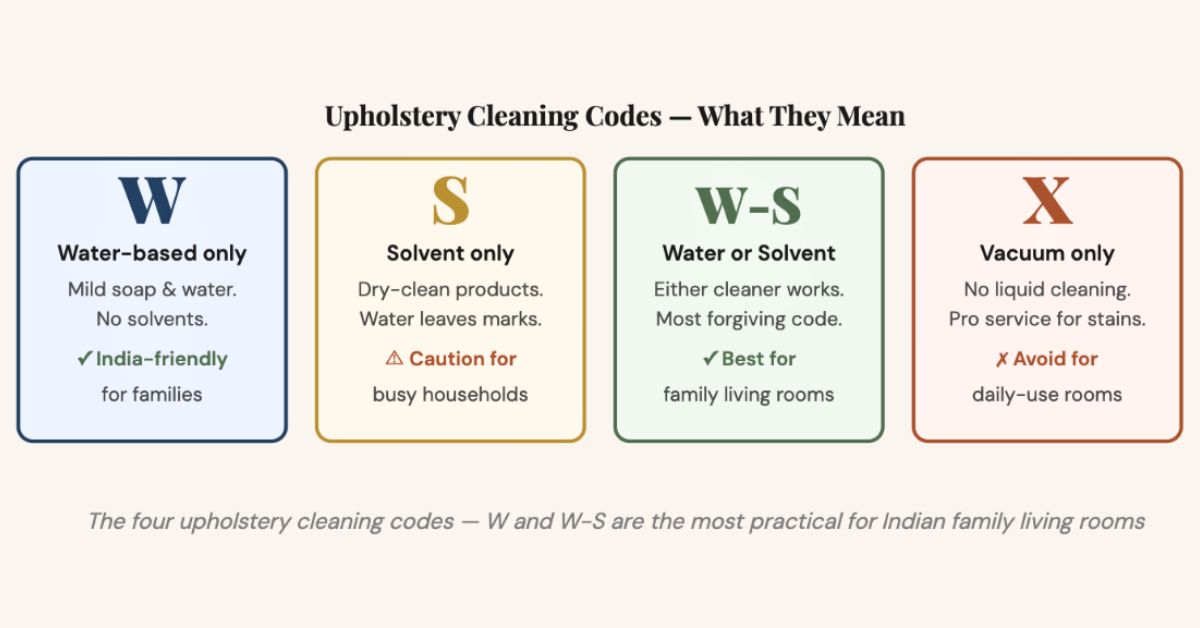
For most Indian households, W or WS fabrics make the most sense. They handle spills without a specialist. One masala chai spill on an X-coded fabric, and you are calling a professional cleaner just to recover the cushion.
Pro Tip
Which Sofa Fabric Lasts Longest in India? A Practical Look at Each Type
Microfiber
Microfiber is woven tightly from synthetic polyester or nylon, which makes it dense enough to repel most liquid spills before they soak in, resist pet hair penetration, and handle daily friction without pilling. In Indian conditions, both dry and humid, it holds up well. Most microfiber upholstery carries a W or WS code. Rub counts start around 50,000. It is one of the more straightforward choices for a family living room.
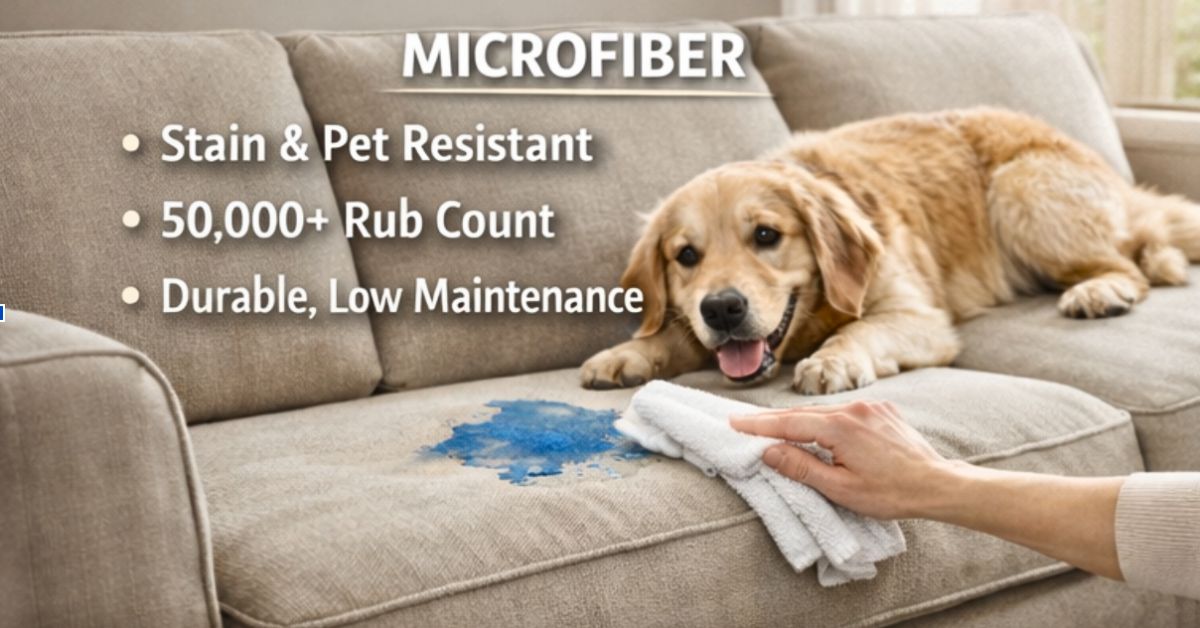
The trade-off is warmth. Without air conditioning in peak summer, microfiber sits warmer than natural fabrics. Cheaper microfiber also loses its texture faster than good-quality woven variants.
Solution-Dyed Acrylic
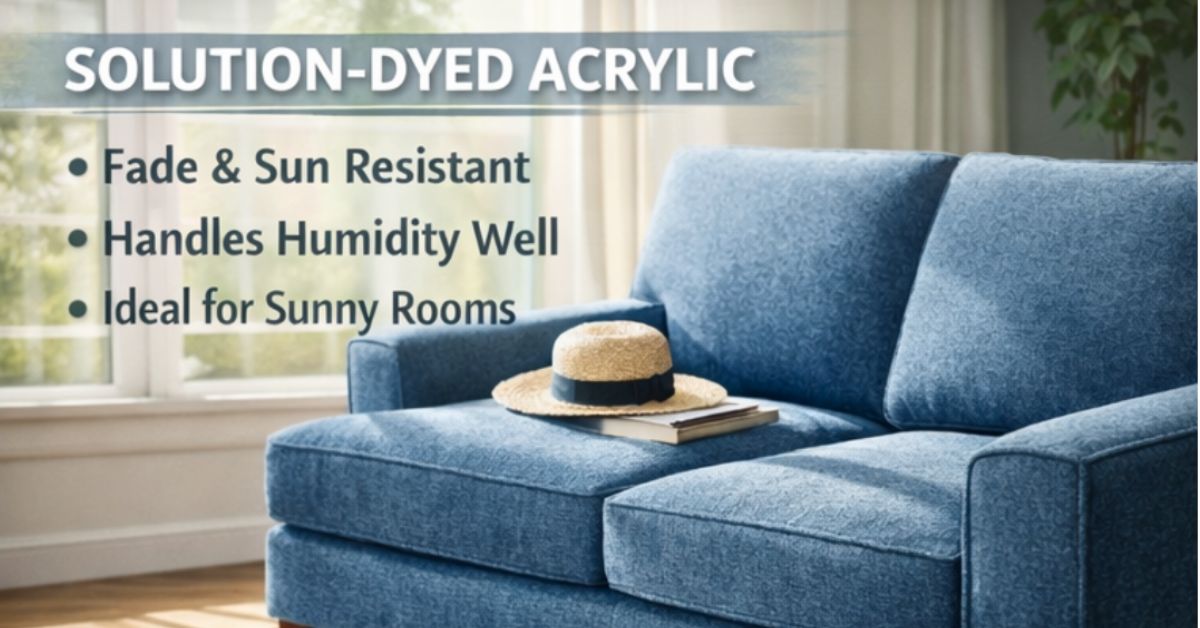
This is the fabric used across hospitality projects because it holds colour under pressure. The dye runs through the fibre itself rather than sitting on the surface, so sunlight and repeated cleaning do not fade it the way surface-dyed fabrics fade. For Indian living rooms with west-facing windows that take three-plus hours of direct afternoon sun, this matters more than most buyers realise.
Solution-dyed acrylic handles humidity well, cleans without drama, and typically comes with rub counts above 50,000. It costs more than standard polyester blends. Over five to seven years of daily use, that cost difference is usually worth it.
Cotton and Cotton Blends
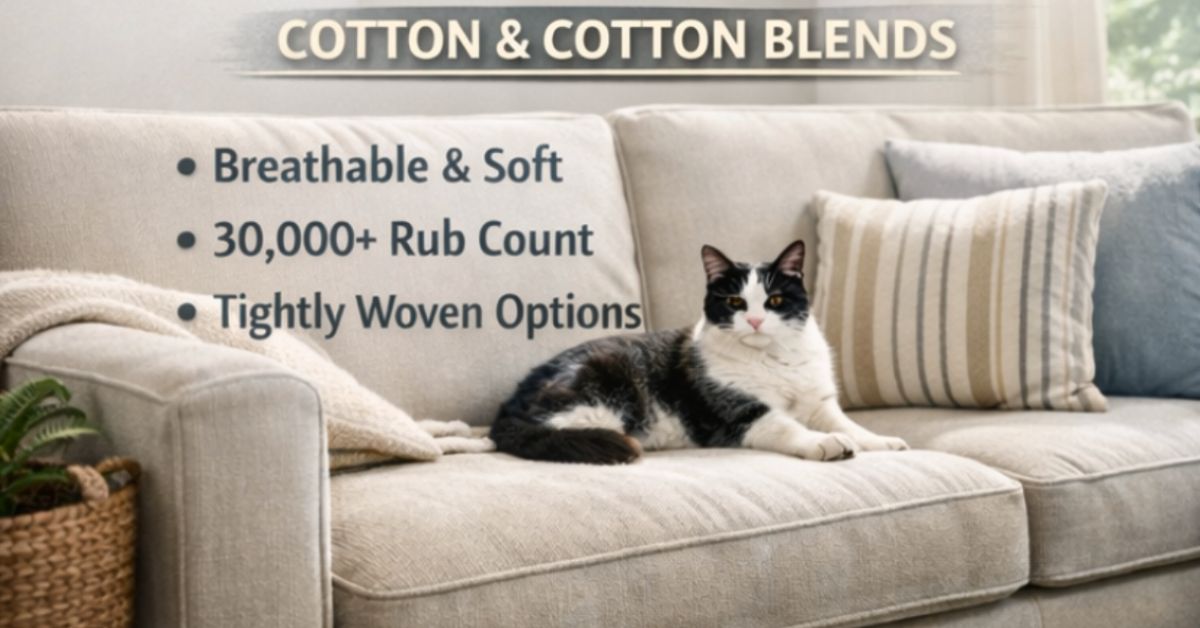
Plain cotton breathes, which is why it shows up so often in warmer Indian cities. It is comfortable to sit on for long periods. The problem is that pure cotton is not built for heavy sofa traffic. It stains readily, wrinkles after a few months of use, and fades faster than synthetics under repeated cleaning.
Cotton-polyester blends are a real step up. A tight weave with a rub count of 30,000 or above gives you the feel of natural fabric with meaningfully better durability. For pet-owning households, avoid unblended cotton; pet hair weaves into the fibres, and vacuuming progressively pulls at the weave.
Velvet and Chenille
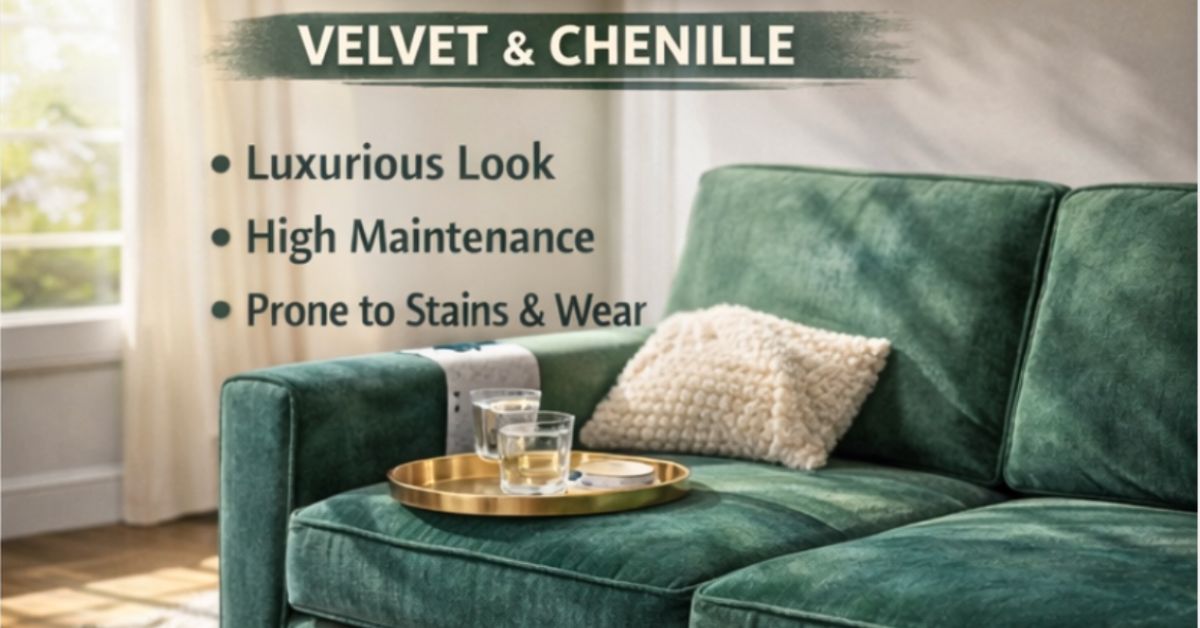
Both fabrics look excellent in photographs. In daily use, they demand more maintenance than most households are prepared to give.
Velvet is sensitive to moisture. A single damp glass left on a velvet armrest in Mumbai can leave a watermark that takes professional treatment to remove. The pile also crushes under pressure and needs regular brushing to stay even. Chenille is slightly more forgiving but attracts pet hair aggressively. Both typically carry an S cleaning code, which means no water-based cleaning at home.
In a formal drawing room that sees guests once a week and has no daily family use, velvet or chenille can work. For a sofa that gets used every day, the maintenance requirement is realistic only if you have dedicated household help managing it consistently.
Leather and Leatherette
Full-grain leather is durable, cleans with a damp cloth, and ages with character. In dry climates like Delhi, Jaipur, and Ahmedabad, it performs reliably year-round. In coastal cities, genuine leather needs conditioning every few months to prevent cracking from salt-air humidity. Skip that step twice, and the surface starts to dry out.
PU leatherette costs less but has a limited window. In Indian humidity conditions, especially in coastal cities, PU leatherette typically begins to peel or crack within three to five years. If the budget points toward leatherette, keep that lifespan in mind.
When comparing leather options, ask whether it is full-grain, top-grain or bonded. Full-grain and top-grain hold up. Bonded leather is pressed scraps and will not last under consistent use.
Download the Fabric Care Card (Free PDF)
Every fabric type has a different care routine. The wrong product on the wrong fabric is how good upholstery gets damaged faster than normal wear ever would. Get the printable reference covering cleaning codes, stain treatment steps by fabric type, and seasonal care reminders for Indian conditions.
Why Sofa Fabric Starts Looking Old in India (Pilling, Dust, and Humidity)
Most buyers focus on stain resistance. The more common reason sofas look worn within two years has nothing to do with spills. Three things age fabric faster than anything else in Indian homes: pilling, dust retention, and humidity damage to fibre structure.
Pilling
Pilling shows up as small fibre balls on the fabric surface. It is caused by short or broken fibres rubbing against each other during regular use. Low-GSM fabrics and loose weaves pill faster. If you sit on the same cushion for several hours a day, pilling is visible within six to twelve months on budget-grade fabric.
To avoid pilling, ask for the fabric GSM (grams per square metre) in addition to the rub count. A tighter, heavier weave pills less. Microfiber and tightly woven synthetics hold their surface texture far longer than loosely woven cotton or chenille.
Dust Retention
Open-weave fabrics trap dust inside the fibre structure rather than on the surface. Vacuuming pulls some of it out, but not all. Over time, dust settles into the weave permanently, changing both the colour and the texture. In cities like Bangalore and Delhi, where air quality brings a steady dust load indoors, open-texture fabrics look dingy within months, even with regular cleaning.
Tight weaves over open textures. Microfiber and dense polyester blends keep dust on the surface where vacuuming actually reaches it.
Humidity and Fibre Degradation
High indoor humidity does two things to fabric. First, it creates a damp environment where odours develop in the fibre structure, especially in natural fabrics like cotton and wool blends. Second, repeated moisture absorption and drying weakens fibre bonds over time, making the fabric feel stiff or rough even when clean.
In cities with an average humidity of above 70 percent, the fabric spec should include humidity tolerance data, not just rub count. Hospitality-grade fabrics usually carry this. Standard retail fabrics often do not.
Sofa Fabric Performance at a Glance: India Living Room Conditions
Fabric | Humidity Tolerance | Pet / Kid Friendly | Pilling Risk | Dust Retention | Cleaning Code | Rub Count Range | Best For |
Microfiber | High | Yes | Low | Low | W / WS | 50,000 – 1,00,000+ | Busy family rooms |
Solution-dyed Acrylic | High | Yes | Low | Low | W / WS | 50,000+ | Sunny rooms, long-term use |
Cotton Blend | Moderate | Moderate | Moderate | Moderate | W | 25,000 – 40,000 | Moderate use, dry climates |
Velvet | Low | No | Low (but crushes) | High | S | 15,000 – 30,000 | Formal, low-traffic spaces |
Chenille | Moderate | No | Moderate | High | S / WS | 20,000 – 35,000 | Aesthetic-first, low-traffic |
Full-grain Leather | Moderate (needs care) | Yes | None | None | W | 1,00,000+ | Low-humidity cities |
PU Leatherette | Low | Yes | None | None | W | 30,000 – 50,000 | Budget option, dry climates |
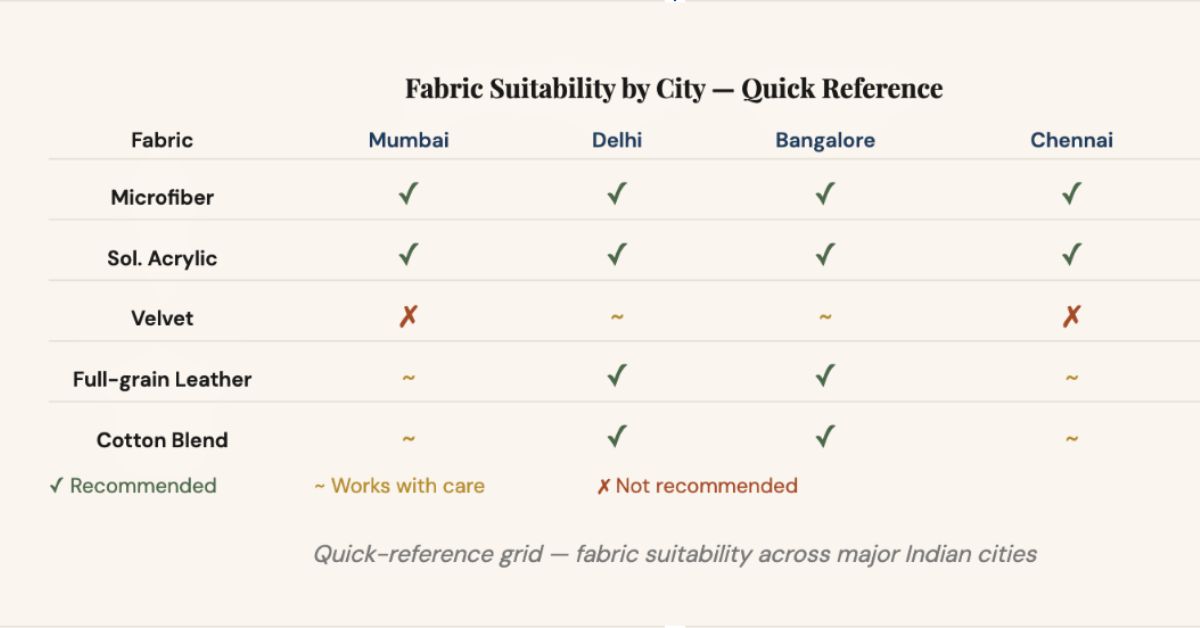
Which Sofa Fabric Works Best in Your City? Mumbai, Delhi, Bangalore, Chennai, and More
India's climate is not one thing. The same fabric that holds up beautifully in Jaipur can deteriorate visibly in Chennai within eighteen months. Here is a quick city-level reference.
Mumbai & Coastal Cities
Skip velvet, untreated leather, and S-only fabrics. Microfiber, solution-dyed acrylic, and tight synthetic weaves hold up through monsoon humidity.
Delhi, Jaipur, Ahmedabad
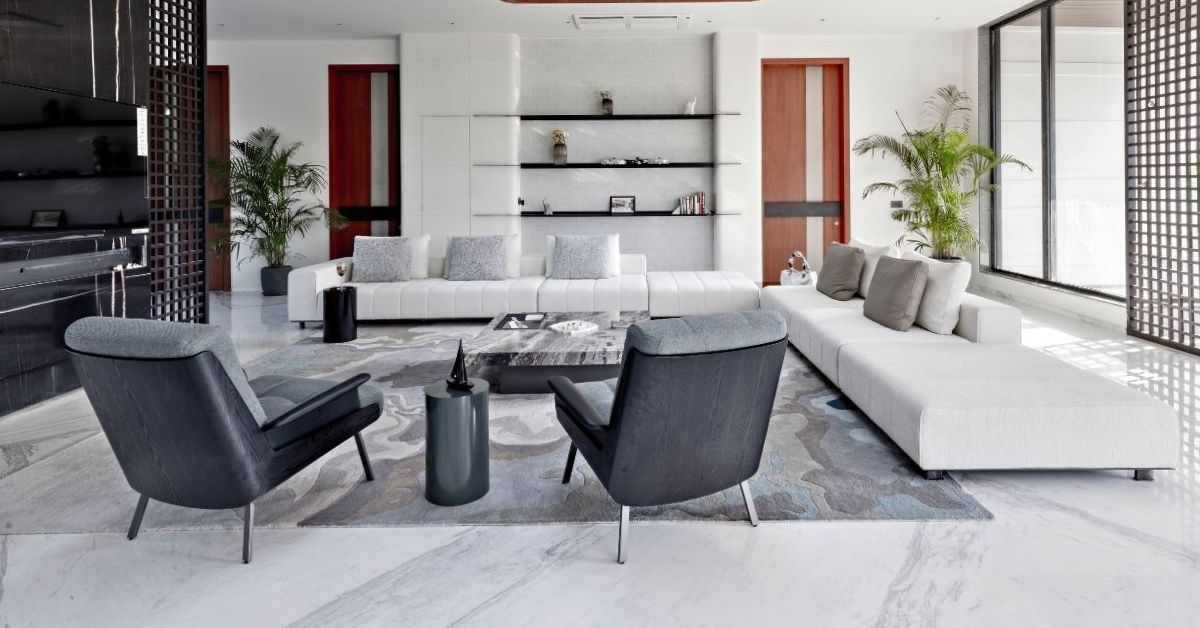
More flexibility here. Leather performs well. Cotton blends are reasonable for moderate-use sofas. Velvet is viable in formal, low-traffic spaces.
Bangalore
Mild climate, so most fabrics work. The bigger issue is dust. Tight weaves over open textures reduce how much settles into the upholstery.
Chennai & Hyderabad
Heat and humidity together. Performance linen or microfiber for daily use. Velvet and untreated cotton will not stay looking right through summer.
Five Questions to Ask Your Vendor Before Confirming Any Fabric
- What is the Martindale rub count for this fabric? Get it in writing.
- What is the cleaning code? Ask to see the tag, not just hear the answer.
- Is the colour solution-dyed or surface-applied? Matters for anything near a window.
- Does this fabric come with a moisture or stain treatment? Some do not, and that is fine if you know going in.
- Has this fabric been tested for indoor humidity exposure? Hospitality-grade fabrics usually have data on this. Standard retail fabric often does not.
Pro Tip
How Arcedior Supports Fabric Sourcing for Interior Projects
Interior professionals and project owners working on residential or hospitality spaces often face a gap between what is specified and what actually arrives. Fabric samples look right in a showroom. The supply quality, lead times, and minimum order quantities are unclear until the project is already running.
Arcedior works as a global sourcing and procurement partner for upholstery fabrics and custom furniture manufacturing. For projects that need specific performance specs – rub count above 40,000, WS cleaning code, humidity-tested finishes, or particular regional availability, Arcedior handles vendor identification, quality verification, and logistics coordination. The spec on paper matches what arrives at the site.
This is not a design service. Arcedior does not create interiors or manage turnkey builds. The scope is product sourcing, manufacturing oversight, QC, and delivery coordination, so that the right material reaches the right project without the usual vendor friction.
Not Sure Which Fabric Will Actually Last in Your Home?
Most clients come to us after choosing the wrong fabric once. Getting the spec right the first time is cheaper than replacing upholstery in year three.
Share a few details and get a specific, personalised recommendation – not a generic one.
📐 Sofa size 👨👩👧 Kids/Pets/Guests 🏙️ Your city 🎨 Preferred look
We reply within 24 hours with 3 fabric options matched to your use case, including rub-count range, cleaning code, and a care plan for each.
Key Takeaway
Choosing the Best Sofa Fabric for Your Living Room in India: The Short Version
The best sofa fabric for a living room in India is not about which option photographs best. It is about which option matches your household's actual daily load – your climate, your family setup, how often the sofa gets used, and how realistically you will maintain it.
A microfiber or solution-dyed acrylic with a 50,000-rub count and a WS cleaning code in a household with two kids and a dog is a well-reasoned purchase. That same spec in a formal guest room that sees use twice a month is more than you need. A velvet sofa in a carefully managed, low-traffic drawing room in Delhi can look excellent for years. That same velvet sofa in a Mumbai family room will show wear within eighteen months.
Match the spec to the life the sofa will actually have. Get the rub count in writing. Check the cleaning code before you hand over the payment. Factor in your city's humidity. Then pick the colour.
That order of thinking is what separates a sofa that looks good on delivery from one that still holds up in year eight.
FAQs