Coffee Table Size Guide | Height + Clearance Rules
Coffee Table Size Guide: Height, Length, and Clearance for Every Sofa
Getting a coffee table wrong is one of the easiest mistakes to make in a living room. Too big, and the space feels cramped. Too small, and the table looks like it ended up there by accident. This coffee table size guide covers the three numbers that actually matter: length relative to your sofa, height relative to your seat cushion, and clearance so the room stays easy to move through.
Whether you are buying one table for a single room or specifying furniture across a residential project, these rules work the same way. The only thing that changes is the sofa.
Quick Answer
Coffee Table Size by Sofa Type
What Size Coffee Table Works for a Standard 3-Seater Sofa in India?
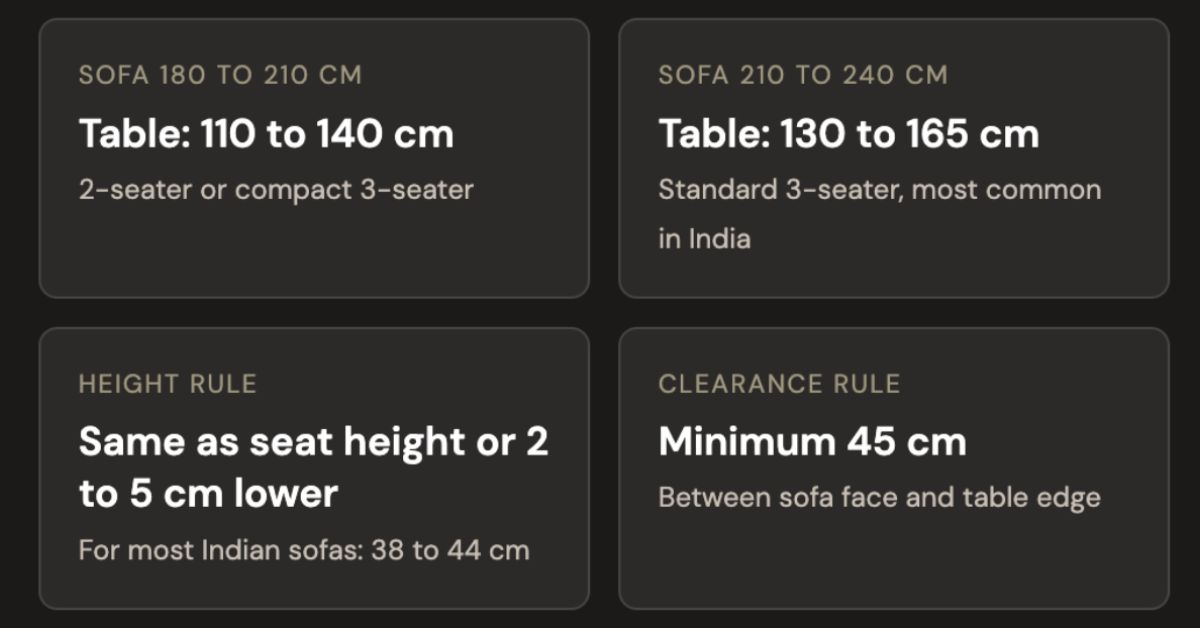
The two-thirds ratio is the most practical starting point. If your sofa is 240 cm long, your coffee table should sit somewhere between 150 cm and 165 cm in length. This proportion keeps the table visually balanced with the sofa without blocking foot traffic.
A table that runs the full sofa length tends to feel heavy and hard to move around. A table shorter than half the sofa length looks like it belongs in a different room. The two-thirds rule lands comfortably between both.
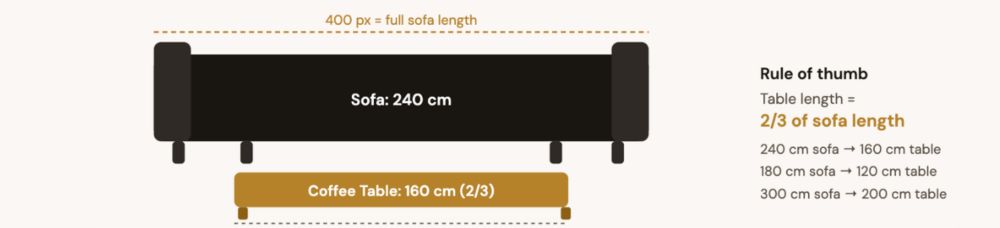
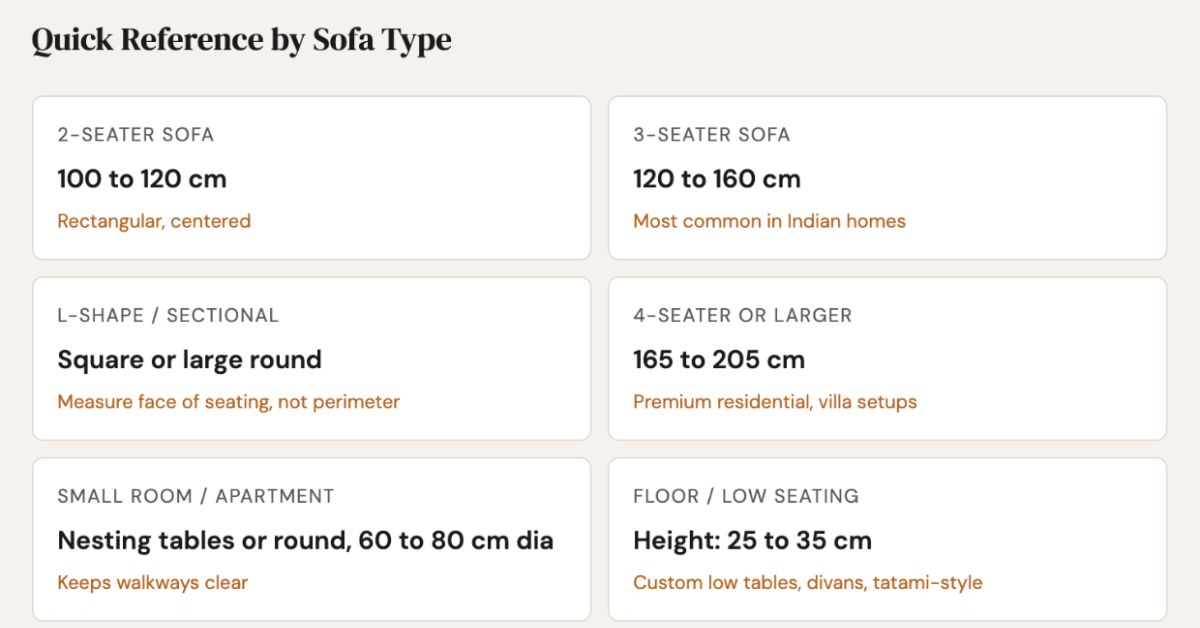
For sectional sofas, measure the face of the sofa that directly fronts the seating area rather than the combined perimeter of the whole section. Apply the same two-thirds calculation to that measurement.
SOFA LENGTH | RECOMMENDED TABLE LENGTH | NOTES |
180 cm | 110–120 cm | Compact living rooms, 2-seater sofas |
210 cm | 130–140 cm | Standard 3-seater, most common in India |
240 cm | 150–165 cm | Larger 3-seater or small L-section |
270 cm | 170–180 cm | Premium residential sofas, 4-seater |
300 cm + | 190–205 cm | Large sectionals, double-sided seating |
What Height Should a Coffee Table Be for Indian Sofas?
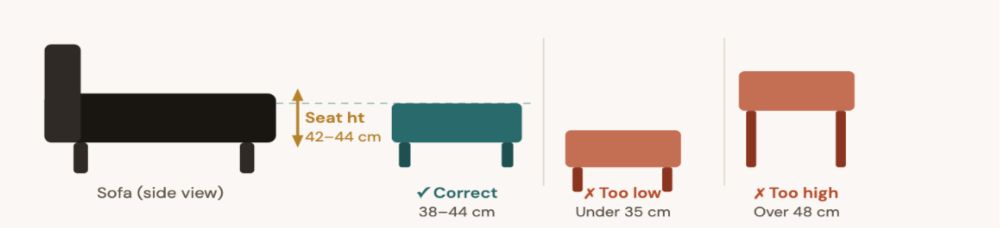
The seat cushion height of your sofa is your reference point. A coffee table should sit at the same height as the cushion or no more than 5 cm below it. Anything lower and reaching for a glass becomes a stretch. Anything higher and the table starts to behave like a dining surface.
For floor-level or low seating
Divans, floor cushions, and tatami-style seating are common in Indian homes and sit anywhere from 20 cm to 30 cm off the ground. A standard 42 cm table is too tall for these. A table between 25 cm and 35 cm works in these cases, and many projects use custom-manufactured low tables to hit that range exactly.
For lounge chairs or accent chairs
When chairs are placed at an angle to the coffee table, aim for the table height to sit at or just below the armrest of the chair. This makes it easy to set a drink down without leaning awkwardly.
How Much Space Should You Leave Around a Coffee Table?
Clearance is the part of any coffee table size guide that gets skipped most often, and it causes the most functional problems once furniture is placed.
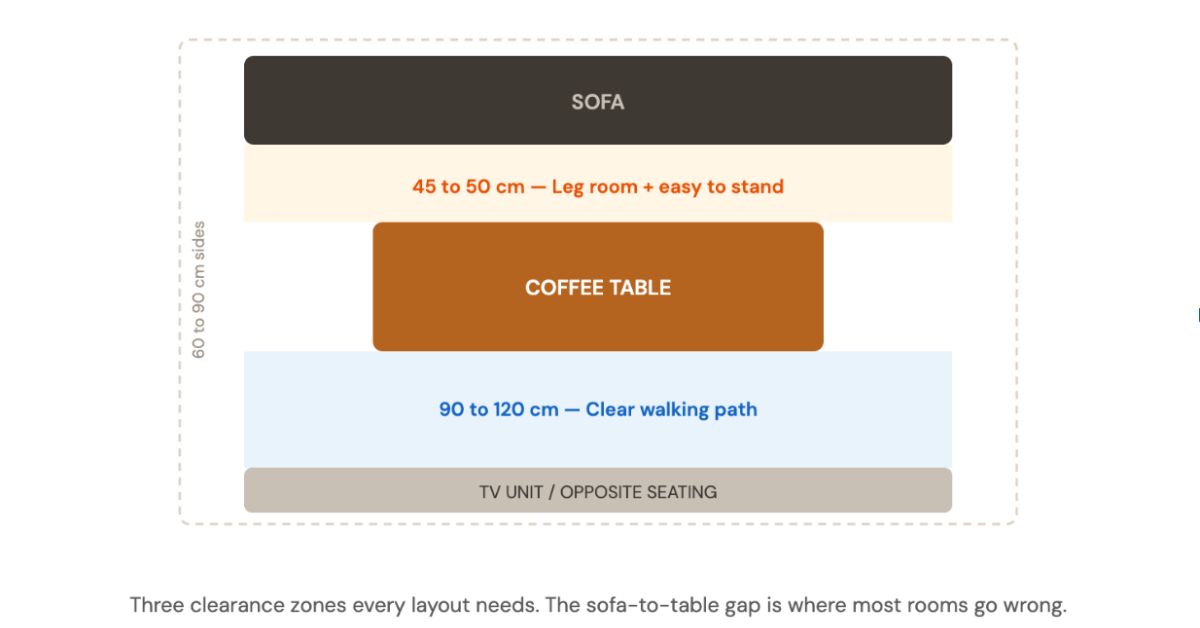
GAP | RECOMMENDED CLEARANCE | WHY IT MATTERS |
Sofa to coffee table | 45–50 cm | Comfortable leg room and easy to stand up |
Table to TV unit / opposite seating | 90–120 cm | Clear walking path through the room |
Table to side walls or furniture | 60–90 cm | Avoids the room feeling boxed in |
In Indian homes where the living room doubles as a family gathering space, these clearances get tested more intensively. Tighter rooms get noticeably uncomfortable once four or five people are in the space.
Pro Tip
Most people realise the table is wrong only after the room feels cramped.
Specifying coffee tables for a residential project?
Arcedior sources and custom-manufactures furniture to exact dimensions, so what you plan is what gets delivered. No guessing. No mismatch. If standard catalogue sizes do not fit your specs, we handle sourcing, manufacturing, QC, and logistics.
Shape: Which Works for Which Sofa?
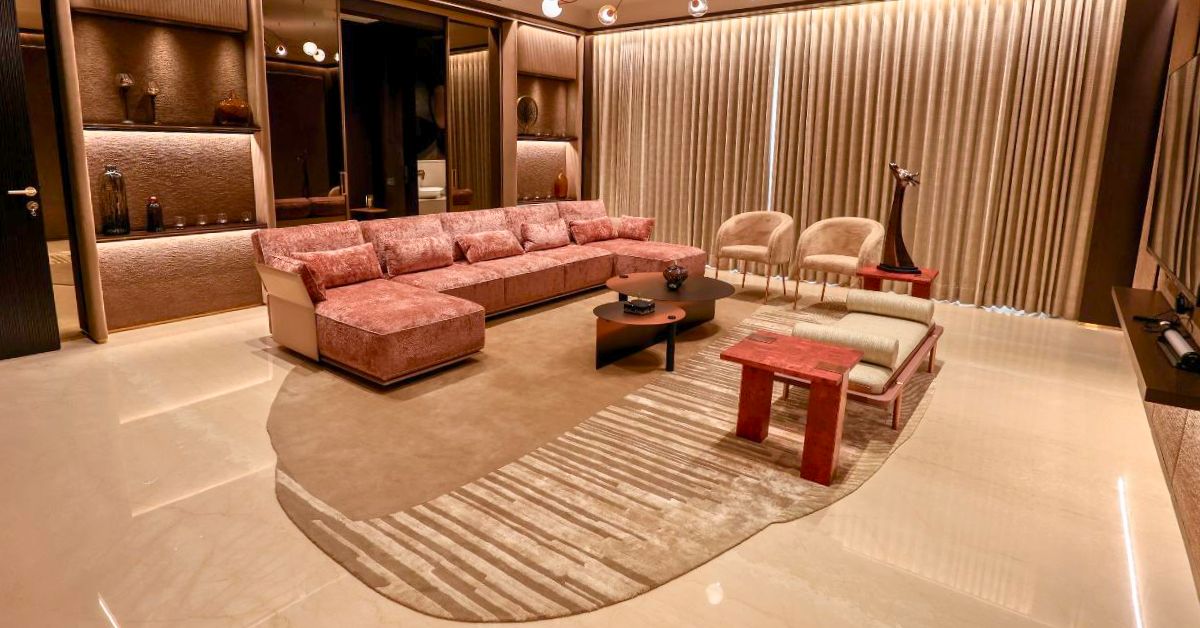
Length and height handle function. Shape handles how the room feels.
- Rectangular: Works best with straight three-seater or four-seater sofas. Aligns cleanly with the sofa line and offers the most usable surface area.
- Round or oval: Easier to move around, better in rooms with children, and suits curved sofas or rooms with softer proportions. For sizing, the diameter should be roughly half the sofa length.
- Square: Works best with L-shaped or sectional seating. Balances the visual weight of a large sofa arrangement without the table looking proportionally wrong on any side.
- Nested tables: Useful in smaller rooms where flexibility matters. Two or three tables that stack together give you a small footprint, normally, and the ability to spread out when needed.
4 Common Coffee Table Size Mistakes (And How to Fix Them)
Mistake 1: Table too large
Blocks movement between the sofa and the table. Room feels congested from day one.
Fix: Use the two-thirds rule
Table length = 66% of sofa length. Mark it on the floor before ordering.
Mistake 2: Table too small
Looks disconnected, like it was placed there by mistake. Proportionally off.
Fix: Stay above half the sofa length
Minimum length = 50% of the sofa. Anything below that reads as undersized.
Mistake 3: Table too tall
Uncomfortable to reach across. Feels like a dining table dropped into the wrong room.
Fix: Match or go 2 to 5 cm below seat height
For Indian sofas, 38 to 44 cm is the practical range. Measure before you order.
Mistake 4: Ignoring clearance
Room looks fine in photos. Gets cramped the first time five people sit in it.
Fix: Tape the footprint first
Mark the table dimensions on the floor. Live with it for a day before placing any order.
The Indian Apartment Reality: Why Standard Rules Need Adjusting
Most international furniture guides assume a living room with a clear 3 to 4 metre depth, a single-purpose seating area, and walkways on all sides. That is not the typical Indian apartment.
In Indian homes, the living room also handles the main entrance walkway, doubles as a dining overflow on festival occasions, and sometimes has a study or workspace tucked into one corner. The practical result is that your usable clearance around the coffee table is often 20 to 30 cm less than what the room's raw dimensions suggest.
A few things to account for specifically:
Tight entrance walkways. In apartments where the front door opens near the living room, one side of the sofa arrangement may lose 60 to 90 cm of usable space to the entry path. This limits how wide the seating group can sit and pushes you toward a more compact table.
Multi-use layouts. If the dining table sits in the same open plan as the living room, the 90 to 120 cm clearance between the coffee table and the opposite side needs to double as circulation between both spaces. A 90 cm gap that works for a pure living room may feel tight if six people are moving between the dining table and the sofa area.
Smaller seating layouts. 2-seater sofas and compact corner units are more common in Indian apartments than the 270 cm four-seaters you see in international showroom photos. Scale your table to the sofa you actually have, not the sofa in the catalogue image.
Best Coffee Table Size for Small Living Rooms in India
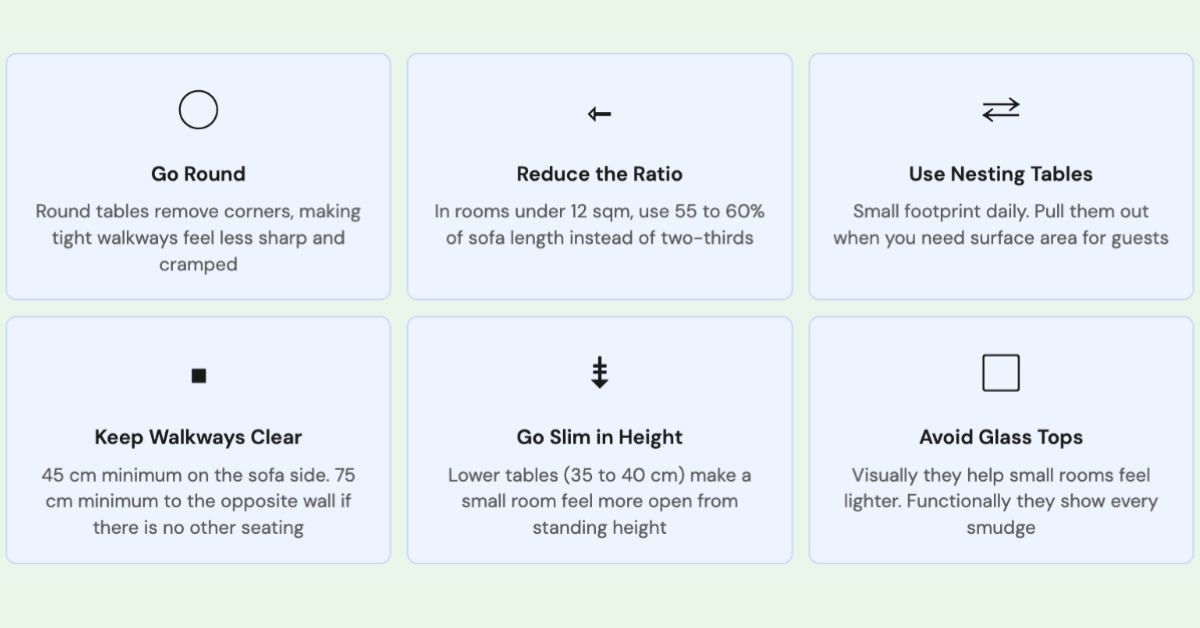
Key Takeaway
Why Indian Sofa Heights Change the Calculation
Standard international furniture dimensions are set against Western sofa proportions, which tend to sit higher than many sofas popular in India. Most sofas in the mid-range segment in India sit at a seat height between 40 cm and 44 cm. European and American coffee tables designed for 45 to 50 cm seat heights can end up feeling noticeably tall when placed with these sofas.
If you are specifying furniture for an Indian residential project, verify the actual seat height of the sofa before locking in the table height. This matters more in projects with multiple units, such as villa developments or apartment complexes, where a table height mismatch across all units is harder to correct once procurement is complete.
Key Takeaway
Coffee Table Size Guide: Quick Reference at a Glance
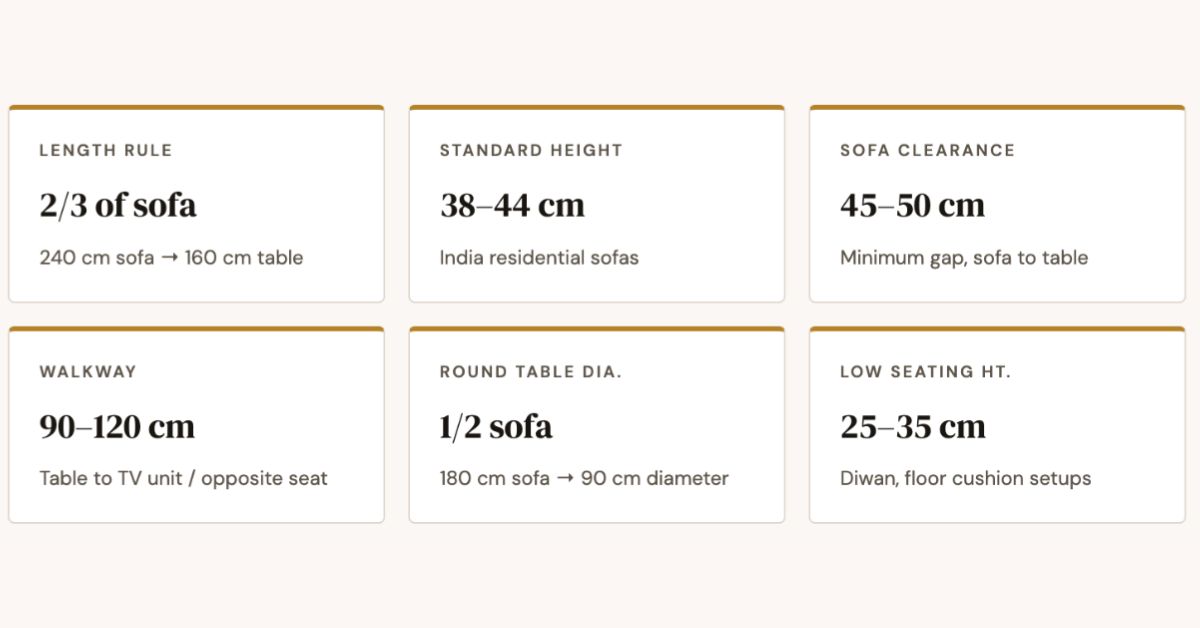
📐 Free Download: Coffee Table Size & Height Cheat Sheet (India)
Includes size ratio charts, sofa-height reference tables, clearance guides, and a quick-spec checklist formatted for Indian residential projects. Useful for procurement teams, project managers, and architects who need a ready spec reference.
When Standard Sizes Do Not Work: Custom Manufacturing
Catalogue coffee tables are sized for broad markets. On a residential project where the sofa is non-standard, the room proportions are unusual, or the design calls for a specific material and finish, standard products often land slightly wrong. The dimensions are close but not right, or the material options do not match what the project needs.
Custom manufacturing solves this directly. You specify the dimensions, the material, and the finish. The table is produced to those specs and delivered ready to install.
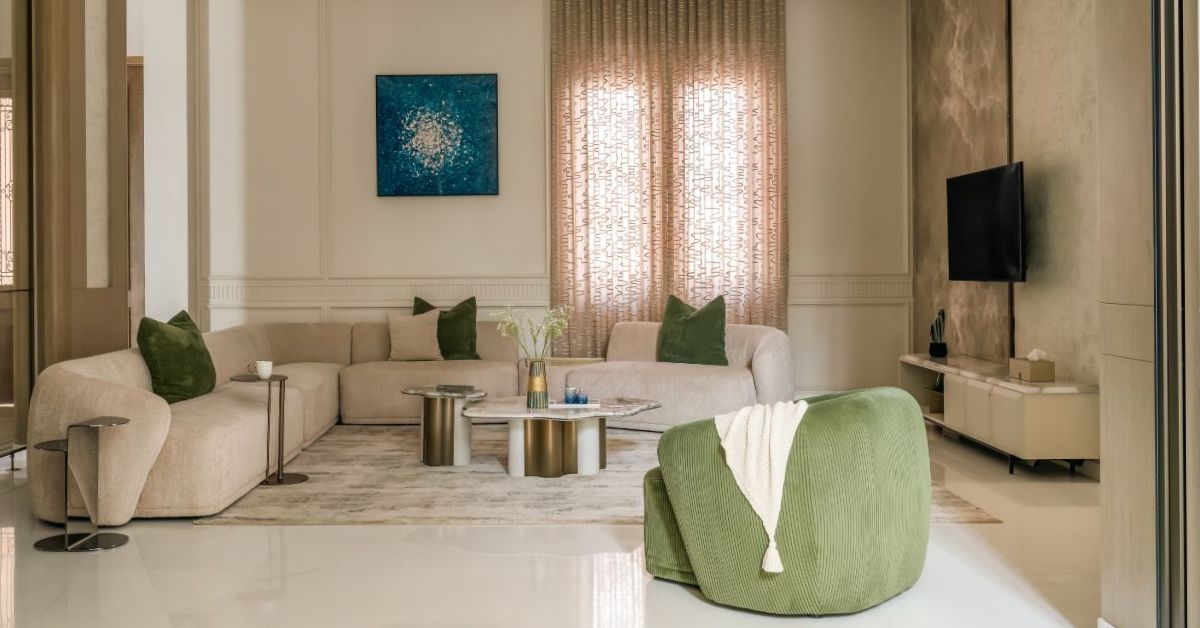
Arcedior supports sourcing and custom manufacturing for interior projects at the product level.
For living room furniture, including coffee tables, the team handles material sourcing, manufacturing to specification, quality checks, and logistics coordination. The product side of the project gets handled without the back and forth that typically comes with managing multiple vendors independently.
If you are a project manager, procurement team, or architect specifying furniture for a residential development and need products made to exact dimensions, that is the kind of work Arcedior is set up to support.
Final Word
A coffee table-size guide is only useful if it leads to an actual decision. The three numbers are simple: two-thirds of sofa length, seat cushion height minus zero to five centimetres, and 45 cm minimum clearance from the sofa. Everything else is detail on top of those three.
The mistakes that show up most often are not because the rules are complicated. They happen because people skip measuring the sofa seat height, pick a table that looks right in a showroom without checking room clearance, or assume that a standard catalogue height will work for their specific sofa. None of these takes long to verify before placing an order.
If you are working on a residential project in India and need coffee tables manufactured to exact dimensions with reliable QC and delivery timelines, Arcedior handles that side of the project. Reach out to discuss what your specs require.
Getting coffee table dimensions wrong across a multi-unit project is expensive to fix after delivery.
Need coffee tables sourced or custom-manufactured for a project?
Arcedior handles sourcing, custom manufacturing, quality checks, and logistics for residential interior projects. Share your specs, and we will take it from there.