FF&E Depreciation Schedule for Hotels India & US
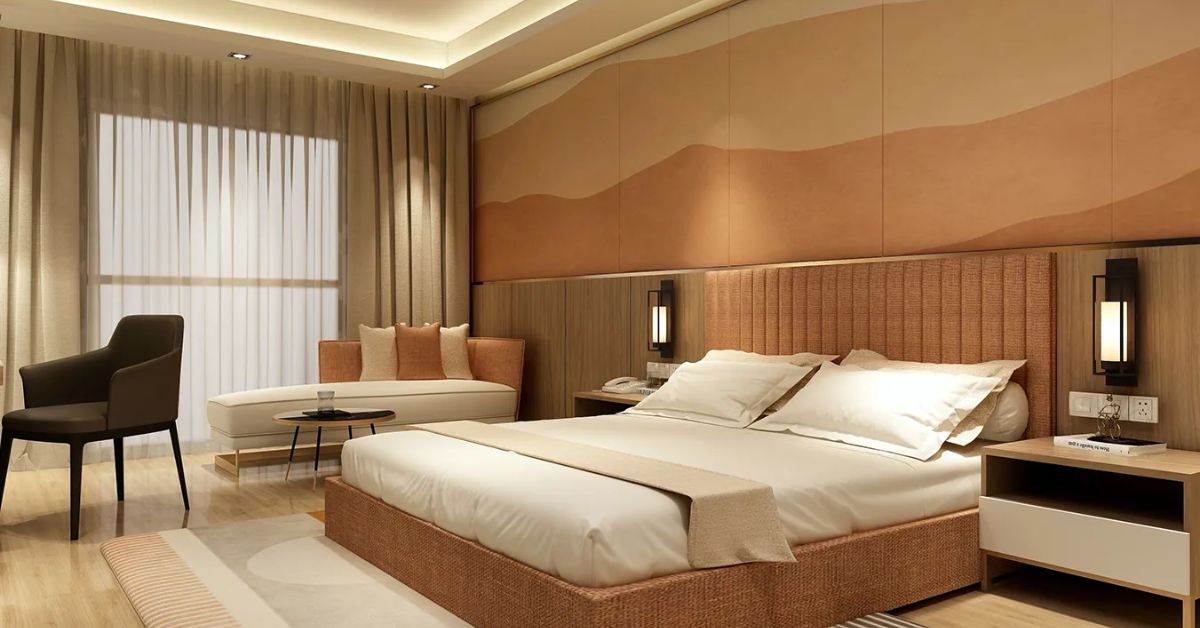
FF&E Depreciation Schedule for Hotels: Complete Guide
Running a hotel means juggling rooms, guests, staff, and assets. Behind every check-in counter and every plush armchair is a balance sheet entry. To keep finances healthy (and auditors happy), every hotel needs a clear FF&E depreciation schedule.
This FF&E depreciation guide explains, step by step, how Indian hotel teams can build their own depreciation schedules for furniture, fixtures, and equipment (FF&E), in line with the Companies Act Schedule II and the Income-tax Act block rates. We’ll also show you a worked example, compare depreciation vs replacement cycles, and provide downloadable templates and calculators.
Running a hotel means tracking assets as carefully as guests. This FF&E depreciation schedule for hotels shows Indian teams exactly how to set useful lives (Schedule II), calculate book vs tax depreciation (Income-tax Act blocks), and plan replacements. You’ll get a worked example, a replacement-cycle matrix, and downloadable Excel/Sheets templates.
What counts as FF&E and OS&E in hotels? (quick recap)
FF&E (Furniture, Fixtures & Equipment) refers to all tangible, movable items that are not permanently attached to the building but are essential to hotel operations.
OS&E (Operating Supplies & Equipment) is a narrower set of consumables and small items.
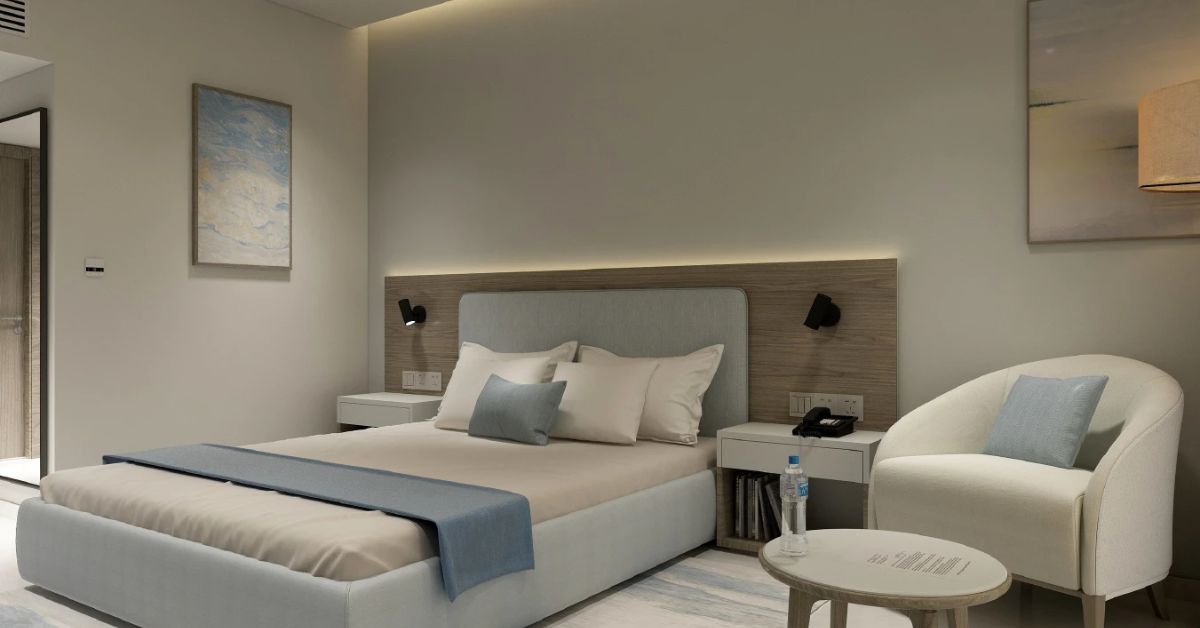
FF&E vs OS&E with examples(standard guest room):
| Category | FF&E | OS&E / consumable |
|---|---|---|
| Room furniture | Bed, headboard, wardrobes, desk, chairs | Extra pillows, guest slippers |
| Lighting & fixtures | Wall lights, fixed reading lamps | Desk lamp bulbs, portable lamps |
| Electrical & wiring | Built-in wiring, switches, and sockets | Extension cord, plug adapters |
| HVAC & comfort | Fan coil unit, room thermostat | Replaceable air filters |
| Soft finishes | Carpets, drapery (if long-lived) | Curtain liners, throw pillows |
Tip: Only FF&E goes on the depreciation schedule. “Soft” items like curtains or carpets can be FF&E if useful life exceeds one year; otherwise treat as OS&E and expense.
What Is an FF&E Depreciation Schedule?
A hotel FF&E depreciation schedule allocates the cost of furniture, fixtures, and equipment over their useful life and shows year-wise depreciation, carrying value, and (optionally) replacement timing.
Why build one?
- For internal accounting and profit & loss (P&L) allocation
- To guide your capex reserve / sinking fund for future replacement
- For compliance with statutory financials and income tax (where applicable)
- To help hospitality leadership understand ageing of assets
Depreciation Key Concepts
Hotels must track FF&E depreciation in two ways:
- For financial reporting (Companies Act, Schedule II)
- For tax computation (Income-tax Act block of assets).
Useful life vs depreciation method
Useful life: Decide how many years you’ll depreciate each asset. You can lean on:
- Companies Act, 2013, Schedule II as default
- Historic turnover or hotel refurbishment cycles in your hotel group
- Vendor recommendations or engineering life assessments
Depreciation methods:
- SLM (Straight Line Method): Equal charge every year.
- WDV (Written Down Value): Higher charge in early years, reducing over time.
In India, for financial statements under Indian GAAP / Ind AS you typically use Straight Line. For tax, WDV is more common.
India schedules (actionable tables)
Companies Act Schedule II useful life relevant to hotels
Schedule II provides default useful lives. Hotels typically use 8 years for furniture and fittings used in hotels (vs 10 years for general furniture). Residual value is capped at ≤5% unless technically justified. Componentize significant parts with different lives. If you adopt a different life (e.g., 12 years for case goods), record the technical basis and disclose it in the financial statements.
Additionally, other relevant classes:
| Asset Class (Schedule II Part C) | Useful Life (Years)* |
|---|---|
| Furniture & fittings for hotels/restaurants | 8 |
| General furniture & fittings (non-hotel) | 10 |
| Office equipment (e.g., desks, file cabinets) | 5 |
| Electrical installations & equipment (wiring, switchgear) | 10 |
| Computers / IT devices (end-user devices) | 3 |
* Subject to componentization: significant parts with different useful lives should be depreciated separately.
Also, per Schedule II, residual value must not exceed 5 % of cost.
If you deviate (say, you adopt a 12-year life for case goods), you must disclose and justify in board minutes and in the financial statements.
Income-tax Act – block depreciation rates for furniture & equipment
Under India’s Income Tax Act, depreciation is allowed under block assets with prescribed rates. For hotel FF&E, many components fall under the “Furniture & fittings” block.
| Block / Class (Income Tax) | Rate of Depreciation |
|---|---|
| Furniture & fittings (including electrical fittings) | 10 % (WDV method) |
| Plant & Machinery (if certain equipment falls there) | 15 % general block |
| Computers / IT/software | 40 % |
Hotel note: Most case goods and decor fall under Furniture & Fittings (10% WDV, including electrical fittings). Larger mechanical items (e.g., HVAC, pumps, chillers) are usually Plant & Machinery (15% WDV)
Special cases:
- If an asset is used less than 180 days in a year, depreciation is allowed at half the normal rate for that year.
- Under certain conditions (Rule 5(2)), 40 % depreciation may be allowed (e.g., for water treatment systems, etc.).
- Electrical fittings (wiring, switches, sockets) are generally included in the furniture & fittings block at 10 %.
Interpretation for hotels:
Most of your FF&E (beds, wardrobes, furniture, lighting, decor) fall under “Furniture & fittings” at 10 % WDV. Some mechanical / plant equipment (e.g., HVAC, chillers) may fall under “plant & machinery” and attract 15 %. The template in the Depreciation Pack segregates residuals accordingly.
You should maintain parallel depreciation: one for books (for financial statements) and one for tax, and reconcile differences (depreciation timing differences) as deferred tax items.
Worked Example – Indian Hotel Case (₹10,00,000 Furniture Mid-Year)
Let’s run a worked example using both books (Schedule II) and tax.
Assumptions:
- Cost of room-furniture set: ₹10,00,000 (including freight, installation).
- Placed in service on 1st October (i.e., mid-year).
- Residual (salvage) = 5 % of cost = ₹50,000 (per Schedule II cap).
- Useful life for books: 8 years (hotel furniture).
- Method for books: Straight line, prorated by months.
- Tax: falls under Furniture block at 10 % WDV, half-year rate in first year since < 180 days? We will assume > 180 days (placed Oct 1 → ~6 months). For simplicity, apply the full 10 % (adjust in the template if you want a half rate).
- Since Oct 1 → Mar 31 is typically ≥180 days, full year-one tax rate applies.
Books depreciation schedule (SLM, pro rata):
| Year | Opening WDV / Cost Basis | Depreciation charge | Closing Carrying Value |
|---|---|---|---|
| Year 1 (Oct–Mar) | ₹10,00,000 less residual (i.e. depreciable base = 9,50,000) | (9,50,000 ÷ 8) × (6/12) = 59,375 | 10,00,000 – 59,375 = 9,40,625 |
| Year 2 | 9,40,625 | 9,50,000 ÷ 8 = 1,18,750 | 8,21,875 |
| Year 3 | 8,21,875 | 1,18,750 | 7,03,125 |
| … | … | … | … |
| Year 8 | 1,18,750 | 1,18,750 | 50,000 (residual) |
You will reach the residual value at the end.
Income Tax depreciation (WDV method, 10 % block):
| Year | Opening WDV | Depreciation @10 % | Closing WDV |
|---|---|---|---|
| Year 1 | ₹10,00,000 | ₹1,00,000 | ₹9,00,000 |
| Year 2 | 9,00,000 | ₹90,000 | ₹8,10,000 |
| Year 3 | ₹8,10,000 | ₹81,000 | ₹7,29,000 |
| … | … | … | … |
| Year N | continues until block exhausted or asset sold | – | – |
Counter- example (asset used <180 days → half tax rate Year 1)
- Cost (incl. install): ₹10,00,000
- Residual (5%): ₹50,000 → depreciable base ₹9,50,000
- Books: SLM 8 years (Schedule II), in service Jan 1 → 3/12 of first-year charge
- Tax: Furniture & Fittings 10% WDV, but half rate (5%) in Year 1 (<180 days)
Year 1 (Books): (₹9,50,000 ÷ 8) × 3/12 = ₹29,688
Year 1 (Tax): 5% × ₹10,00,000 = ₹50,000
Why it matters: Year-one tax may be higher or lower than books depending on dates and method—track timing differences and deferred tax.
3-year timing difference (illustrative 25% tax rate)
| Year | Book Dep (SLM) | Tax Dep (WDV) | Timing Diff (Tax–Book) | Cum. Diff | DTL @25% |
|---|---|---|---|---|---|
| 1 | ₹29,688 | ₹50,000 | ₹20,312 | ₹20,312 | ₹5,078 |
| 2 | ₹1,18,750 | ₹95,000 | –₹23,750 | –₹3,438 | -₹859 |
| 3 | ₹1,18,750 | ₹85,000 | –₹33,250 | –₹36,688 | –₹9,172 |
(Use your pack to recompute with real dates and tax rates.)
Comments/reconciliation:
- Books vs tax depreciation differ in timing and quantum (SLM vs declining).
- Use your Depreciation Pack to model both side by side and produce the “timing difference” schedule.
- Your capex reserve planning (replacement fund) should follow the books schedule or your internal forecast (not tax).
US quick reference (MACRS) for hotel FF&E
If your hotel (or a U.S.-based entity) applies U.S. tax depreciation, MACRS (Modified Accelerated Cost Recovery System) is the relevant regime.
Typical MACRS classes + simple example
- Many FF&E assets fall into 5-year or 7-year MACRS classes (depending on type, e.g., furniture, hotel furnishings).
- Under 5-year MACRS, accelerated depreciation schedules front-load deductions (via 200% declining balance switching to straight line).
- Under 7-year MACRS, similar but over 7 years.
Simple example: Suppose you buy a U.S. hotel guestroom case good set at US $15,000, placed in service Jan 1, Year 1, elect 5-year MACRS (half-year convention).
MACRS schedule (simplified):
| Year | MACRS Rate (5-year class) | Depreciation |
|---|---|---|
| Year 1 | 20.00 % | 3,000 |
| Year 2 | 32.00 % | 4,800 |
| Year 3 | 19.20 % | 2,880 |
| Year 4 | 11.52 % | 1,728 |
| Year 5 | 11.52 % | 1,728 |
| Year 6 | 5.76 % | 864 |
Sum = 100%. (These are standard MACRS percentages.)
Thus, tax depreciation in the first two years is heavy, which affects cash flow and tax shield. But note: your book depreciation under Generally Accepted Accounting Principles (GAAP) may still use straight-line (e.g, 7-year straight line). You’ll need to book a deferred tax liability for the difference.
Be careful: Note: MACRS is tax only. Financial statements (GAAP/IFRS/Ind AS) often remain straight-line. If you report to a US parent, maintain dual schedules (Ind AS + MACRS) and track deferred tax from timing differences.
Depreciation vs Replacement Cycle (plan your capex)
Depreciation is the systematic allocation of cost over useful life for accounting and tax; replacement cycles reflect how long an asset remains operationally acceptable or safe. They often diverge from depreciation life.
Capex Reserve (Sinking Fund) refers to setting aside funds annually in advance to fund replacement when the time comes. In hotels, the two rarely match perfectly. You may depreciate a chair over ten years, but refurbish rooms every six. A well-managed hotel finance team uses both lenses to plan capex intelligently.
Soft goods, case goods, bathrooms – replacement-cycle vs depreciation matrix
Here is a matrix that maps common hotel asset groups to typical replacement cycles vs depreciation life:
| Asset group | Depreciation life (book) | Replacement cycle (typical) | Comments |
|---|---|---|---|
| Soft goods (linens, curtains, pillows) | ~5–7 years (or in OS&E) | 5–7 years | Treat as FF&E only if life >1 year; otherwise, expense via OS&E; plan quicker refreshes for premium segments. |
| Carpets, curtains, wallcover | 8–10 years | 6–10 years | Aesthetic refresh may pre-empt book life; budget corridor/room waves to avoid lumpy capex. |
| Case goods (beds, side tables, wardrobes) | 8 years (hotel Schedule II) | 10–12 years | Often serviceable beyond 8 years; keep if condition/brand standards allow; defer capex with touch-ups. |
| Bathroom fixed fixtures (vanities, fixed hardware) | 8–10 years | 15–18 years | Fixtures may outlast book life; align with waterproofing/MEP cycles to minimize shutdowns. |
| Lighting / decorative fixtures | 8–10 years | 10–12 years | Sync replacements with design refresh; LED retrofits can reset useful life assumptions. |
| HVAC indoor units, pipes, and pumps | 10–12 years | 12–15 years | Batch floor-by-floor swaps to limit downtime; track coil/board failures. |
| Major plant (chillers, boilers) | 15–20 years | 15–20 years | Capitalize under Plant & Machinery; isolate in a separate lifecycle plan. |
How to build your FF&E depreciation schedule hotel (7 steps)
Here is a practical workflow for hotel finance teams:
- Create the asset register — room/space-wise list with cost, vendor/invoice, and in-service date.
- Classify each line — Schedule II life + Income-tax block/rate selected.
- Choose methods — Books: SLM; Tax (India): WDV; US entities: MACRS as applicable.
- Compute year-by-year — Books: (Cost – Residual) ÷ life × prorate; Tax: Opening WDV × rate (half-rate if <180 days).
- Project 5–15 years — carrying value + depreciation schedule exported.
- Size the capex reserve — overlay replacement cycles to set annual sinking-fund targets.
- Paper deviations — brief technical note + financial-statement disclosure if lives differ from Schedule II.
Once your depreciation schedule is structured, align it with procurement timelines. For sourcing replacements or standardized room furniture packages, explore Arcedior’s global FF&E marketplace, which lets you benchmark replacement costs across categories.
Conclusion
Building a detailed FF&E depreciation schedule is more than compliance; it’s a management tool that links accounting with long-term operational planning. When aligned with your replacement cycle and capex reserve, it becomes the backbone of your asset management strategy.
Remember:
- Use Schedule II for book depreciation.
- Use Income-tax block rates for tax reporting.
- Keep your replacement plan practical and evidence-based.
- And above all, keep your data current; outdated registers cost money.
FAQs
1. What is included in FF&E for hotels?
Furniture, fixtures, and equipment, beds, tables, sofas, lighting, kitchen units, lifts, HVACs, and everything durable except building shell and land.
2. What is the depreciation rate for hotel furniture under the Income-tax Act?
Generally, 10% WDV for Furniture & Fittings (including electrical fittings). If used <180 days in the year of addition, apply half the rate. But always verify current Finance Act amendments.
3. What MACRS life applies to hotel FF&E in the U.S.?
Commonly, 5- or 7-year classes with accelerated rates for tax; book depreciation may remain straight-line.
4. How do I create a fixed asset register for hotel FF&E?
Room-by-room inventory with cost, vendor/invoice, in-service date, book life, tax block/rate, salvage value, location codes; reconcile to the GL monthly.
5. What’s the difference between a replacement cycle and depreciation schedule?
Depreciation allocates cost for accounting/tax; the replacement cycle is when assets are actually refreshed. Use both to size the capex reserve.
6. Is carpet FF&E, and how long does it last?
Carpet can be FF&E if life >1 year; hotels often depreciate 8–10 years, but refresh 6–10 years for appearance and brand standards.