Hostel Furniture Suppliers India
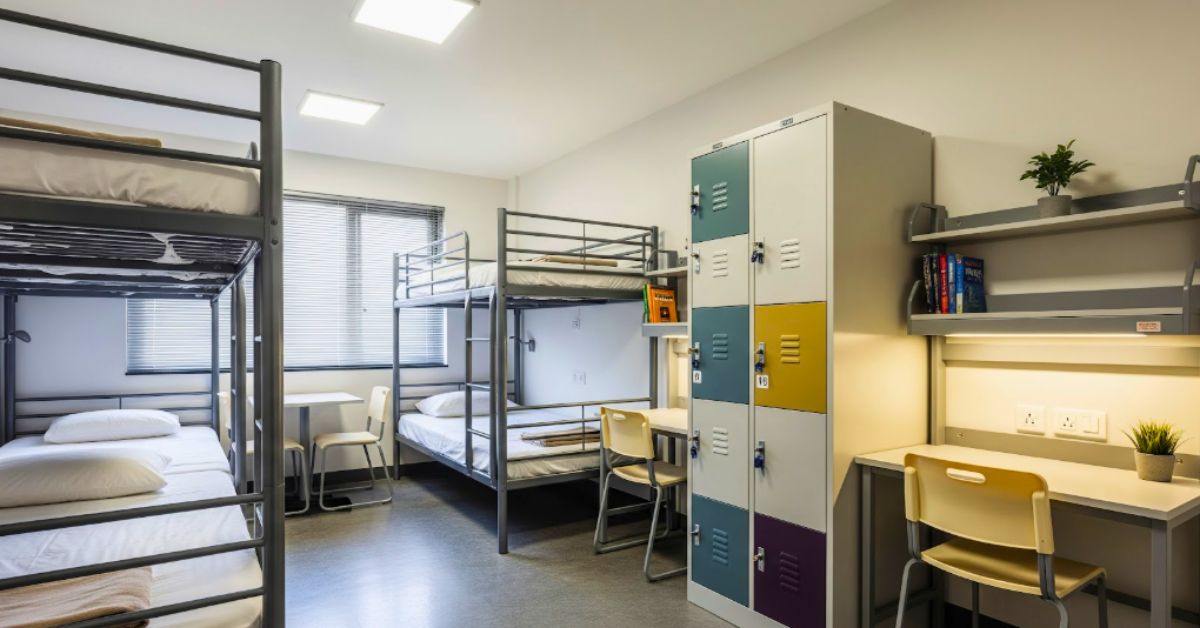
Hostel Furniture Suppliers India: Bunk Beds, Study Units & Storage (Procurement-Ready Guide)
When you're sourcing hostel furniture across India, you need more than product catalogs. You need a supplier who understands BOQ coordination, quality checks, delivery timelines, and installation logistics for institutional projects. Whether you're setting up a college hostel in Bengaluru, a PG accommodation in Mumbai, or a school dormitory in Delhi NCR, this guide covers everything procurement teams need: product specs, material choices, pricing factors, lead times, and QC checkpoints.
Arcedior works as a single-window partner for hostel furniture sourcing and custom manufacturing across India. We handle global sourcing of interior products, contract manufacturing, quality inspections, logistics coordination, and installation support so your hostel project finishes on time with spec-correct furniture.
Quick Actions:
- Get Quote: Share your BOQ on WhatsApp for a spec-correct quote
- Layout Planning: Get hostel room layout planning support
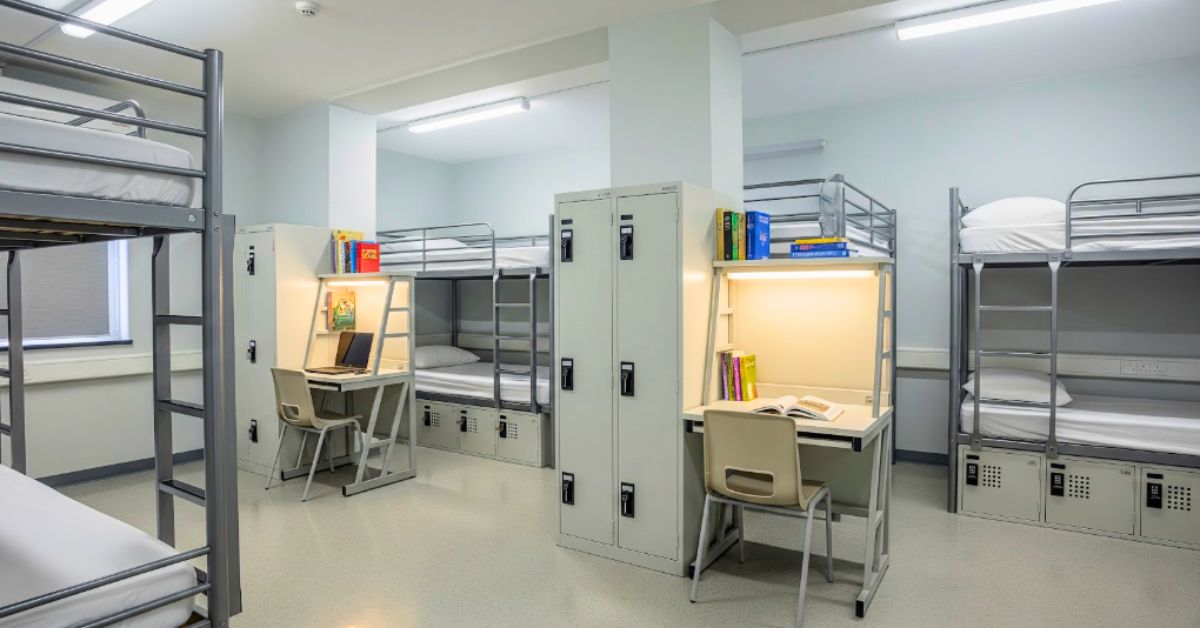
What Should Hostel Furniture Suppliers in India Provide?
Hostel furniture suppliers in India should do more than sell beds. Reliable suppliers help institutions and PG operators with BOQ-ready specifications, pre-dispatch QC checkpoints, room-wise tagging, dispatch planning, Pan-India delivery coordination, and installation support. Look for suppliers who can provide factory inspection reports, comply with BIS safety standards, and coordinate logistics with your site team for smooth project completion.
How to Shortlist Hostel Furniture Suppliers in India: 10-Point Checklist
Before diving into products, procurement teams need a framework to evaluate suppliers quickly. Use this checklist to shortlist reliable partners:
Checkpoint | What to Verify | Why It Matters |
1. Steel thickness declaration | Ask for gauge specification + test reports | Ensures structural strength matches your occupancy needs |
2. Coating process details | Multi-stage powder coating with thickness reports (60-80 microns) | Prevents rust and extends furniture life |
3. Weld finish standard | Smooth joints, no sharp edges, continuous welds | Safety + durability indicator |
4. Sample approval process | Physical samples before bulk production | Confirms quality before order commitment |
5. QC documentation | Pre-dispatch inspection photos + checklists | Accountability and defect prevention |
6. Packing standard | Corner guards, edge protectors, and room-wise labeling | Reduces transit damage, easier site distribution |
7. Dispatch plan | Phased delivery, tracking updates, and coordination with the site | Avoids storage/congestion issues on site |
8. Spares policy | Availability of replacement parts (chairs, hardware) | Easier long-term maintenance |
9. Warranty terms | Clear coverage + replacement timeline | Protection against manufacturing defects |
10. Past institutional references | College/hostel/PG projects completed | Proof of institutional project experience |
Tender Note (India): When preparing RFQs for institutional procurement, ask suppliers if their bunk beds are tested as per IS 17636:2022 (BIS safety standard for bunk beds) and whether they can provide documentation for tender evaluation. This helps ensure safety compliance and simplifies vendor comparison.
Typical Hostel Furniture Package: 100-Bed and 200-Bed Examples
Most procurement teams want a starting point for budget planning and BOQ preparation. Here are typical furniture packages for standard hostel projects.
Important disclaimer: These are reference examples only, actual requirements vary based on your room layout, occupancy model, and budget.
100-Bed Hostel Package (Standard Configuration)
Assumes: 25 rooms with 4 students per room
Item Category | Quantity | Specification | Per-Unit Range Factor |
Bunk Beds (Two-Tier) | 50 units | MS frame, powder coated, with guardrails | Based on steel gauge + finish |
Study Desks | 50 units | Engineered wood top, MS legs, cable cutout | Based on board grade + hardware |
Study Chairs | 100 units | Metal frame, cushioned seat | Include 5-10% spares |
Wardrobes/Lockers | 100 units | Metal locker with ventilation | Single-door per student |
Bedside Shelves | 50 units | Wall-mounted or standalone | Optional: charging slots |
Common Area Dining Tables | 5 units | Heavy-duty 8-seater | As per mess capacity |
Dining Benches | 10 units | Metal frame, powder coated | Pairs with tables |
Typical Timeline: 6-8 weeks from order confirmation to installation completion
200-Bed Hostel Package (Multi-Block Configuration)
Assumes: 50 rooms with 4 students per room across 2-3 blocks
Item Category | Quantity | Specification | Per-Unit Range Factor |
Bunk Beds (Two-Tier) | 100 units | MS frame, powder coated, with guardrails | Based on steel gauge + finish |
Study Desks | 100 units | Engineered wood top, MS legs, cable cutout | Based on board grade + hardware |
Study Chairs | 210 units | Metal frame, cushioned seat | 5% extra spares included |
Wardrobes/Lockers | 200 units | Metal locker with ventilation | Single-door per student |
Bedside Shelves | 100 units | Wall-mounted or standalone | Optional: charging slots |
Common Area Dining Tables | 12 units | Heavy-duty 8-10 seater | Distributed across blocks |
Dining Benches | 24 units | Metal frame, powder coated | Pairs with tables |
Shoe Racks | 15 units | Open design, individual compartments | Per 10-15 students |
Typical Timeline: 8-10 weeks from order confirmation to installation completion
Special Note for Multi-Block Projects: Consider phased delivery (block-wise) to avoid site congestion and storage issues. Coordinate with civil/MEP teams for access timing.
RFQ Email Template (Copy-Paste Ready)
Subject: RFQ for Hostel Furniture - [Project Name] - [Bed Count]
Dear Supplier,
We are setting up a hostel facility with [100/200/300] bed capacity in [City, State] and require furniture supply and coordination.
Project Details:
- Total beds: [Number]
- Number of rooms: [Number]
- Expected occupancy per room: [2/4/6 students]
- Delivery location: [City]
- Target delivery date: [Month/Year]
- Site access: [Lift available/Staircase only, Floor level]
Items Required: Please quote for the following as per attached BOQ:
- Bunk beds (two-tier/three-tier)
- Study desks and chairs
- Wardrobes/Lockers
- Common area furniture
Documentation Required with Quote:
- Item-wise specification sheet (steel gauge, coating thickness, board grade)
- Sample photos or catalog reference
- Warranty terms
- Delivery timeline (production + logistics)
- Payment terms
- Reference to IS 17636:2022 compliance for bunk beds
- QC and inspection process details
- Installation coordination scope
Evaluation Criteria:
- Technical compliance: 40%
- Pricing: 30%
- Delivery timeline: 15%
- Warranty and past project experience: 15%
Please submit your quote by [Date].
Regards, [Name] [Organization] [Contact Details]
What Furniture Does a Hostel Typically Need?
Every hostel needs sleeping furniture (bunk beds/cots), study furniture (desks and chairs), storage (wardrobes/lockers), and common area furniture (dining tables, shoe racks). This checklist helps ensure nothing gets missed during BOQ preparation.
Hostel Furniture Checklist
Category | Item | Standard Spec | Optional Upgrades | Typical Qty per Room |
Sleeping | Bunk beds or single cots | MS frame, powder coated, with guardrails | Storage drawers underneath, integrated lockers | 2-3 bunk beds (4-6 students) |
Study | Study desk with chair | Engineered wood top, MS frame | Cable cutouts, overhead shelf, drawer unit | 1 per 2 students |
Storage | Wardrobe or locker | Metal locker with ventilation | Personal safe, mirror, hooks | 1 per student |
Storage | Bedside shelf | Wall-mounted or standalone | Phone charging slot | 1 per bed |
Common Areas | Dining tables with benches | Heavy-duty frames | Foldable for multi-use spaces | As per capacity |
Common Areas | Shoe racks | Open or closed design | Individual compartments | Per 10-15 students |
Reception/Office | Reception desk, chairs, filing storage | Professional finish | Branding panels | As needed |
This checklist gives you a starting point. Every hostel has different room sizes, student capacity, and budget constraints. The key is getting furniture that survives daily student use while staying within procurement budgets.
Hostel Bunk Beds: Types, Specs, and Selection Guide
Hostel bunk beds are the backbone of hostel room planning. Hostel furniture manufacturing in India focuses on durable MS-frame bunk beds, study units, and metal lockers designed for institutional use. Understanding types, specifications, and safety standards helps procurement teams select the right manufacturer partner.
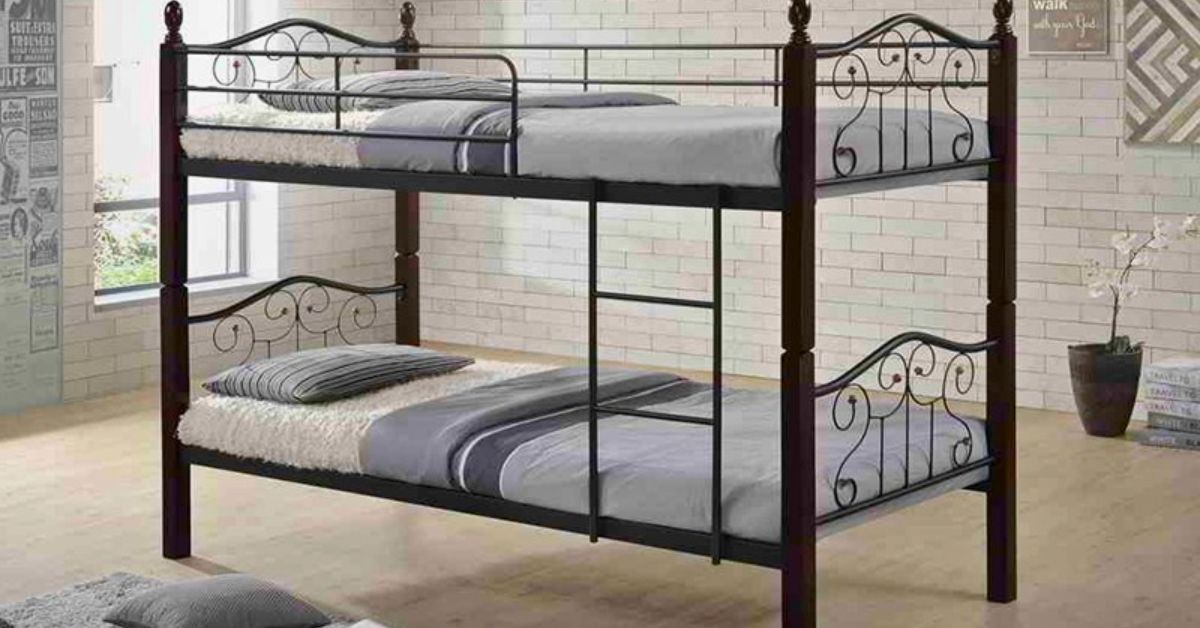
Types of Hostel Bunk Beds
1. Two-Tier Bunk Beds (Standard Double Decker)
The most common choice for hostels. Two sleeping levels with a ladder and safety guardrails. Typical dimensions range around 99 cm in width and 200 cm in length, though this varies by manufacturer. Some suppliers list hostel bunk bed sizes around 2045×995×1720 mm.
Best for: Standard hostel rooms with 8-10 ft ceiling height
2. Triple Bunk Beds (Three-Tier)
Three sleeping levels are stacked vertically. Requires higher ceiling clearance (minimum 11-12 ft). More space-efficient but needs careful safety planning.
Best for: High-density accommodation, worker hostels, budget PG setups
3. Single-Over-Single L-Shaped Bunk Beds
Two separate single beds arranged in an L-shape, one elevated. Provides more personal space and easier top bunk access.
Best for: Premium hostels, smaller capacity rooms
4. Bunk Beds with Integrated Storage
Features under-bed drawers, side lockers, or built-in shelving units. Maximizes space utilization in compact rooms.
Best for: PG accommodations, studio-style hostel rooms
Key Specifications to Check
Frame Material and Construction
- Mild steel (MS) frame: Standard choice for institutional furniture. Check steel gauge thickness (14-16 gauge for load-bearing members)
- Powder coating: An anti-rust finish is mandatory. Look for electrostatic powder coating with a minimum 60-80 microns thickness
- Welding quality: All joints should have continuous, smooth welds without gaps or sharp edges
Safety Features and BIS Compliance Standards (Critical for Compliance)
The Bureau of Indian Standards has published a product manual for bunk beds as per IS 17636:2022. While this standard focuses on domestic bunk beds, it provides useful safety benchmarks for institutional procurement.
Key Safety Parameters from IS 17636:2022:
- Guardrails: Minimum height from mattress surface (typically 16 cm for domestic use; institutional buyers often specify higher for added safety)
- Ladder design: Non-slip steps, secure attachment, comfortable spacing between rungs
- Gap specifications: Spacing between components designed to prevent entrapment hazards
- Load capacity: Upper bunk should safely support adult weight plus mattress (minimum 110 kg for domestic standards; institutional specs may vary based on usage)
Always verify the manufacturer's load testing reports and safety certifications during procurement.
Compliance-Ready Procurement (2025-2026 Context):
The Furniture (Quality Control) Order, 2025 was published by DPIIT on 13 February 2025. The order states it comes into force 12 months from publication, meaning it will be effective from February 2026.
What This Means for Institutional Buyers:
For 2026 procurements, many institutional buyers will ask suppliers about BIS/ISI compliance readiness under the Furniture QCO. While requirements vary by product category and tender conditions, starting conversations with suppliers now about compliance documentation helps future-proof your procurement process.
Practical Procurement Action:
- Request manufacturers' load testing reports during vendor evaluation
- Ask if suppliers can provide documentation referencing IS 17636:2022 safety parameters
- For tender specifications, mention BIS safety standards as evaluation criteria
- Verify quality certifications during pre-dispatch QC checks
Always verify the manufacturer's safety test reports and quality certifications during procurement. Match specifications to your expected occupancy levels and actual usage patterns rather than just following generic recommendations.
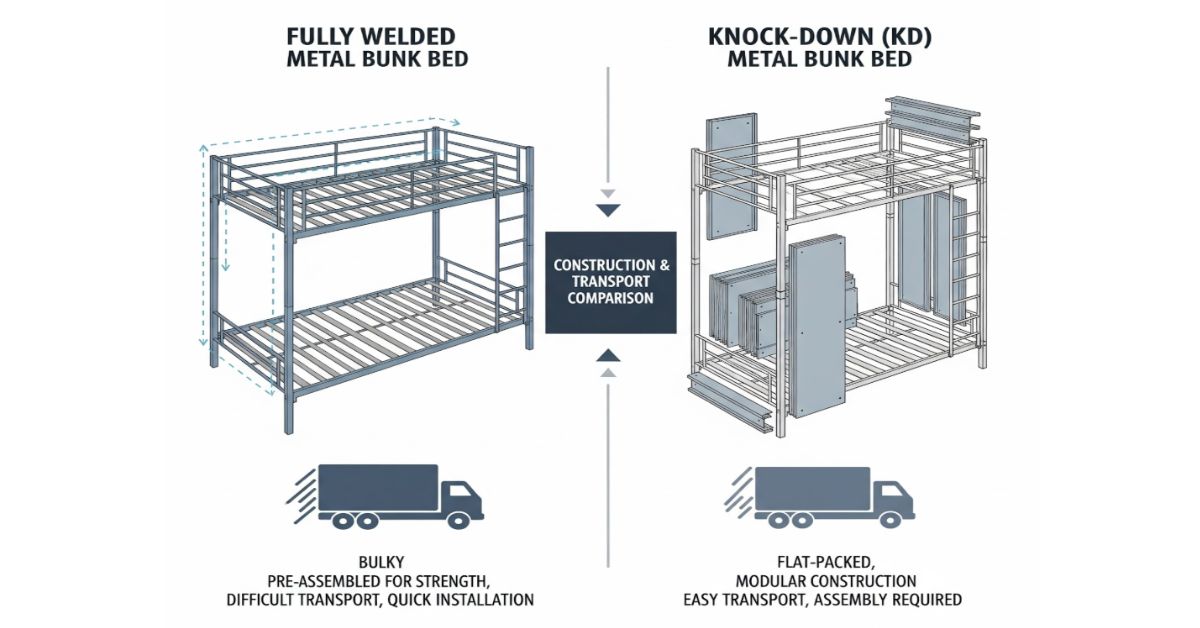
Knock-Down vs Welded Frames
Aspect | Knock-Down (KD) | Fully Welded |
Transportation | Flat-packed, lower freight | Requires larger vehicles |
Installation | Quick assembly on-site | Pre-assembled, just positioning |
Durability | Slightly less rigid over time | More rigid, no loosening joints |
Maintenance | Can tighten bolts if needed | Fixed structure |
Best for | Multi-location projects, tight site access | Single-location, permanent setup |
What Steel Thickness and Coating Should Hostel Bunk Beds Have?
Many institutional specs ask suppliers to declare steel gauge thickness and coating thickness with supporting test documentation. Common specifications include 14-16 gauge steel for load-bearing members and 60-80 micron electrostatic powder coating. However, the right specification depends on your expected occupancy level, daily wear-and-tear, and environment. Coastal or high-humidity locations may need additional anti-corrosion treatment before powder coating.
What to Request from Suppliers:
- Declared steel gauge with thickness measurement reports
- Powder coating process details (pre-treatment, coating, curing)
- Coating thickness test certificates (60-80 microns minimum)
- Anti-corrosion treatment for coastal/basement installations
- Sample inspection before bulk order confirmation
Hostel Bunk Bed Price and Cost Factors
Pricing for hostel bunk beds varies based on several factors:
- Steel gauge and thickness: Heavier gauge = higher strength = higher cost
- Powder coating process: Multi-stage coating (pre-treatment, coating, curing) costs more but lasts longer
- Storage add-ons: Integrated lockers or drawers add 15-25% to base price
- Knock-down vs welded: KD frames often cost 10-15% more due to hardware and engineering
- Order quantity: Bulk orders (50+ units) typically get 8-12% better rates
- Delivery location: Metro cities have lower logistics costs vs remote locations
- Floor level and site access: Ground floor vs 4th floor without a lift affects installation coordination costs
Budget planning tip: For a standard two-tier MS powder-coated bunk bed without storage, prices typically start from mid-range for institutional bulk orders. Always request a detailed BOQ with per-unit cost breakdown, delivery charges, and installation coordination charges shown separately.
Dormitory Furniture Supplier India: Study Units That Survive Daily Use
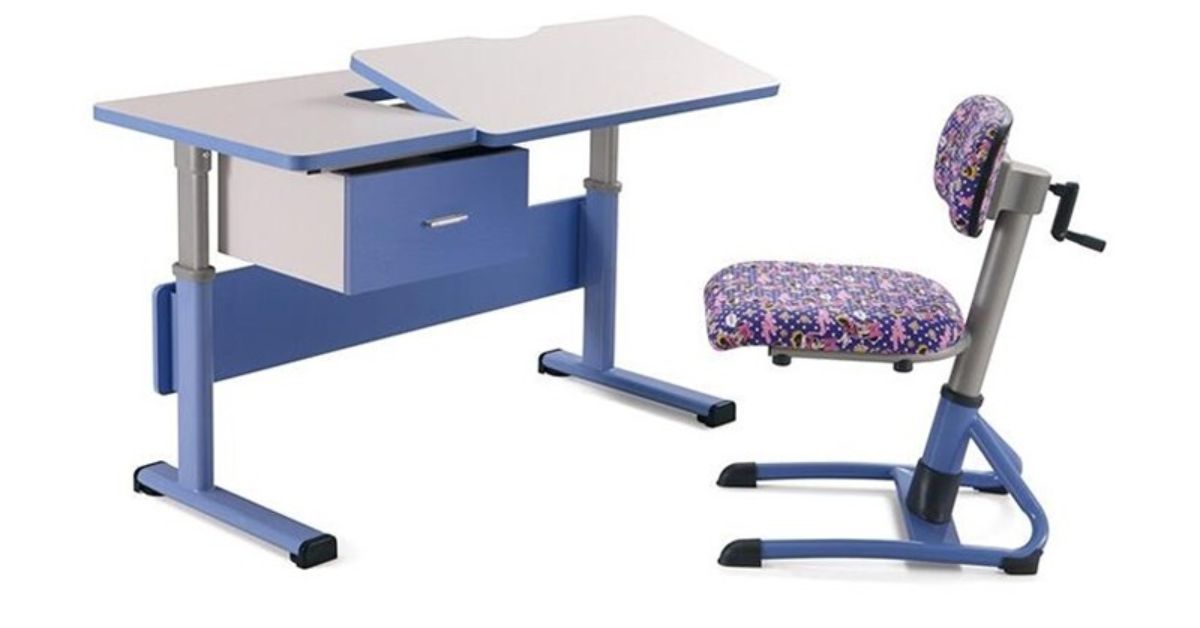
Dormitory and hostel study furniture must withstand constant use; students study, eat, keep laptops, and sometimes even stand on chairs. Procurement specs should prioritize scratch-resistant surfaces, rounded edges, cable management, and durable hardware.
Study tables and chairs in hostels face constant use. Students study, eat, keep laptops, and sometimes even stand on chairs to reach high shelves.
Key Features:
- Scratch-resistant surfaces (laminate, PU finish)
- Rounded edges and durable edge banding
- Integrated cable cutouts for power and internet
- Optional storage: drawers, pedestals, overhead shelves
Bulk Ordering Tips for Study Furniture
- Order 5-10% extra chairs as spares (they wear out faster than tables)
- Standardize designs across all rooms for easier maintenance and part replacement
- Check if the manufacturer provides replacement parts (cushions, casters, hardware)
Storage Solutions: Wardrobes, Lockers, and Room Organization
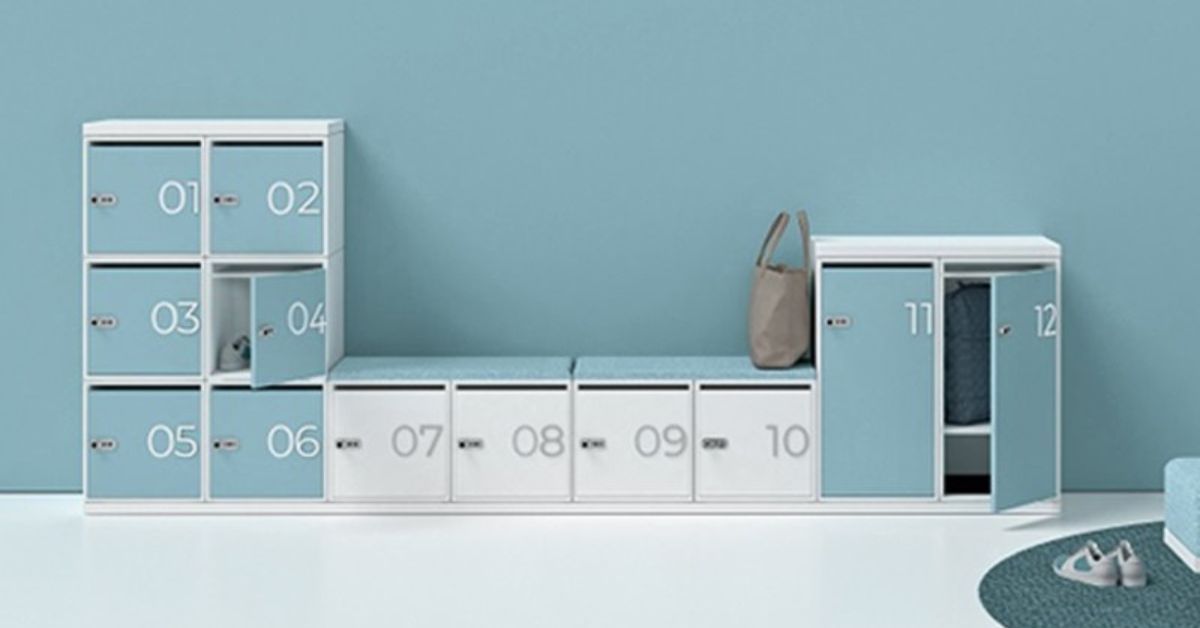
Students need secure, organized storage for clothes, books, valuables, and personal items. The right storage system keeps hostel rooms tidy and reduces conflicts between roommates.
Metal vs Engineered Wood Lockers
Aspect | Metal Lockers | Engineered Wood Wardrobes |
Durability | Extremely durable, rust-resistant if powder-coated | Moderate, depends on the quality of the board and edges |
Security | Better lock mechanisms, harder to break | Locks can be forced, hinges may weaken |
Ventilation | Easy to add ventilation slots | Limited breathability can trap odors |
Cost | Higher initial cost | Lower initial cost |
Maintenance | Minimal, just periodic checks | Edge damages, hinge repairs are common |
Best for | High-security needs, long-term investment | Budget-conscious projects, shorter lifespan OK |
Features
- Ventilation slots
- Label slots for occupant identification
- Vertical storage for small rooms
- Wall-mounted shelves to free floor space
Tip: Stackable or modular lockers optimize multi-occupant rooms efficiently.
Materials Guide: What Actually Matters for Hostel Furniture
Understanding material specifications, steel gauge, powder coating process, engineered wood grades, and hardware quality, helps you evaluate supplier quotes accurately and make informed procurement decisions.
Mild Steel (MS) and Powder Coating
Why MS is Standard for Hostel Furniture
- High strength-to-weight ratio
- Weldable for custom designs
- Long lifespan with proper coating
- Recyclable and sustainable
Powder Coating Process (What to Verify with Suppliers)
- Surface preparation: Rust removal, degreasing, phosphating
- Electrostatic powder application: Ensures uniform coating
- Curing: High-temperature oven (160-200°C) for 15-20 minutes
- Quality check: Thickness measurement, adhesion test
Ask suppliers for powder coating thickness reports. Standard institutional furniture should have a 60-80 micron coating.
Anti-Rust Treatment For high-humidity locations (coastal cities, basement hostels), request additional anti-corrosion treatment before powder coating.
Engineered Wood for Study and Storage Furniture
Board Types
- Plywood: Stronger, more expensive, used for wardrobes and premium study tables
- Particle board: Budget option, needs good lamination for durability
- MDF: Smooth finish, good for painted/laminated surfaces
Quality Indicators
- Board grade: BWP (Boiling Water Proof) or BWR (Boiling Water Resistant) for plywood
- Laminate brand: National brands ensure consistent quality
- Formaldehyde emission: E1 grade or better (low emission, safer for indoor use)
Hardware Quality (Often Overlooked)
Critical Hardware Components
- Hinges: Soft-close hinges reduce slamming noise and last longer
- Drawer slides: Ball-bearing slides (not plastic) for smooth operation
- Locks: Pin-cylinder or number locks; avoid cheap disc locks
- Fasteners: Stainless steel or zinc-plated to prevent rust
- Bed bolts: High-tensile strength bolts for bunk bed joints
Request hardware specifications in your BOQ. Low-quality hardware fails first and causes most maintenance issues.
Pricing: What Actually Changes the Cost of Hostel Furniture
Transparent pricing helps during budget planning and vendor comparison. Steel gauge, coating quality, storage add-ons, order quantity, delivery location, and installation floor level all impact final costs.
Cost Factor Breakdown
Factor | Impact on Price | Optimization Tip |
Steel gauge/thickness | Higher gauge = 10-15% higher cost | Match gauge to actual load requirements, don't over-spec |
Powder coating process | Multi-stage coating adds 8-12% | Worth it for longer life, lower maintenance |
Storage add-ons | Drawers/lockers add 15-25% | Evaluate if needed per room type |
Knock-down packaging | Adds 10-15% for hardware/engineering | Saves on freight and site access costs |
Order quantity | Bulk discount: 50 units (5-8%), 100+ units (8-12%) | Consolidate orders across project phases |
Delivery location | Metro cities: baseline; remote locations: +10-20% | Plan logistics in advance |
Installation coordination | Ground floor: baseline; upper floors: +5-10% per floor | Check lift access, loading zones |
Budget Ranges Are Project-Specific
We avoid listing specific price ranges because every project has unique specs. Factors like steel grade, finish quality, customization level, quantity, and delivery location all affect final pricing.
For Accurate Quotes: Share a detailed BOQ with quantities, spec requirements, delivery city, and installation floor level. This lets suppliers provide accurate, comparable quotes instead of ballpark estimates.
What is a Realistic Lead Time for Hostel Furniture in India?
Hostel furniture lead times typically include specification finalization, sampling, production, QC checks, packing, logistics, and installation coordination. A standard 100-200-bed hostel project takes 6-10 weeks from order confirmation to completed installation. Production time depends on order quantity and customization level. Metro city deliveries take 5-7 days from dispatch, while remote locations may need 10-15 days. Always factor in site readiness and coordination with other trades.
Typical Procurement Workflow
Phase 1: Specification and Sampling (1-2 weeks)
- Finalize furniture specifications and quantities
- Review manufacturer samples for quality check
- Approve materials, finishes, and dimensions
- Confirm pricing and payment terms
Phase 2: Production (3-6 weeks, depending on quantity)
- Custom manufacturing or bulk production
- Periodic progress updates from the supplier
- Pre-dispatch quality checks at the factory
Phase 3: Quality Control and Packing (3-5 days)
- Final inspection against approved samples
- Load testing for structural furniture
- Protective packing for transit
- Documentation for dispatch
Phase 4: Logistics and Dispatch (5-15 days depending on location)
- Transportation from the manufacturing unit to the site
- Transit time varies by distance and road conditions
- Tracking updates during movement
Phase 5: On-Site Coordination (1-2 weeks)
- Unloading and material verification
- Room-wise distribution and tagging
- Assembly/installation coordination
- Defect reporting and resolution
Total Timeline: 6-10 weeks from order confirmation to installation completion for a standard 100-200-bed hostel project.
Installation Coordination Checklist
Share this checklist with your site team before furniture delivery:
✓ Confirm unloading access (gate width, turning radius for trucks)
✓ Check if the goods lift is available (weight capacity and dimensions)
✓ Arrange floor protection (cardboard, cloth) to prevent damage during movement
✓ Prepare room-wise tagging system (labels match BOQ)
✓ Ensure power supply for any power tools needed
✓ Verify storage space for unpacking materials and debris
✓ Coordinate with civil/painting teams to avoid clashes
✓ Assign a contact person on-site for furniture team coordination
Pan-India Delivery: Serviceable Cities and Regional Logistics Constraints
We coordinate hostel furniture supply across India with city-specific logistics planning. Understanding regional constraints, access restrictions, humidity conditions, and transit infrastructure helps set realistic timelines and avoid delivery surprises.
Metro Cities (Mumbai, Delhi, Bengaluru, Chennai, Hyderabad, Pune):
Mumbai (Maharashtra):
- Logistics strength: Excellent road connectivity, multiple logistics hubs
- Access constraint: Restricted unloading time windows in many residential and institutional areas (typically 6 AM - 10 AM or 6 PM - 9 PM)
- Coordination tip: Confirm unloading slots with society/building management at least 3 days in advance
- Delivery timeline: 5-7 days from dispatch
Bengaluru (Karnataka):
- Logistics strength: Major manufacturing hub, good connectivity
- Access constraint: Many buildings have narrow corridors, small lifts (4-5 ft width), and tight turning radius
- Coordination tip: Verify lift dimensions and staircase width before finalizing bunk bed design (KD beds work better for upper floors with access constraints)
- Delivery timeline: 5-7 days from dispatch
Delhi NCR (Delhi, Noida, Gurgaon, Faridabad):
- Logistics strength: Excellent highway network, multiple entry points
- Access constraint: Multi-block hostel projects face site congestion if all deliveries arrive simultaneously
- Coordination tip: Plan phased, block-wise deliveries with 2-3 day gaps to avoid storage/congestion issues
- Delivery timeline: 5-7 days from dispatch
Chennai (Tamil Nadu):
- Logistics strength: Good connectivity, strong manufacturing base in Tamil Nadu
- Environmental factor: Coastal humidity requires anti-corrosion coating consideration
- Delivery timeline: 5-7 days from dispatch
Hyderabad (Telangana):
- Logistics strength: Central location, good connectivity to southern and western India
- Delivery timeline: 5-7 days from dispatch
Pune (Maharashtra):
- Logistics strength: Close to Mumbai port, strong manufacturing ecosystem
- Delivery timeline: 5-7 days from dispatch
Tier 2 Cities: Good Connectivity with Regional Considerations
Jaipur, Indore, Lucknow, Ahmedabad, Surat, Coimbatore:
- Logistics strength: Good highway connectivity with slightly longer transit times
- Access constraint: Old city areas may have truck size restrictions (need smaller vehicles for last mile)
- Coordination tip: May require local installation team coordination vs metro cities
- Delivery timeline: 7-10 days from dispatch
Coastal and Remote Locations: Extended Transit Planning
Kochi (Kerala), Goa, Visakhapatnam (Andhra Pradesh):
- Environmental factor: High humidity, salt air exposure
- Furniture specification: Prefer metal furniture with enhanced anti-corrosion treatment (multi-stage coating + anti-rust primer)
- Delivery timeline: 10-15 days from dispatch
- Budget consideration: Additional logistics costs (10-20% above metro baseline)
Northeast (Guwahati, Shillong, Imphal), Hill Stations (Shimla, Darjeeling, Ooty):
- Access constraint: Limited road infrastructure, seasonal weather disruptions
- Coordination tip: Plan well in advance (avoid the monsoon season for hill routes)
- Delivery timeline: 12-18 days from dispatch
- Logistics note: May need smaller vehicles for last-mile delivery
Operational Proof: How We Ensure Quality and Timely Delivery
Most suppliers show product catalogs. We show you how we actually execute projects. Here's what procurement teams receive when working with Arcedior:
1. Sample QC Checklist (Factory Inspection Standard)
Before dispatch, every batch undergoes factory-level QC checks. Here's what we verify:
Pre-Dispatch Quality Control Checklist:
Checkpoint | Specification | Pass/Fail |
Weld finishing | Smooth, continuous welds, no sharp edges, no gaps | ✓ |
Coating uniformity | Even powder coat thickness, no thin spots, no orange peel | ✓ |
Coating thickness | 60-80 microns measured at 5 points per unit | ✓ |
Fastener quality | All bolts/screws flush, proper torque, no thread damage | ✓ |
Guardrail stability | Top bunk rails firmly attached, no wobble | ✓ |
Load testing | Supports 110 kg+ on upper bunk (as per IS 17636:2022 reference) | ✓ |
Drawer operation | Smooth sliding, no jamming, proper alignment | ✓ |
Hinges & locks | Function properly, no stiffness, keys work smoothly | ✓ |
Edge banding | Intact, no peeling, corners properly finished | ✓ |
Hardware pouching | All nuts, bolts, screws pouched and labeled per unit | ✓ |
Note: Actual QC checklist images available during project quotation stage
2. Packing Standard (Transit Damage Prevention)
Our Standard Packing Protocol:
- Corner guards: EPE foam or cardboard corner protectors on all bed frames
- Edge protection: Bubble wrap or foam sheets on powder-coated surfaces
- Hardware pouching: All fasteners, bolts, and small parts in labeled zip-lock bags attached to corresponding furniture piece
- Room-wise labeling: Each KD piece labeled with room number + item code matching BOQ
- Assembly instruction cards: Laminated visual guides for on-site assembly teams
- Protective wrapping: Stretch film or corrugated sheets for full unit protection
Why This Matters: Proper packing reduces transit damage by 80-90% and makes on-site distribution 3x faster.
3. Dispatch Tracker Template (Multi-Block Coordination)
For projects with 100+ beds or multiple blocks, we provide real-time dispatch tracking:
Dispatch Coordination Sheet (Sample Format):
Block/Floor | Items | Qty | Dispatch Date | Vehicle No. | Expected Arrival | Unloading Slot | Status |
Block A, Ground Floor | Bunk beds | 20 | 15-Mar | MH-12-XX-1234 | 20-Mar | 7:00 AM - 9:00 AM | In Transit |
Block A, First Floor | Study desks + chairs | 40 | 15-Mar | MH-12-XX-1234 | 20-Mar | 9:30 AM - 11:00 AM | In Transit |
Block B, Ground Floor | Lockers + wardrobes | 50 | 18-Mar | MH-12-XX-5678 | 23-Mar | 7:00 AM - 9:00 AM | Scheduled |
Block B, First Floor | Bunk beds | 20 | 18-Mar | MH-12-XX-5678 | 23-Mar | 9:30 AM - 11:30 AM | Scheduled |
Site Coordination Benefits:
- ✓ Avoid simultaneous delivery to multiple blocks (prevents congestion)
- ✓ Coordinate with lift availability and civil work schedules
- ✓ Plan labor/assembly teams based on the arrival schedule
- ✓ Room-wise tagging completed before distribution
Quality Control Checklist: Your Procurement Differentiator
Most institutional buyers skip detailed QC until furniture arrives on-site; by then, fixing defects is expensive and time-consuming. Setting QC expectations with suppliers upfront and documenting checks at the factory and site level creates accountability.
Checkpoint | What to Inspect |
Weld finishing | Smooth joints, no sharp edges |
Coating uniformity | Even powder coat, no peeling |
Fastener alignment | Bolts, screws flush, and secure |
Guardrail stability | Top bunk rails secure |
Load testing | Supports recommended weight |
Drawer operation | Smooth, no jamming |
Hinges & locks | Function properly |
Edge banding | Intact, no peeling |
Packaging | Knock-down pieces labeled per room |
Dispatch checklist | Room-wise, quantity verified |
Procurement Documentation Pack
Request these documents from suppliers during evaluation:
- Sample QC checklist PDF
- Packing standard details (corner guards, edge protectors, hardware pouching)
- Dispatch checklist template
- Warranty terms document
- Spares availability list
- Reference to IS 17636:2022 compliance (for bunk bed safety parameters)
Institutional Procurement Best Practice: Document QC checks with photos at both factory and site level. This creates accountability and makes defect resolution faster.
BOQ and RFQ Support: Procurement-Ready Templates
Preparing a comprehensive BOQ (Bill of Quantities) is the foundation of smooth hostel furniture procurement. We provide templates and tools that make this easier.
Hostel Furniture Tender Checklist (BOQ + QC + Dispatch Plan)
For institutional procurement teams preparing RFQs:
BOQ Structure:
- Room type and quantity breakdown
- Specification per item (steel gauge, coating, finish, hardware)
- Warranty terms required
- Delivery and installation scope
QC Requirements:
- Pre-dispatch inspection photos
- Quality test certificates (load testing, coating thickness)
- Safety compliance documentation (IS 17636:2022 reference for bunk beds)
Packing Standard:
- Room-wise tagging and labeling
- Corner guards and edge protection
- Hardware pouching per unit
Dispatch Plan:
- Phased delivery schedule (if multi-block)
- Tracking mechanism
- Site coordination contact
Installation Coordination:
- Unloading access requirements
- Lift size and floor-wise movement plan
- Debris handling and cleanup
- Snag list closure process
Why Choose Arcedior for Hostel Furniture Sourcing
Arcedior specializes as a single-window partner for product sourcing, custom and contract manufacturing, quality control, logistics coordination, and installation support for institutional furniture projects across India. We are not a design or turnkey firm.

What We Handle for Hostel Projects
1. Global Sourcing and Custom Manufacturing
- Source furniture from reliable manufacturers across India and internationally
- Coordinate custom manufacturing for project-specific requirements
- Manage multiple vendors as a single point of contact
- Compare specifications and pricing across options
2. Quality Control and Inspection
- Factory inspections before dispatch
- Sample approval coordination
- QC checkpoint verification (welding, coating, hardware, safety)
- Documentation of quality parameters
3. Logistics and Delivery Coordination
- Transportation planning from the manufacturing units to the site
- Shipment tracking and updates
- Coordination with site teams for unloading schedules
- Management of multi-location deliveries
4. Installation Coordination Support
- Room-wise tagging and distribution planning
- Assembly coordination with on-ground teams
- Defect reporting and resolution tracking
- Handover documentation
Our Process for Hostel Furniture Projects
Step 1: You share your hostel layout, room types, and capacity requirements
Step 2: We help finalize the BOQ with specification guidance
Step 3: We provide sourcing options with samples for approval
Step 4: Manufacturing begins with progress updates
Step 5: QC checks at the factory before dispatch
Step 6: Logistics coordination and on-site delivery
Step 7: Installation coordination and final handover
We support your project team with everything related to furniture procurement so you can focus on other aspects of the hostel setup. Designers, developers, educational institutions, and PG operators work with Arcedior to execute their approved designs without managing 10-20 vendors.
Get Started with Your Hostel Furniture Procurement
Setting up hostel furniture across India requires more than finding a catalog. You need a partner who understands institutional procurement, coordinates quality checks, manages logistics, and ensures everything arrives on-site as specified.
Arcedior works with educational institutions, hostel operators, PG accommodations, and developers to source and manufacture hostel furniture with end-to-end coordination from BOQ preparation to final installation support.
Next Steps:
Share your BOQ on WhatsApp for a detailed quote with a specification breakdown
Email your project details, and we'll schedule a consultation call
Request samples for quality evaluation before placing bulk orders
Contact Arcedior for hostel furniture sourcing, custom manufacturing coordination, quality control, and pan-India delivery support.
FAQs
What is the best material for hostel bunk beds?
Mild steel (MS) frames with electrostatic powder coating are the industry standard for hostel bunk beds. Steel provides the strength needed for daily use and a long lifespan, while powder coating prevents rust and maintains appearance. Many institutional specs ask suppliers to declare steel gauge (commonly 14-16 gauge for load-bearing members) and provide coating thickness reports (60-80 microns minimum). Coastal areas or high-humidity environments may require additional anti-corrosion treatment. Always request material test documentation during procurement to verify specifications match your requirements.
Which is better for hostels: welded or knock-down bunk beds?
It depends on your project logistics and site access. Knock-down (KD) bunk beds ship flat-packed, reduce freight costs, and are ideal when you have tight site access like narrow staircases or small elevators. They're also better for multi-location projects and make part replacement easier. Fully welded bunk beds are more rigid, require less on-site assembly time, and work well for single-location projects with good vehicle access. Both can be equally durable if manufactured properly. KD beds typically cost 10-15% more due to additional hardware and engineering, but can save on logistics costs.
What dimensions should I expect for hostel bunk beds?
Standard hostel bunk bed dimensions vary by manufacturer and design. Common sizes include approximately 99 cm width x 200 cm length for the sleeping surface. Some suppliers specify dimensions around 2045 mm length x 995 mm width x 1720 mm height for two-tier bunk beds. However, dimensions vary based on storage features, frame design, and target user group. Always verify exact dimensions with your supplier and ensure they fit your room layout with adequate circulation space. Maintain a minimum of 2 ft between beds and 3 ft for main aisles. Consider ceiling height for triple bunks (minimum 11-12 ft) and access for changing top bunk bedding.
Are there safety standards for bunk beds in India?
Yes, the Bureau of Indian Standards has published a Product Manual for Bunk Beds as per IS 17636:2022, which provides safety specifications primarily for domestic bunk beds. While this may not be mandatory for all institutional furniture, it offers useful safety benchmarks that procurement teams can reference. The standard covers guardrail heights, ladder design, gap specifications to prevent entrapment, and load capacity requirements. Additionally, the Furniture (Quality Control) Order, 2025 (published by DPIIT) will come into force 12 months from publication, meaning institutional buyers planning 2026 procurements should start asking suppliers about BIS/ISI compliance readiness. During procurement, request manufacturers' safety test reports, load capacity documentation, and verify compliance during QC checks. Specify IS 17636:2022 reference in your tender documents as a quality benchmark.
What affects hostel furniture lead time?
Several factors impact delivery timelines: Manufacturing time depends on order quantity and customization level (standard designs are faster). Material availability can add 1-2 weeks if specific finishes or hardware need sourcing. The production queue at the manufacturer affects the start time. Quality control and sampling add 1-2 weeks but ensure you get spec-correct products. Logistics distance varies from 5 days (metro cities) to 15 days (remote locations). Site readiness affects installation coordination. A typical 100-200-bed hostel project takes 6-10 weeks from order confirmation to completed installation.
How do I compare quotes from different hostel furniture suppliers?
Create a standardized comparison sheet with these evaluation criteria: per-unit price (ensure you're comparing similar specs), material specifications (steel gauge, coating thickness, board grade), exact dimensions, hardware quality and brands, warranty period and coverage, production plus delivery lead time, payment terms, transportation charges as a separate line item, installation support scope, and QC documentation provided. Don't just compare the lowest price; evaluate the total project cost, including delivery, installation, and long-term quality. Request samples before finalizing large orders and check references from past institutional projects. Ask suppliers for documentation on safety compliance, especially IS 17636:2022, for bunk beds.
Do you deliver and install hostel furniture in Mumbai, Bengaluru, Delhi NCR, and other cities?
Yes, Arcedior coordinates hostel furniture delivery and installation support across India, including Mumbai, Pune, Delhi NCR, Bengaluru, Hyderabad, Chennai, Ahmedabad, Kolkata, Jaipur, Indore, Coimbatore, Kochi, Lucknow, Surat, and other cities. We work as a single-window coordination partner for logistics, site delivery, room-wise distribution, and installation support. Delivery timelines vary based on distance from manufacturing locations: metro cities typically receive deliveries within 5-7 days of dispatch, while tier 2 cities and remote locations may take 7-15 days. We coordinate with your site team to ensure smooth unloading, floor-wise movement, and installation scheduling.
What should I include in a hostel furniture tender document?
A comprehensive tender for hostel furniture should include: Project overview (hostel type, capacity, location), detailed BOQ with room-wise quantities and specifications, material specifications (steel gauge, powder coating thickness, wood grade, hardware brands), dimensional drawings where applicable, quality standards (BIS references, load testing requirements), delivery timeline expectations, site access details (floor levels, lift availability, unloading space), payment terms and milestones, warranty requirements, installation coordination scope, QC and inspection process, and defect resolution protocol. Include clear evaluation criteria: technical compliance (40%), pricing (30%), delivery timeline (15%), and past project experience (15%).
How do I plan furniture for small hostel rooms?
For compact hostel rooms (10×10 ft or 10×12 ft), prioritize vertical space utilization: Use bunk beds instead of single cots to double sleeping capacity. Wall-mounted study desks save floor space compared to freestanding tables. Tall, narrow wardrobes instead of wide, shallow ones maximize storage in less floor area. Under-bed storage drawers utilize dead space. Over-door hooks and wall shelving keep belongings organized without taking floor space. Consider L-shaped bunk bed layouts in corner spaces. Maintain minimum circulation: 2 ft between furniture and 3 ft for the main walking aisle. We provide hostel room layout templates for different room sizes to help optimize furniture placement.
What warranty should I expect on hostel furniture?
Standard warranty for institutional hostel furniture is 1 year for manufacturing defects, including welding failures, coating peeling, hardware malfunction, and structural issues. Warranty typically covers: Frame integrity (bends, cracks, weld failures), coating defects (peeling, bubbling, rust), hardware replacement (hinges, locks, drawer slides), but excludes: Normal wear and tear from daily use, damage from misuse (standing on furniture, impacts), improper installation by buyer's team, exposure to extreme conditions not disclosed initially. Always clarify warranty terms in writing: what's covered, claim process, replacement timeline, and whether the warranty includes on-site visits. Extended warranties (2-3 years) may be available at extra cost for large projects.