Minimum Lounge Circulation Width Guide
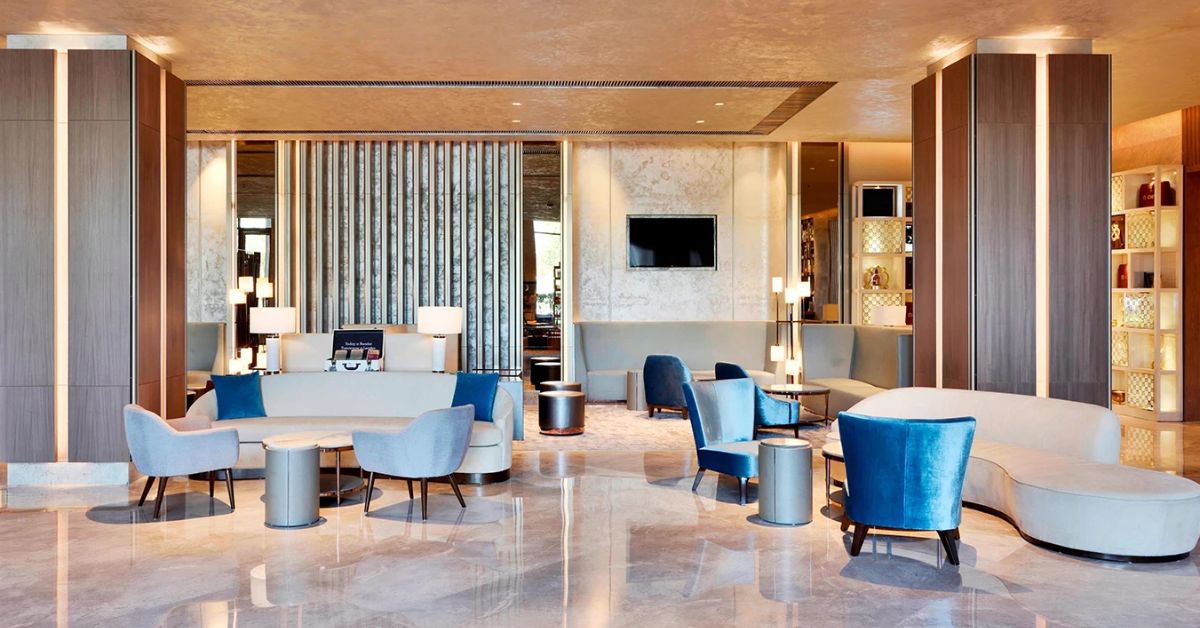
Minimum Circulation Width for Lounge Spaces: Simple Rules for Comfortable Flow
Designing a lounge that feels comfortable, premium, and easy to move through is harder than it looks. Everyone has experienced the awkward shuffle past a coffee table or the tight squeeze behind a sofa. Whether the space is a hotel lobby, a members club, a corporate breakout zone, or a premium living room, getting the minimum circulation width lounge standards right immediately affects comfort and operations. In this guide, you'll get clear lounge seating clearance guidelines you can actually use, supported by clear numbers, practical reasoning, and multi-sector examples.
Quick Answer: Minimum Circulation Width in a Lounge
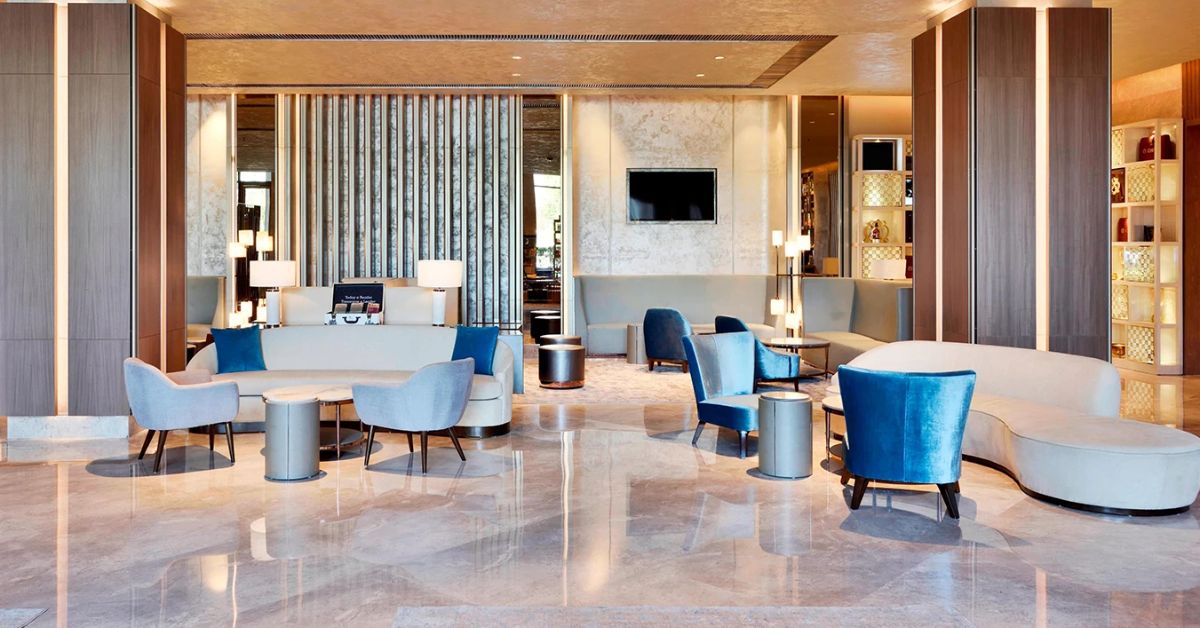
Feature photo: Indore Marriott Hotel, India; Architect/Designer: Mr. Hardik Joshi
Most lounges work well when you keep minimum circulation widths within a simple range. Keep 900 to 1,000 mm (36 to 40 inches) clear for main walkways, 750 to 900 mm (30 to 36 inches) behind seating, and the minimum distance between sofa and coffee table should be 400 to 450 mm (16 to 18 inches). Leave 900–1,200 mm (36–48") between seating groups and increase widths where wheelchairs, strollers, or staff with trays move regularly. These lounge circulation width standards apply across hospitality, office, and residential settings.
For reference, see how these circulation principles work in this hotel lobby lounge project in Indore, where circulation around seating clusters stays within these widths.
Minimum Circulation Width Lounge Summary Table
| Situation | Minimum (mm) | Comfortable (mm) | Inches (approx.) |
|---|---|---|---|
| Sofa to coffee table | 400 | 450 | 16 to 18 |
| Behind lounge seating | 750 | 900 | 30 to 36 |
| Between seating groups | 900 | 1,200 | 36 to 48 |
| Primary walkway | 1,000 | 1,200 | 40 to 48 |
| Accessible route | 900 | 1,200 | 36 to 48 |
Table 1. Minimum circulation widths for lounge seating (mm and inches)
What Is Circulation Space in a Lounge?
Circulation space refers to the clear floor area people need to move through and around furniture comfortably. Proper lounge traffic flow determines how comfortably guests can walk, sit, rise, carry items, or access exits. In lounge settings, this includes lounge pathways to exits, service areas, and the gaps between individual seating pieces.
Primary vs Secondary Circulation

Primary circulation covers main paths that connect key destinations like entrances to reception desks, seating areas to bars, or lounge zones to washrooms and exits. These routes typically carry heavier foot traffic and must remain continuously clear. Clear routes around lounge seating require wider clearances that respect building codes for safety and accessibility.
Secondary circulation involves the space between chairs, sofas, and side tables within seating clusters. This is where people squeeze past to reach their seat, stand up, or where staff serve refreshments. While not as heavily trafficked, these zones still require careful planning to avoid bottlenecks.
Why Lounge Circulation Width Matters
Proper lounge circulation width delivers multiple benefits:
- Comfort improves when guests can move freely without navigating obstacle courses or brushing against strangers.
- Safety increases by reducing trip hazards and keeping emergency exit routes clear.
- Operations run smoothly when staff can deliver service efficiently and maintenance teams can access all areas.
- Accessibility becomes possible when wheelchairs, strollers, and guests with mobility aids can navigate independently.
Key Minimum Widths Around Lounge Seating
Below are the core measurements designers rely on. These numbers help avoid common circulation mistakes and give clear planning targets across settings.
How Much Minimum Distance Between Sofa and Coffee Table
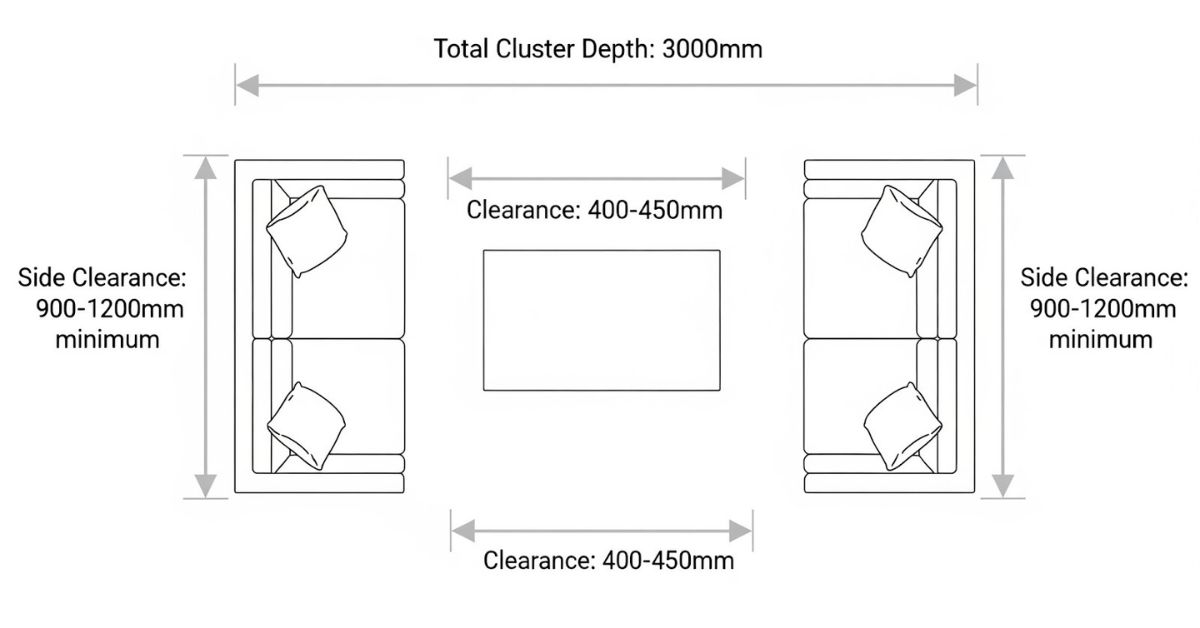
Two facing sofas with coffee table
Most lounges perform best with 400 to 450 mm (16 to 18 inches) between the sofa and the coffee table. This minimum distance between sofa and coffee table allows guests to extend their legs and still reach drinks comfortably. If the seating is deep, add a bit more clearance. In smaller rooms, do not reduce the gap below 350 mm, or the area will feel cramped, and guests may hit their knees.
How Much Minimum Circulation Width Behind Lounge Sofa
Behind sofas and lounge chairs, keep at least 750 mm (30 inches) in low traffic areas and around 900 mm (36 inches) where people pass regularly. This clearance behind lounge seating prevents the uncomfortable sideways shuffle and allows room for staff carrying trays or equipment. In hotel or airport lounges where guests often have luggage, slightly wider paths help prevent bottlenecks.
What Is the Minimum Walkway Width in a Lounge?
Main walkways need between 900 and 1000 mm (36 to 40 inches) to function smoothly. In busier lounges, 1100 to 1200 mm (43 to 48 inches) creates a premium, free-flowing experience. Routes such as entry to bar, clusters to washrooms, or paths to exits should follow these numbers.
How Much Space Between Furniture for Walking in a Lounge?
When arranging multiple seating clusters, the minimum distance between furniture for walking should be 900 to 1,200 mm (36 to 48 inches) between them. This prevents users from entering another group’s personal space and keeps movement clear. Wider gaps work well in hospitality spaces or corporate lounges where groups need privacy and space for movement.
What About Wheelchair and Accessibility Requirements
Accessible routes for wheelchairs should remain between 900 mm (36 inches) and 1200 mm (48 inches) clear. A turning circle of around 1500 mm (60 inches) is ideal for wheelchairs. Mixed-use lounges, hotel public areas, and airports should keep primary paths between 1,000 and 1,200 mm.
Code Note: Most accessibility standards base routes on wheelchair clearances, such as around 915 mm (36") continuous clear width and 1,525 mm (60") passing zones or turning spaces. Always cross-check lounge circulation against your local accessibility and fire codes (ADA / IBC in the US, NBC and local bye-laws in India, or equivalent).
* Remember, these are baseline lounge seating clearance guidelines. Local building and accessibility codes should always be checked, but using these as baseline values ensures lounge plans support mixed users. These ranges work as a starting point for lounges in India, the Middle East, the UK/EU, and the US, but final widths must follow local building and accessibility rules.
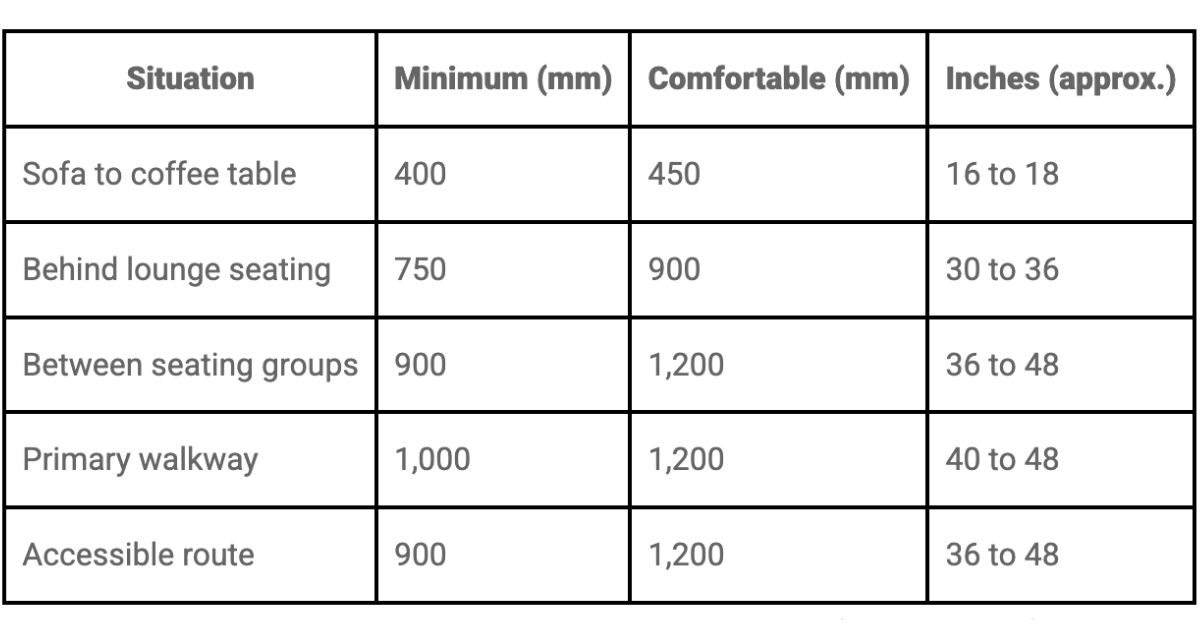
Minimum circulation width lounge seating summary table in mm and inches
Minimum Circulation Width by Lounge Type
Different lounge types have different flow patterns. Below are clear recommendations for hospitality, corporate, transit, and residential settings.
Hotel Lobby and Club Lounges
Hotels and clubs have medium to high traffic. People move with luggage or food service items. Lounge room dimensions and circulation planning should target:
- Main routes should be 1000 to 1200 mm
- 900 mm minimum behind the seating
- 1,000 to 1,200 mm between clusters.
Special considerations include guest luggage during check-in periods, staff carrying trays and service items, and event days when occupancy spikes above normal levels. Building in extra clearance prevents bottlenecks during your busiest operational windows.
Corporate Breakout and Coworking Lounges
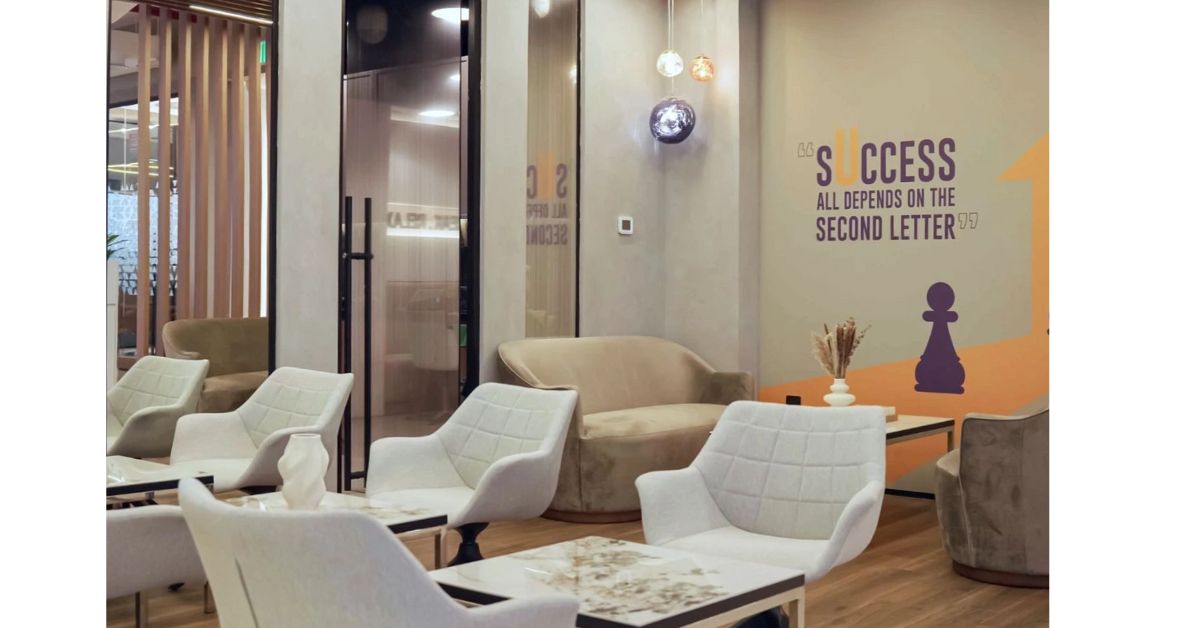
Feature photo: Tesla Properties Office Lounge, Dubai; Architect/Designer: Mr. Saif Zaidi
Corporate lounges carry steady traffic during breaks. This corporate project in Dubai, where the lounge area demonstrates how circulation planning for people who move with laptops, cables, and drinks balances comfort with space efficiency. The minimum circulation space for lounge seating for people who move with laptops, cables, and drinks balances comfort with space efficiency.
- Main circulation widths between 900 and 1100 mm work well.
- 800 to 900 mm behind the seating
- Keep 900 to 1,000 mm between seating groups.
Airport and Transit Lounges
Transit spaces handle consistently high flow and many luggage trolleys.
- Provide 1,100 to 1,200 mm minimum on main paths
- Behind seating, 900 to 1000 mm works well.
- 1,200 mm between clusters where trolleys and rolling bags move.
Travelers navigate with carry-on suitcases, backpacks, shopping bags, and sometimes trolleys. Undersizing circulation space creates immediate congestion and frustrated guests.
Minimum Walkway Width in a Living Room/Residential Lounge
Home environments generally experience low to moderate traffic with familiar users. In residential lounges in India and similar contexts, you can generally work with:
- You can work with 800 to 900 mm for main paths
- Behind seating, 750 to 900 mm works for casual movement
- Between clusters, 800 to 900 mm keeps the layout comfortable without overwhelming the room.
Consider family movement patterns, occasional entertaining, and children's play routes.
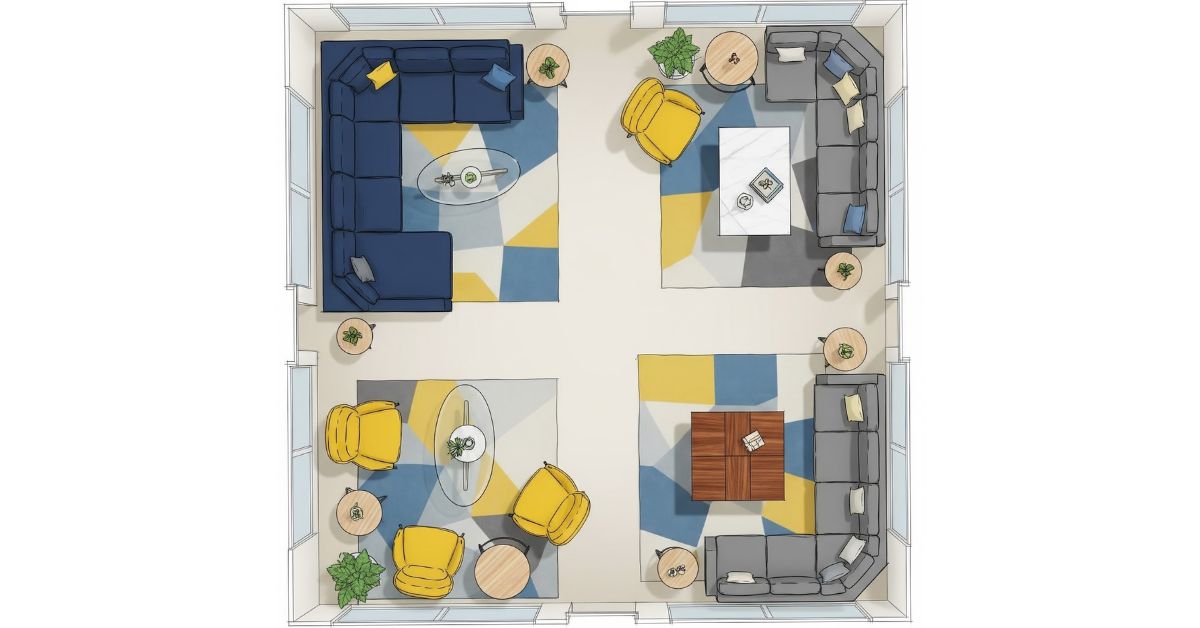
How to Plan Lounge Traffic Flow in Your Floor Plan
Step 1: Draw Furniture Footprints
Start by placing furniture footprints to scale. Draw sofas, lounge chairs, side tables, and coffee tables accurately. This forms the foundation for proper lounge room dimensions and circulation planning.
Step 2: Map Primary Routes
Identify essential movement routes. These include entrances, exits, bar areas, service stations, washrooms, and reception desks. Mark these lounge pathways clearly on your plan.
Step 3: Add Minimum Widths
Apply the width standards from earlier sections to each route type. Draw dimension lines of 900 to 1200 mm for main circulation and 750 to 900 mm behind seating. Highlight sofa to coffee table distances of 400 to 450 mm. Ensure the minimum circulation width lounge standards are met throughout. This visual representation immediately reveals where dimensions fall short.
Step 4: Check for Circulation Conflicts
Look for door swings, columns, or tight corners that reduce circulation. Identify areas where lounge traffic flows cross or collide. These are your redesign priorities.
Step 5: Adjust Furniture and Seat Count
Shift clusters, reduce seat depth, or remove pieces that restrict flow. It is better to reduce seating by one module than create a cramped experience.
Step 6: Verify Against Local Codes
After aligning the layout with these guidelines, check local codes related to fire, accessibility, and corridor widths. Cross-reference your lounge plan with local regulations, including minimum circulation width lounge in India or your specific region, and consider professional code consultants for final approval on commercial projects.
Common Lounge Circulation Mistakes and How to Fix Them
Squeezing Too Many Seats Into a Tight Zone
When people turn sideways to pass or apologize constantly for disturbing seated guests, you've oversaturated your space. This violates basic lounge seating clearance guidelines and creates uncomfortable experiences.
Fix this by removing seats strategically or selecting furniture with smaller footprints while maintaining your minimum passage width living room standards throughout the layout.
Oversized Coffee Tables Blocking Movement
Large coffee tables look impressive but create knee-bumping hazards and force service staff into awkward reaches. They often violate the minimum distance between sofa and coffee table rule.
Choose appropriately scaled tables and preserve that 400 to 450 mm clearance between seating and table edges.
No Clear Primary Route
Guests shouldn't need to zigzag through multiple seating clusters to reach exits or service points. Poor lounge traffic flow planning creates confusion and frustration.
Establish one continuous, clear path and arrange your furniture layout around it, treating this route as fixed infrastructure. Map lounge pathways early in the design process, not as an afterthought.
Is 600 mm Enough Space to Walk Between Lounge Furniture?
When wheelchairs can't pass or guests wrestle suitcases through furniture mazes, you've missed critical user needs. Insufficient minimum distance between furniture for walking impacts all users, not just those with mobility challenges.
Increase primary path widths and designate specific passing zones where two-way traffic can flow smoothly.
From Circulation Rules to Real Lounge Projects
Once the minimum circulation space for lounge seating is final, the next step is selecting or customising furniture that fits these clearances. Many teams need support with global product sourcing or managing contract and custom manufacturing so the final pieces match dimensions accurately.
If you need a partner to handle sourcing, manufacturing coordination, quality checks, logistics, and installation support while you focus on the layout and experience, share your lounge plan with Arcedior. Our team can help you spec and source pieces that respect your circulation widths and operational needs.
Conclusion
Minimum circulation width in a lounge affects everything from comfort to accessibility and operational efficiency. By using clear spacing rules, mapping primary routes, and planning around real-world behaviour, designers can produce lounges that feel open and intuitive. Whether the setting is hospitality, corporate, transit, or residential, the measurements in this minimum circulation width lounge guide help avoid common mistakes and support confident design decisions.
FAQs
1. What is the minimum circulation width in a lounge?
Most lounges need at least 900 to 1000 mm for main paths, with 1,100 to 1,200 mm preferred for high-traffic routes. Behind seating, maintain 750 to 900 mm (30 to 36 inches). Between furniture clusters, allow 900 to 1,200 mm depending on usage intensity and accessibility requirements.
2. How much space should be between a sofa and a coffee table?
The minimum distance between sofa and coffee table should be 400 to 450 mm (16 to 18 inches). This distance balances comfortable leg room with convenient reach to the table surface. Deeper sofas may need slightly more clearance, but avoid dropping below 350 mm in any layout.
3. Is 600 mm enough space to walk between lounge furniture?
No, 600 mm (24 inches) is too tight for comfortable circulation and doesn't meet accessibility standards for wheelchair users. The proper minimum distance between furniture for walking in secondary paths should be at least 750 mm, while primary lounge circulation width routes require 900 mm minimum to ensure comfortable movement.
4. What is the minimum walkway width in a living room or lounge?
Residential lounges or living rooms typically need 800 to 900 mm (32 to 36 inches) for main paths, while commercial lounge seating areas require 900 to 1,200 mm (36 to 48 inches).
5. How much space is needed behind a lounge chair or sofa?
Behind lounge seating, provide 750 mm (30 inches) minimum in low-traffic zones and 900 mm (36 inches) where people regularly pass. Service areas benefit from 900 to 1,000 mm to accommodate staff with trays or guests with luggage.
6. What width do I need for wheelchair access in a lounge?
Wheelchair-accessible routes require 900 mm (36 inches) continuous clear width, as part of lounge seating clearance guidelines, with 1,500 mm (60 inches) diameter turning circles at decision points. Consider 1,000 to 1,200 mm for primary routes in mixed-use lounges to accommodate wheelchairs alongside pedestrian traffic comfortably.
7. Do building codes specify exact lounge circulation widths?
Building codes typically address corridor widths, egress paths, and accessibility requirements rather than specifying lounge furniture spacing directly. However, your lounge room dimensions and circulation must comply with applicable corridor width minimums, accessibility standards, and fire safety regulations. The minimum circulation width lounge in India and other regions should always be verified against local codes before finalizing commercial projects.