Greenwashing in Furniture: How to Spot Fake Sustainability Claims

Greenwashing in Furniture: How to Spot Fake Sustainability Claims
Last Updated: June 2026. You are reviewing a furniture supplier's quotation. Their brochure carries FSC and GREENGUARD logos. The product descriptions say "sustainably sourced" and "eco-certified." The price is 20% higher than competing quotes. You flag it as the sustainable option in your FF&E submittal.
Three months later, during a LEED documentation audit, your consultant asks for the certificate numbers. The supplier sends a PDF with a logo. No certificate ID. No expiry date. No product-level scope.
That 20% premium just paid for a marketing claim.
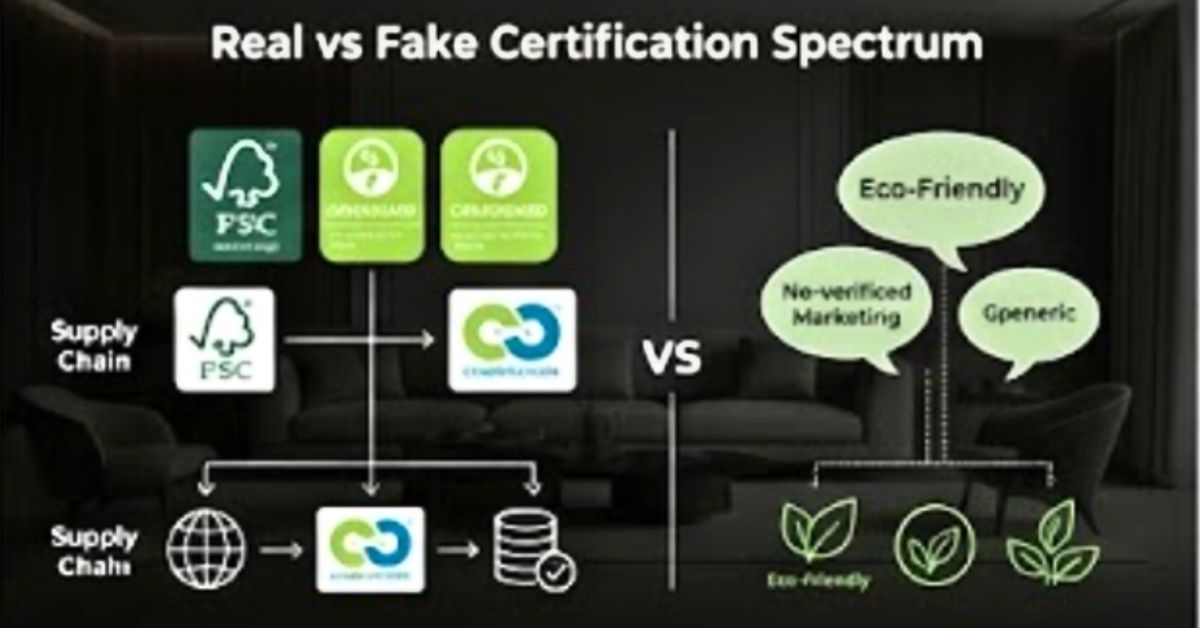
According to the European Commission, 53% of environmental claims examined were vague, misleading, or unfounded, while 40% lacked supporting evidence entirely. The furniture sector is not exempt. With the EU's Empowering Consumers for the Green Transition framework now in force and member states implementing anti-greenwashing requirements through 2026, regulatory pressure on unsubstantiated claims is rising. But most procurement teams are still working without a clear verification process.
This guide gives you one. Practical steps, live databases, a certification comparison table including newer certifications your consultant may already be requesting, and a question list you can paste directly into your RFQ.
Quick Answer: What office furniture should Gurgaon companies buy for a hybrid team?
What Is Greenwashing in Furniture?
Definition
Simon-Kucher's 2024 Global Sustainability Study found that willingness to pay more for sustainable products increased to 54%, demonstrating why sustainability claims have become commercially valuable and vulnerable to misuse. That commercial incentive is exactly what drives green premium fraud in the furniture supply chain. If buyers pay more for "sustainable," suppliers benefit from claiming it, whether or not it holds up to scrutiny.
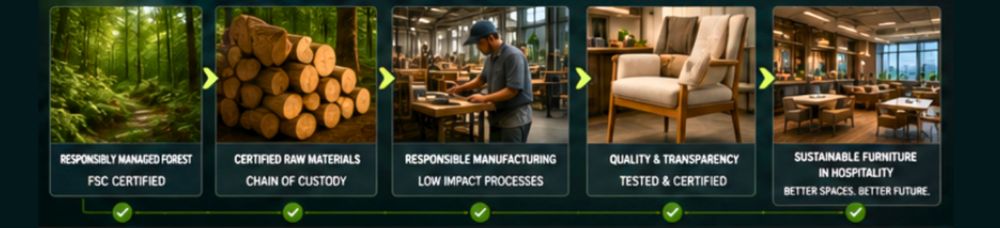
For procurement managers, the risk is not just financial. If greenwashed products enter a LEED-rated hotel project in Dubai or a BREEAM development in India, the documentation shortfall surfaces during certification audits, not before. At that stage, swapping out specified furniture is expensive, time-consuming, and sometimes impossible without a schedule impact.
The solution is a verification process that runs before any supplier gets onto a shortlist. Not after purchase orders are raised.
The Certification Reality Check: Rigorous vs Self-Declared vs Fake
The biggest trap in furniture procurement is treating all certification claims as equivalent. They are not. Here is the full spectrum, from certificates that hold up in a LEED audit to claims that cannot be verified by anyone.

Third-Party Accredited Certifications
These are the certifications that have an issuing body, a product-specific scope, a verification database, and a renewal cycle. They are the only kind that protects your project documentation.
Certification | What It Actually Tests | Third-Party Accredited? | Product or Company Level? | Relevant to Furniture? | Verify At |
FSC (Forest Stewardship Council) | Wood chain of custody from forest to finished product | Yes | Product level | Yes: solid wood, veneer, engineered wood | info.fsc.org |
GREENGUARD / GREENGUARD Gold | Indoor chemical emissions (VOCs, formaldehyde) | Yes | Product level | Yes: especially hospitality and healthcare | greenguard.ul.com |
Cradle to Cradle (C2C) | Material health, recyclability, and social responsibility | Yes | Product level | Yes: premium LEED/BREEAM projects | c2ccertified.org |
BIFMA Level | Sustainability for commercial/office furniture specifically | Yes | Product level | Yes: commercial and office | levelcertified.org |
Declare Label | Material ingredient transparency and disclosure (what is actually in the product) | Yes | Product level | Yes: increasingly requested by LEED consultants for material health credits | |
ISO 14001 | Company environmental management system | Company only | Company level | No: does not certify the product | iso.org (company registry) |
ISO 9001 | Quality management system (not sustainability) | Not Sustainability | Company level | No: quality cert only | iso.org |
Self-declared "eco-friendly" | Nothing independently tested | No | Neither | No | Cannot be independently verified |
Self-declared "sustainably sourced" | Nothing. No chain of custody. | No | Neither | No | Cannot be independently verified |
"Carbon neutral" (no methodology stated) | Unverifiable without Gold Standard or Verra certification | Check method | Depends on claim | Only if third-party verified |
The ISO trap: The most common buyer mistake is seeing ISO 9001 or ISO 14001 on a supplier's letterhead and assuming the product is sustainable. ISO 9001 certifies a quality management process. ISO 14001 certifies an environmental management system at the company level. Neither tells you what materials are in the furniture or where they came from.
Download the Free Supplier Green Claims Verifier
Would you know if your supplier's FSC or GREENGUARD certificate is actually valid? Most buyers don't check until the audit happens. Get our free Supplier Green Claims Verifier and verify any supplier's sustainability claims in under five minutes.
What Is the Declare Label and Why Are Consultants Asking for It Now?
Most procurement guides stop at FSC and GREENGUARD. The Declare Label is the certification most often missing from those guides, and it is increasingly requested by LEED consultants in 2025 and 2026 as projects pursue the Material Ingredients credit.
Declare is a product transparency label run by the International Living Future Institute. It functions as an ingredients list for building materials and furniture. A product with a Declare Label has publicly disclosed every material in it, down to the chemical components. Consultants use it to confirm that products do not contain red-listed chemicals, which is required for LEED v4 and Living Building Challenge certifications.
The practical difference from GREENGUARD is this: GREENGUARD tells you how much a product off-gasses. Declare tells you what the product is actually made of. For a hospitality project chasing both LEED credits and growing client ESG requirements, both pieces of information matter.
You can verify any product's Declare status. Search by manufacturer or product name. If a supplier claims a Declare Label, the product should appear in the database with an active status.
What Are the Most Common Greenwashing Tactics Furniture Suppliers Use?
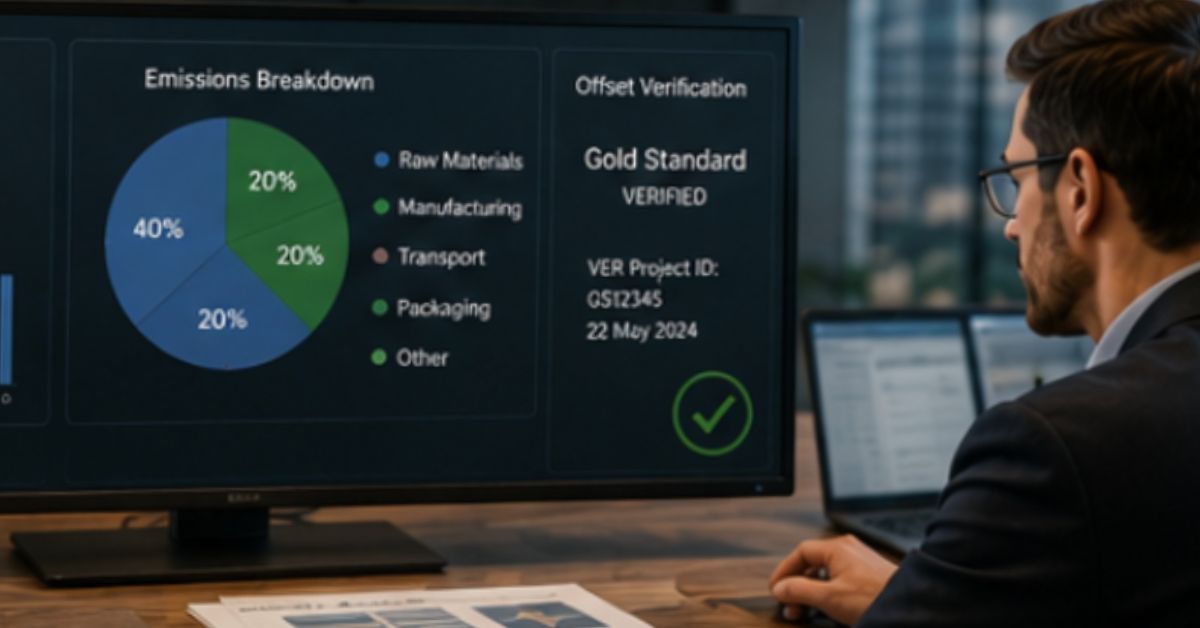
Knowing the tactics makes them easier to catch at the RFQ stage. These seven show up repeatedly in international furniture sourcing, including from suppliers serving India and GCC project pipelines.
- The ISO Swap
- The Company Claim
- The Expired Certificate
- The Irrelevant Cert
- The Logo Drop
- The Vague Language Play
- The Green Premium
- The Carbon Neutral Shortcut
Citing ISO 9001 or ISO 14001 as proof of sustainability. One is a quality system cert. The other is an environmental management system certificate. Neither certifies the product.
Ask: "Which third-party body certified this specific product for sustainability?"
"Our factory is eco-certified," presented as if the product is certified. A certified factory can produce uncertified products. These are not the same thing.
Ask: "Is this certification at the product level or the facility level?"
A certificate that lapsed one or two years ago. Some suppliers continue using the logo and PDF without disclosing the expiry date. This is not just misleading. It is verifiable fraud.
Ask: "What is the exact expiry date, and can you confirm it on the issuing body's database today?"
A GREENGUARD certificate for a supplier's upholstery line used to imply the entire product range is certified. Certifications are product-specific. One product's certificate does not extend to the whole catalogue.
Ask: "Which specific SKUs in our order fall within the scope of this certificate?"
FSC and GREENGUARD logos appear in marketing materials and brochures without the supplier holding current, product-specific certification. This is a misuse of the certification mark that both FSC and UL explicitly prohibit.
Ask: "Please send the certificate number so I can verify it on the official database."
"Sustainable materials," "eco-conscious production," "green manufacturing process," language that sounds meaningful but carries no certification commitment, and cannot be independently verified.
Ask: "Which third-party body tested or verified this claim, and where can I access the report?"
Pricing sustainability-labelled products 15-25% above uncertified alternatives without holding any third-party certification. With 54% of buyers willing to pay more for sustainable products (Simon-Kucher, 2024), the commercial incentive is clear.
Ask: "What certification justifies the sustainability premium in this quote?"
Suppliers claim products are "carbon neutral" without publishing a carbon accounting methodology, third-party verification, or offset documentation. This tactic has increased as carbon neutrality becomes a marketing term rather than a documented outcome. The EU's anti-greenwashing framework specifically targets unsubstantiated climate claims, and buyers in EU-adjacent markets are now expected to scrutinize them the same way.
Ask: "Which standard, verifier, or carbon accounting methodology supports this carbon-neutral claim?"
Have a Spec with Sustainability Requirements?
Share your BOQ or product list with us. We will tell you which suppliers in our network carry third-party verified certifications and which ones are using labels that do not hold up under scrutiny.
How to Verify a Furniture Certification Is Real (Step by Step)
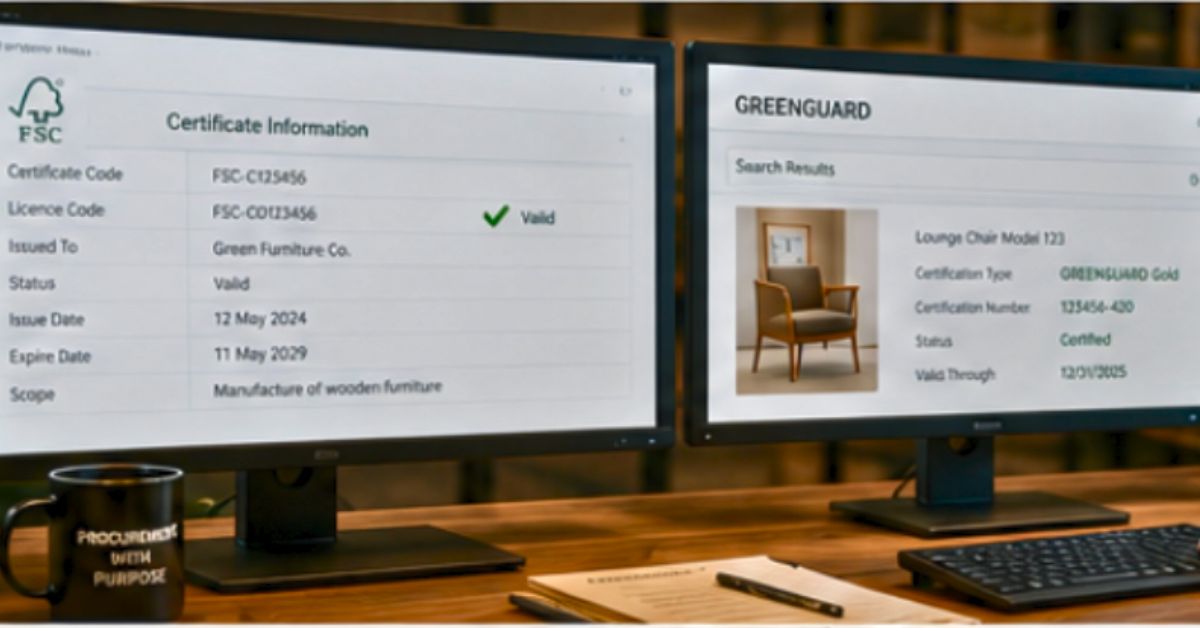
This is the step most procurement teams skip. Checking an actual database takes four minutes. It should happen before any supplier goes onto an approved list.
- Ask for the certificate number in writing
Do not accept a logo, a brochure, or a PDF scan as proof. Ask the supplier to provide the full certificate number, the name of the issuing body, and the certificate expiry date. Put this request in your RFQ template, so it is standard for every supplier. - Go to the official database and search
Use the live databases below. Search by company name or certificate number. If the supplier appears in the database with an active certificate status, the certification is real. If they do not appear, or the status shows as inactive/expired, reject the claim. - FSC
- GREENGUARD / GREENGUARD Gold
- Cradle to Cradle
- BIFMA Level
- Confirm the scope matches your order
Database entries usually list the product categories or specific SKUs covered. Confirm that the products in your order fall within the certificate scope. A supplier certified for their metal furniture range is not automatically certified for the upholstered seating in your specification. - Confirm the certificate is valid through your delivery date
Some certificates are renewed annually. If your project delivery is eight months away and the certificate expires in three, that is a documentation gap. Ask the supplier to confirm renewal status before finalising the order. - For LEED or BREEAM projects, also request an EPD
An Environmental Product Declaration is a standardised report of a product's environmental impact across its lifecycle. LEED v4 credits for materials and resources require EPDs. A supplier who cannot provide one for products going into a rated building should not be on that project's procurement list.
Pro Tip
Product-Level vs Company-Level Claims: The Trap Most Buyers Miss
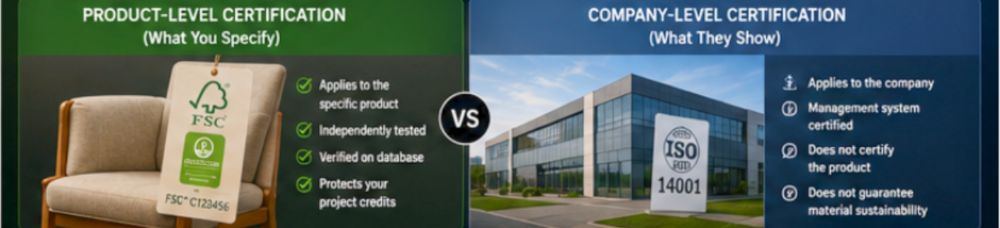
This distinction separates greenwash from genuine certification. It is one of the least-covered angles in procurement content and one of the most consequential for project specifications.
A product-level certification means the specific item in your order has been tested, audited, and certified. The certification scope is documented to include that product. GREENGUARD certifies specific products against indoor air quality standards. FSC certifies specific product lines through a chain-of-custody audit. These are usable in your documentation.
A company-level claim means the company has a management system, a policy, or a company-wide certification. ISO 14001 is the classic example. It certifies that the company has an environmental management system in place. It says nothing about whether the sofa you are buying has any lower environmental impact than one from a non-certified factory.
The problem gets worse when suppliers blend the two. "We are FSC-certified" often means the company holds an FSC Chain of Custody certificate covering some of their product range. Whether the specific items in your order are within that scope is a separate question. Always ask it.
Ready to approve a sustainable supplier? Verify them first.
Download Supplier Green Claims Verifier and run every certification claim through our procurement checklist before adding a supplier to your shortlist. Because the most expensive sustainability mistake isn't buying uncertified furniture. It's finding out after you've already specified it.
What Happens If You Specify Greenwashed Furniture for a LEED or Estidama Project?
The consequences are not theoretical. LEED v4, which is widely used across GCC projects, requires Environmental Product Declarations and material health documentation for several Materials and Resources credits. If the products you have specified cannot produce that documentation, those credits are lost during the certification audit.
In a project targeting LEED Gold, losing three or four credits in the Materials category can push the final score below the threshold. The cost of that is not just a lower certification level. It can trigger penalty clauses if the certification level was written into the developer's contractual commitments to a buyer or investor.
In Abu Dhabi, Estidama's Pearl Rating System has material requirements for rated projects. Al Sa'fat, Dubai's green building rating framework, carries similar expectations for material specifications. A supplier who cannot provide verified product documentation should not be on the list for any rated building in the UAE.
UAE Cabinet Decision No. 37 of 2021 on product conformity assessment also establishes an expectation of verifiable claims in the market. While not furniture-specific, it reflects a regulatory direction that makes unverifiable sustainability claims increasingly difficult to defend.
Key Takeaway
For Projects in India and the UAE
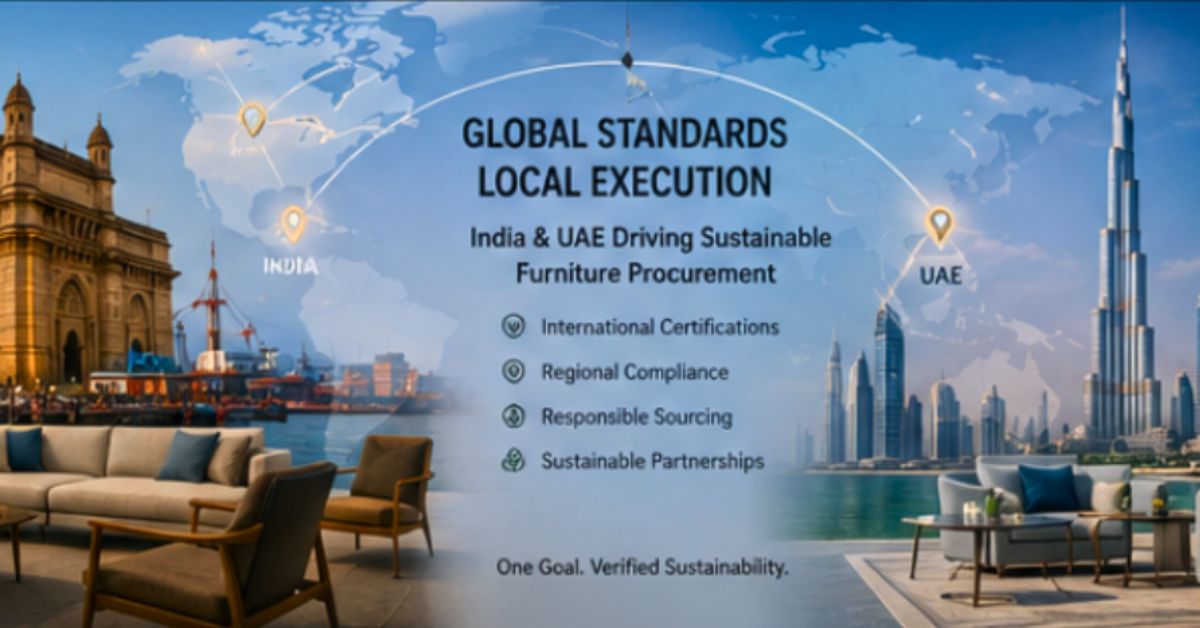
India sourcing context:
- India's Bureau of Indian Standards (BIS) does not have a mandatory furniture-specific sustainability certification as of 2026. "BIS certified" does not mean sustainable.
- The Advertising Standards Council of India (ASCI) issued greenwashing guidelines in 2023 requiring that green claims be substantiated, measurable, and not misleading. Suppliers making vague green claims in Indian market communications are technically in violation of these guidelines.
- When procuring from international manufacturers, including those based in India, ask for FSC Chain of Custody certificates, not company-level statements.
- Indian factories can hold FSC, GREENGUARD, and ISO 14001 certifications. Ask for certificate numbers and verify them on the issuing body's database directly.
UAE and GCC project context:
- Estidama (Abu Dhabi) and Al Sa'fat (Dubai) have specific material requirements for rated projects. Unverified suppliers cannot be specified for Pearl-rated or rated buildings.
- LEED v4 (widely used across GCC hospitality and commercial projects) requires EPDs for materials credits. A supplier without an EPD for a major furniture category is not suitable for that project's shortlist.
- The EU's Empowering Consumers for the Green Transition framework entered into force in 2024, and member states are implementing anti-greenwashing requirements through 2026. This creates upstream pressure on global suppliers who export into European markets, and procurement managers in India and the GCC are now seeing better-documented certificate packages from these manufacturers as a result.
What Should I Ask a Furniture Supplier About Sustainability Before Placing Any Order?
The eight questions below are written for use in an RFQ email or a formal tender document. They are direct, specific, and designed to surface false claims without confrontation. A supplier with legitimate certifications will answer all eight without difficulty.
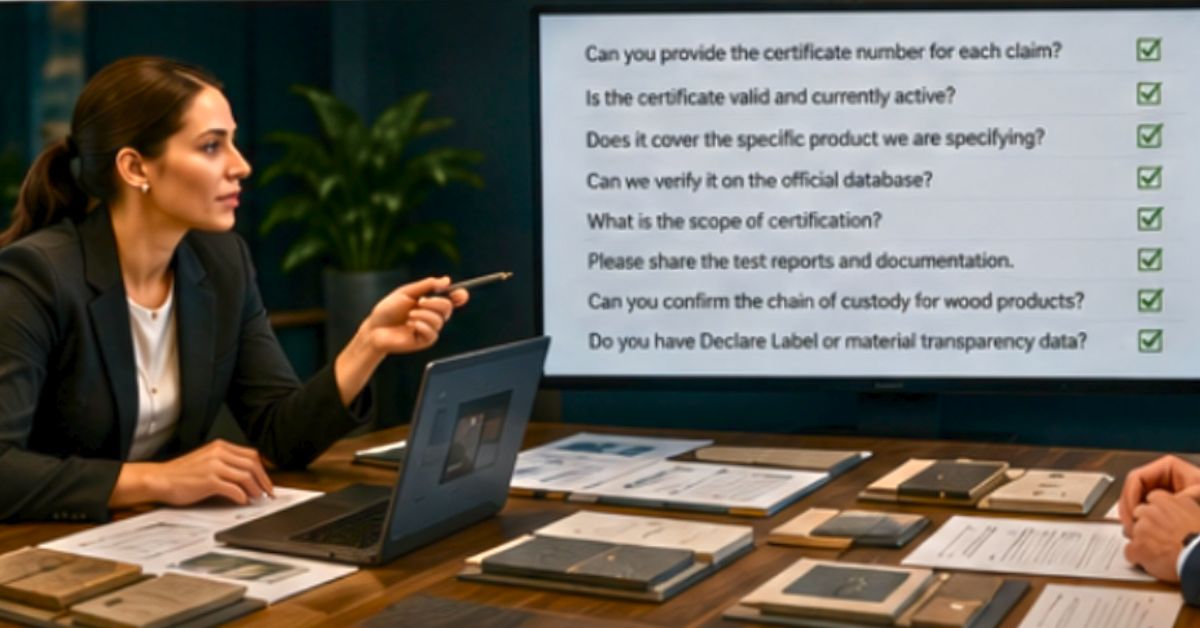
Supplier Interrogation Script (Copy-Paste Ready for RFQ)
- "Can you provide the certificate number, issuing body, and expiry date for each sustainability certification you claim for this product?"
- "Is this certification at the product level or the company level?"
- "Which specific products in our order are covered by this certificate?"
- "Can I verify this certificate on the official issuing body's database today?"
- "If you claim FSC certification, can you provide your FSC Chain of Custody certificate number?"
- "Does this product have an Environmental Product Declaration (EPD)?"
- "What is the VOC emission class of this product, and which standard was it tested to?"
- "Which standard, verifier, or carbon accounting methodology supports this carbon-neutral claim, if applicable?"
When Arcedior sources for a project with sustainability requirements, supplier certification verification is part of the pre-approval process, not an afterthought. Certificate numbers are checked on official databases before any supplier enters an active project shortlist. For more on how that process works in practice, see our FF&E Submittal Guide.
Pre-Dispatch Sustainability QC Checklist
Regulatory Update: June 2026
Regulatory scrutiny of environmental claims continues to increase globally. The EU's Empowering Consumers for the Green Transition framework entered into force in 2024, and member states are implementing anti-greenwashing requirements through 2026, increasing expectations for evidence-backed environmental claims. In India, ASCI's 2023 green claims guidelines carry the same substantiation requirement. Procurement managers in both markets are now effectively operating in an environment where unsubstantiated green claims are a compliance risk, not just a procurement inconvenience.
Sustainable Sourcing Without the Guesswork
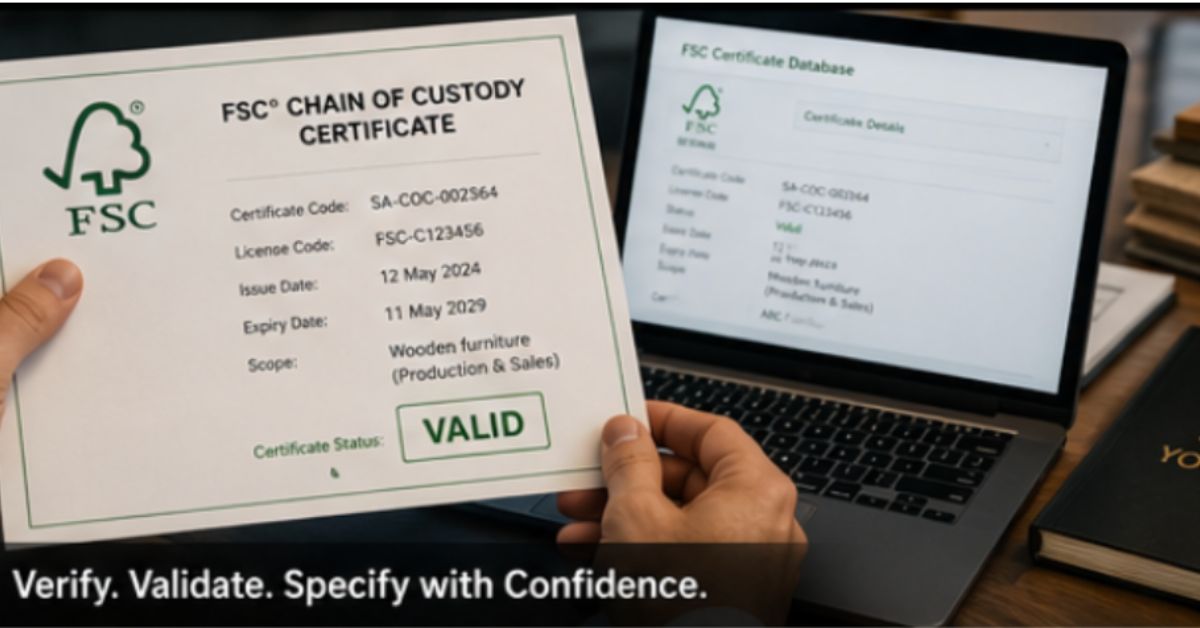
The gap between a real sustainability certification and a marketing claim is measurable. It is a certificate number, a database entry, and a scope document. None of that requires special tools or access. It just requires asking.
Most procurement teams do not ask. They take the brochure at face value. They approve the green premium. And the problem surfaces four months later during a LEED audit or a client ESG review, when the documentation is already missing.
The verification process in this guide takes under ten minutes per supplier. That is worth the time.
The EU Green Claims Directive (2024) and ASCI's 2023 guidelines in India both signal the same direction: unsubstantiated green claims are increasingly a compliance problem, not just a procurement risk. Getting ahead of that means building verification into your standard sourcing workflow now, not after the first documentation failure.
Key Takeaway
Ready to Source with Verified Credentials?
If you have a sourcing list for an upcoming project, send us your spec: product category, material, finish, quantity, and any certification requirements from your client or consultant. Arcedior will verify supplier credentials and flag any greenwash risk before you commit to an order.