Foam Density for Hotel Sofas Guide
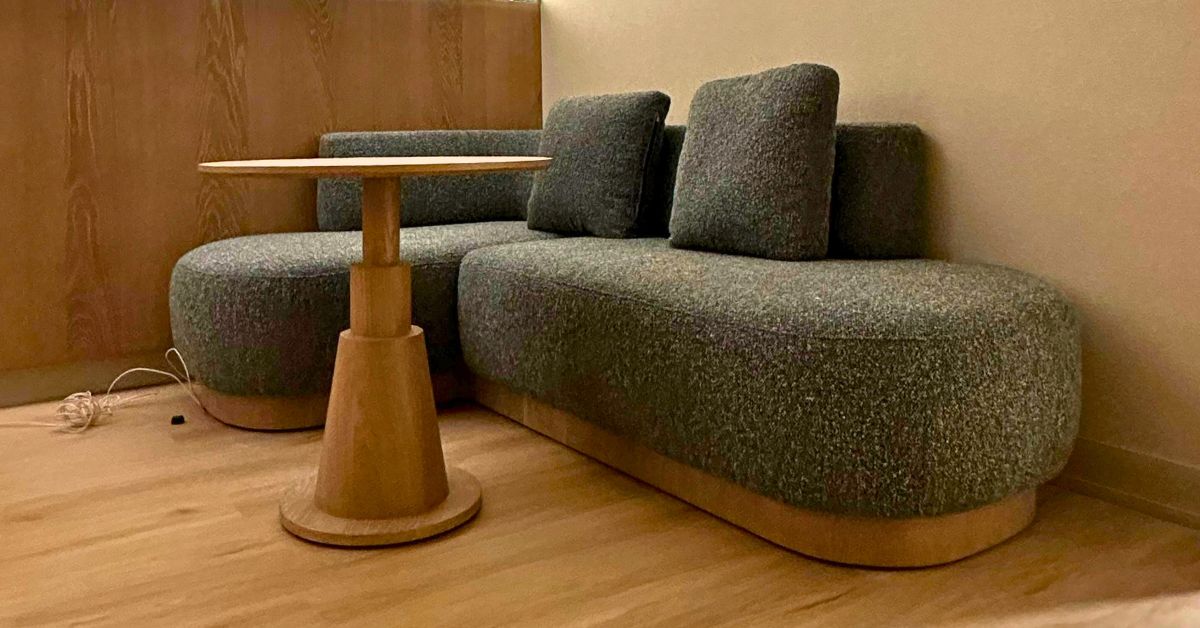
Foam Density for Hotel Sofas: The Procurement-Ready Guide (with Specs, QA & Checklist)
Hotel Sofa Foam Density (spec guide):
For hotel sofa seat cushions, specify 35–50 kg/m³ (≈2.2–3.1 pcf) HR/CMHR foam with a medium-firm ILD/IFD for comfort and longevity.
For back cushions, go with 24–32 kg/m³ (≈1.5–2.0 pcf).
Always request ISO 845 density and ASTM D3574 IFD/compression test data, plus TB117-2013/BS 5852 (UK/EU) compliance for hospitality projects.
Converter: 1 pcf ≈ 16.02 kg/m³
What Is Foam Density? (pcf vs kg/m³)
Foam density tells you how much material is packed into a given volume of polyurethane foam. The denser the foam, the more material per cubic meter – meaning better support, resilience, and lifespan.
Density is measured according to ISO 845 (apparent density standard) and expressed in either:
- kg/m³ (kilograms per cubic meter) – common in EU, Asia, Middle East
- pcf (pounds per cubic foot) – standard in North America
Higher density means more polymer per cubic unit, which translates to better load-bearing capacity, slower compression set, and longer service life under repeated guest use.
For easy conversion: 1 pcf ≈ 16.02 kg/m³
So, when a spec says “2.5 pcf foam”, it roughly means “40 kg/m³ foam.”
Formula: Density (kg/m³) = Foam weight (kg) ÷ Volume (m³)
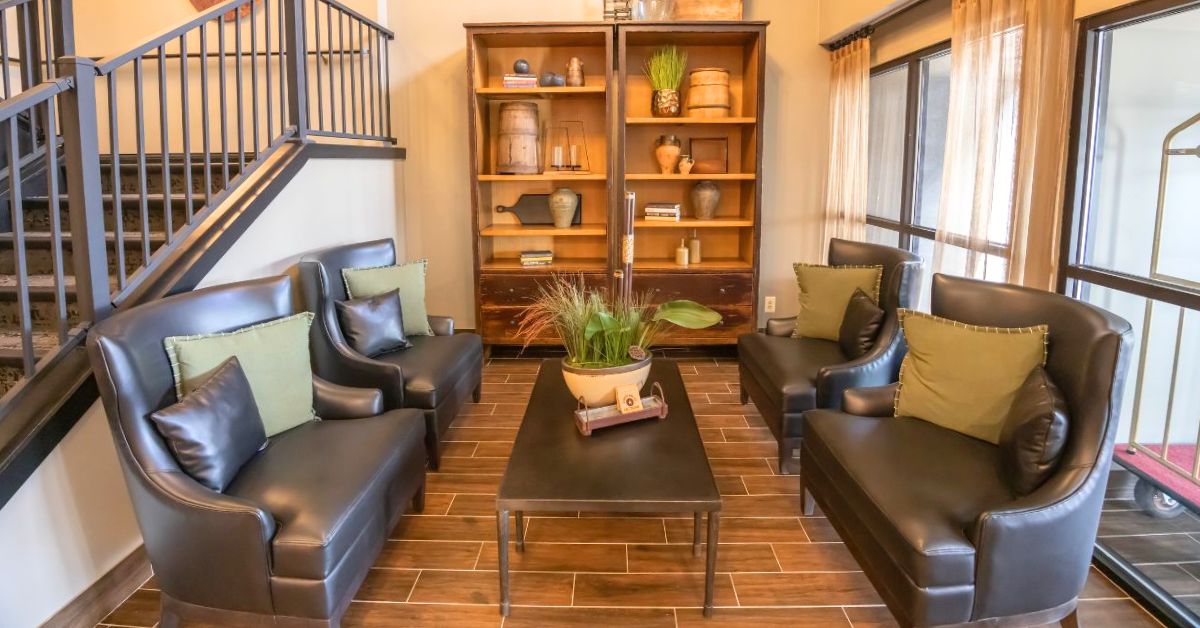
Feature photo: Distill Inn, Bardstown, USA
Why Density Matters in Hotels
Hotel sofas take far more use than residential ones – guests sit, lounge, and sometimes even nap. Low-density foam tends to:
- Sag quickly
- Lose shape
- Fail compression recovery after a few months
A foam with higher density (40–50 kg/m³) retains its structure and “bounce” even after 50,000+ compression cycles, which aligns with heavy commercial or hospitality use.
In short, density tells you how long a sofa will last, not how soft it feels – and that’s where ILD/IFD enters the picture.
Density ≠ Firmness: Meet ILD/IFD
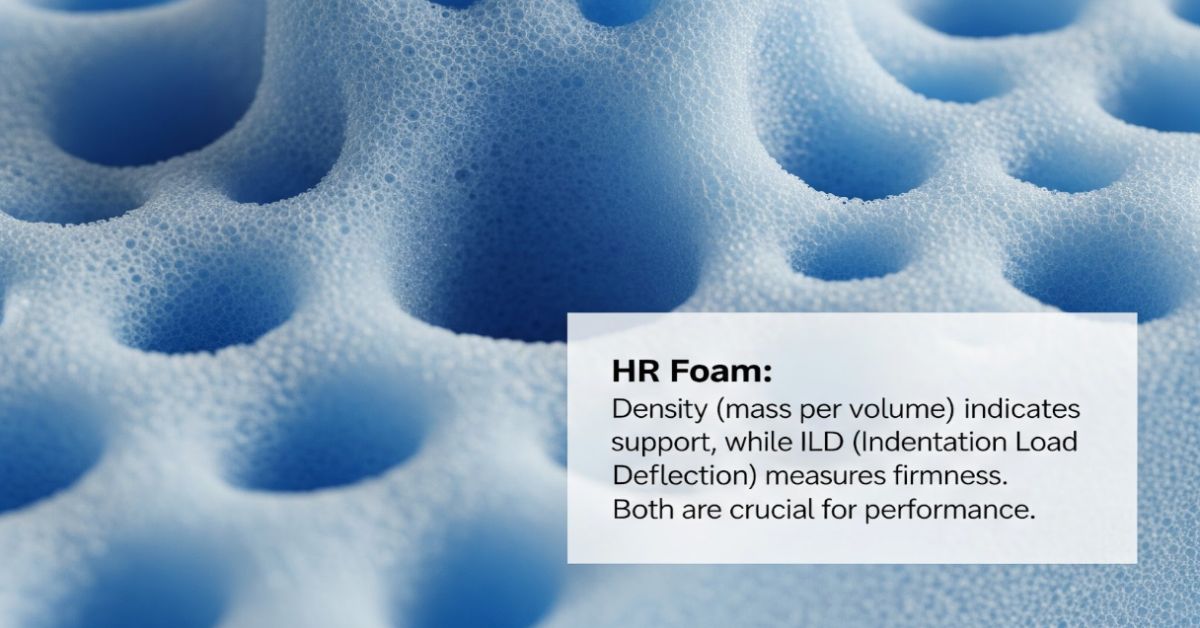
This is critical for hotel procurement teams to understand:
- Density (kg/m³ or pcf) = how heavy or solid the foam is. It tells you how much material is packed into the foam and predicts how long it will resist sagging and compression fatigue.
- ILD/IFD (Indentation Load or Force Deflection) = how firm it feels when pressed.
In technical testing (as per ASTM D3574), ILD/IFD is measured by compressing a foam sample by 25% of its height and noting the force (in newtons or pounds) required.
For example:
- A soft foam may have an IFD of around 20–25 lb
- A medium-firm foam: 30–35 lb
- A firm foam: 40+ lb
Why Procurement Should Care
Two foams can have the same density (say 40 kg/m³) but feel completely different due to their ILD/IFD values. That’s why every specification sheet should pair both metrics:
“Seat foam: HR40, 45 kg/m³ density, 35 IFD”
“Back foam: HR28, 28 kg/m³ density, 22 IFD”
Density = Durability; ILD = Feel
Think of density as the engine capacity of a car; it defines power and endurance. ILD/IFD is the suspension tuning; it defines comfort. Both must be tuned correctly for the “ride” (guest seating experience) to be right.
This balance between resilience and comfort is what differentiates a premium hospitality sofa from a low-cost residential one.
Recommended Density Ranges for Hotel Sofas
Seat Cushions
For heavy-use areas like lobbies and lounges, foam should retain shape even after thousands of uses per month. Industry benchmarks (based on PFA and Carr’s Corner trade data) recommend:
- Density: 35–50 kg/m³ (≈ 2.2–3.1 pcf)
- Foam Grade: HR35, HR40, or CMHR45
- ILD/IFD: 30–40 lb for medium-firm comfort
These foams deliver a firm sit feel with excellent recovery, ideal for hotel seating that sees constant use. Softer foams may feel plush initially but tend to bottom out within a year.
Back Cushions
Back foam doesn’t carry full body weight, so slightly softer grades improve comfort:
- Density: 24–32 kg/m³ (≈ 1.5–2.0 pcf)
- Foam Grade: HR28 or HR30
- ILD/IFD: 18–25 lb
In some cases, designers mix HR foam with blown fiber or silicone fill for a cushier look, but ensure all materials meet TB117-2013 or BS 5852 standards if used in hospitality spaces.
HR/CMHR Foam Grades Explained
You'll often see foam labeled as HR35, HR40, or CMHR:
- HR = High Resilience polyurethane foam
- CMHR = Combustion-Modified High Resilience foam (includes fire retardants)
- The number (35, 40, etc.) typically refers to the approximate density in kg/m³
Example: HR40 means high-resilience foam with a density around 40 kg/m³ (≈2.5 pcf)–a solid choice for hotel seat cushions.
| Application | Density Range (kg/m³) | Density Range (pcf) | Foam Grade |
|---|---|---|---|
| Seat Cushions | 35–50 kg/m³ | ≈2.2–3.1 pcf | HR or CMHR |
| Back Cushions | 24–32 kg/m³ | ≈1.5–2.0 pcf | HR |
| Armrests | 28–35 kg/m³ | ≈1.7–2.2 pcf | HR |
Real-world example: A high-traffic hotel lobby sofa might spec a 50 kg/m³ (3.1 pcf) CMHR seat core with a 38 kg/m³ (2.4 pcf) HR back - balancing guest comfort with 5+ year durability under daily use.
Foam Types for Hospitality Use
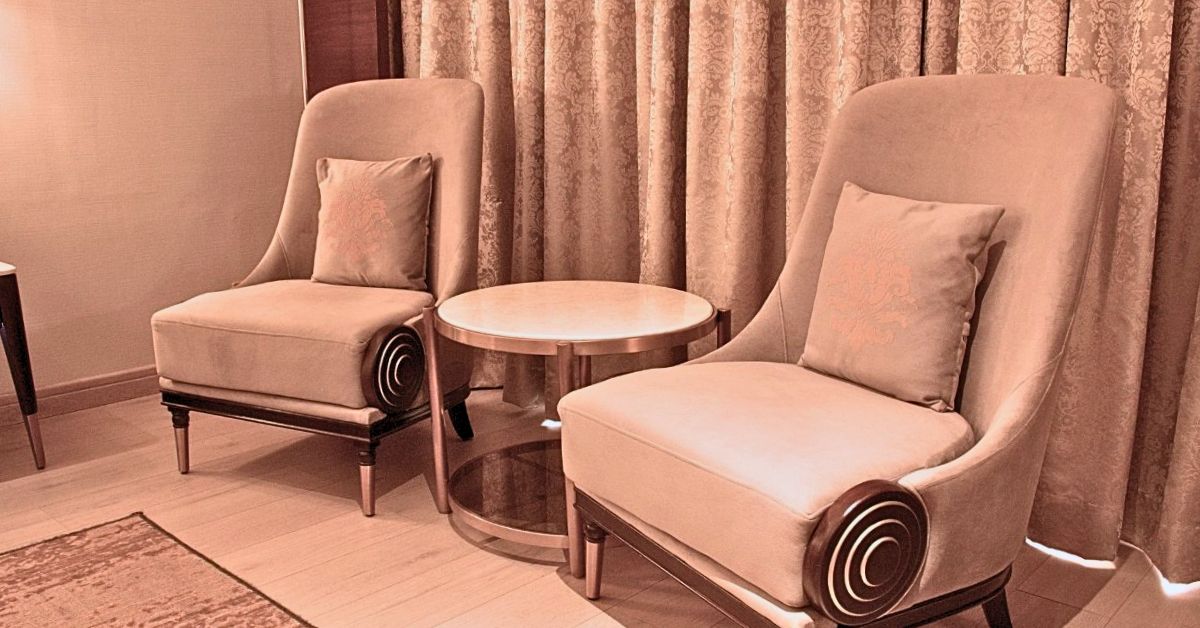
Feature photo: Taj Gandhinagar Resort & Spa Gandhinagar, India; Architect/Designer: Ar. Reza Kabul
When you’re sourcing sofas for hotels, not all foams are created equal. The type of foam you choose will influence not just comfort, but also durability, fire safety, and compliance with international standards. Let’s look at the most common foams used in hospitality furniture.
1. Polyurethane (PU) Foam
Polyurethane foam is the most widely used in commercial furniture. It’s versatile, easy to mold, and available in a broad range of densities and firmness levels. For hotels, it’s the foundation material for both HR (High Resilience) and CMHR (Combustion Modified High Resilience) foams.
- Pros: Affordable, customizable densities, widely available globally.
- Cons: Basic PU (non-HR) tends to lose resilience faster; not ideal for heavy-duty hotel applications.
2. HR Foam (High Resilience Foam)
HR foam is a premium-grade polyurethane foam known for its open-cell structure, allowing excellent elasticity and recovery after compression. This “bounce-back” feature makes it ideal for hotel seating that’s used daily.
- Typical Density: 35–50 kg/m³ (≈ 2.2–3.1 pcf)
- Common Grades: HR35, HR40, HR45
- Advantages:
- High durability and comfort
- Better airflow and support balance
- Excellent for lobbies, lounges, and suites
HR foam’s resilience ensures that even after 50,000+ cycles of compression testing (as per ASTM D3574), the seat doesn’t lose shape or comfort.
3. CMHR Foam (Combustion Modified High Resilience)
CMHR foam adds fire-retardant additives to the HR base. It complies with BS 5852 and BS 7176 for hospitality seating – mandatory for hotel projects in the UK, EU, and export contracts.
- Typical Density: 40–50 kg/m³ (≈ 2.5–3.1 pcf)
- Use Cases: Lobby seating, banquet benches, public area sofas
- Fire Compliance: BS 5852 Crib 5 / BS 7176 Medium Hazard
4. Memory Foam (Viscoelastic)
While memory foam is popular in mattresses, it’s rarely used for sofa seats in hotels. The reason? It retains heat and lacks quick recovery. However, it’s sometimes layered above HR foam for a plush top feel in luxury suites.
At Arcedior, our sourcing team typically recommends HR35–HR45 for seats and HR28–HR32 for backs, depending on guest volume and lounge type.
Compliance & Safety Standards You Must Ask For
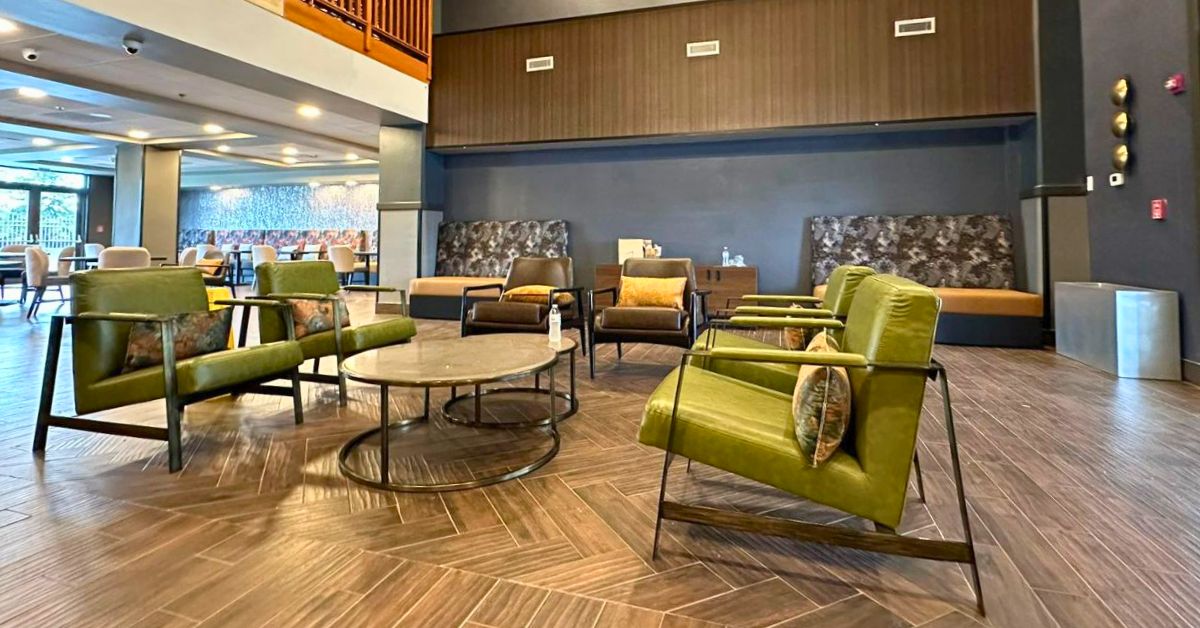
Feature photo: Four Points by Sheraton, Columbus, USA
Hospitality furniture doesn’t just have to look good; it must also meet strict fire and performance standards. These standards vary by region but are essential for insurance and safety certification. Fire safety and durability testing aren't optional; they're procurement checkpoints.
Fire Regulations for Hotels
Hotels and public seating fall under strict fire safety codes. Two primary standards govern foam flammability:
TB117-2013 (United States)
California Technical Bulletin 117-2013 sets smolder resistance requirements for upholstered furniture components. This standard replaced the old TB117 and no longer requires flame-retardant chemicals in foam – instead focuses on barrier fabrics and cover integrity.
BS 7176 & BS 5852 (UK/EU)
British Standard 7176 categorizes upholstered furniture by hazard level:
- Low Hazard: Domestic use
- Medium Hazard: Hotels, care homes, offices (most hospitality projects)
- High Hazard: Prisons, detention centers
Crib 5 is the most common test for medium-hazard hotel furniture under BS 5852.
What to Ask Your Supplier
- Test certificates (TB117-2013 or BS 7176/Crib 5)
- Test report dates (ensure recent compliance)
- Batch numbers matching foam deliveries
- Third-party lab verification (not in-house only)
If your hotel furniture is headed for export to the UK or Europe, these are non-negotiable.
These are the “proof of quality” reports every procurement manager should collect. They confirm that what you’re buying actually meets spec. Arcedior’s QA process mandates compliance certificates and batch-wise test data for every project.
Spec It Right: Seat & Back Foam Stacks
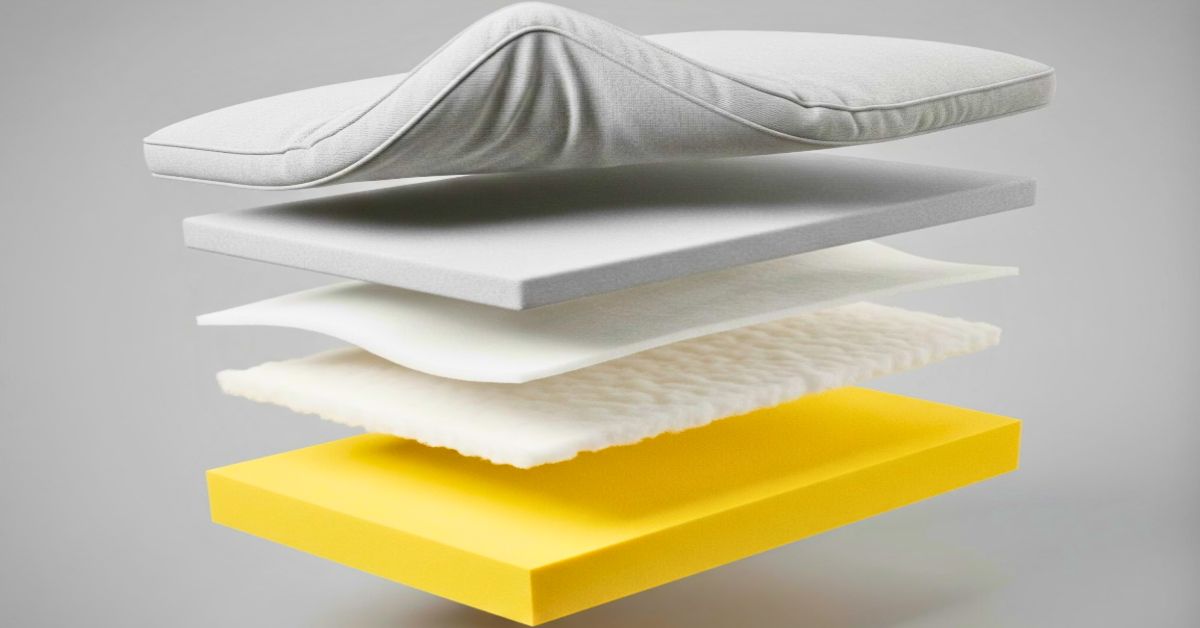
Let’s translate all this into real-world seat and back configurations for hotels.
Seat Cushion Stack Example
- Foam Core: CMHR or HR40–45 (40–50 kg/m³ ≈ 2.5–3.1 pcf)
- IFD/ILD: 35–40 lb (medium-firm)
- Wrap Layer: Dacron or fiber wrap (10–15 mm) for softness and fabric glide
- Ticking Fabric: Fire-retardant lining per TB117-2013 / BS 5852
This combination delivers comfort that lasts across 3–5 years of daily guest use in high-traffic environments.
Back Cushion Stack Example
- Foam Core: HR28–HR32 (24–32 kg/m³ ≈ 1.5–2.0 pcf)
- IFD/ILD: 20–25 lb (soft-medium)
- Wrap Layer: Optional channel fiber or blown fill for loft
- Ticking Fabric: Same fire-rated liner as the seat
Pros of Foam-Only Backs
- Longer lifespan
- Easier maintenance
- Consistent aesthetic shape
Cons of Fiber Mix Backs
- Softer, but requires re-fluffing
- May settle unevenly
For procurement teams, these details should go directly into your spec sheet – clarity here avoids miscommunication during production.
Durability Beyond Foam (Don’t Ignore Fabric)
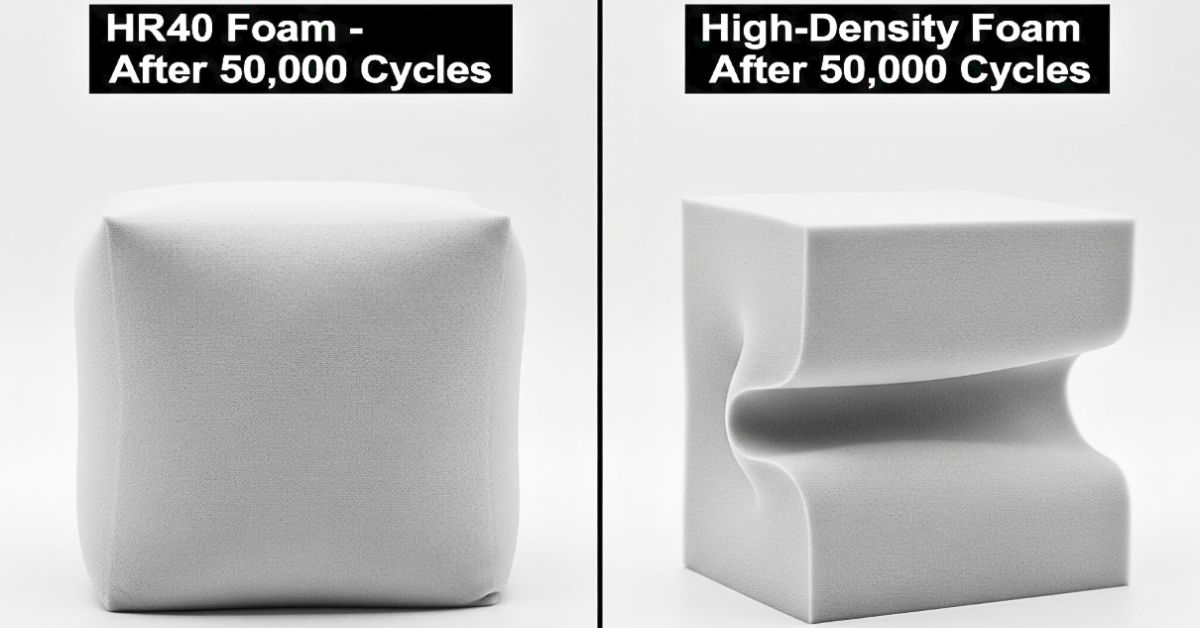
Even the best foam can fail early if paired with a weak fabric. Hotels should always specify commercial-grade upholstery fabrics with high abrasion resistance. For hotel seating, specify:
- Martindale rub count: Minimum 30,000 cycles (heavy-duty hospitality). Lobby and all-day dining should target 40,000+.
- Wyzenbeek equivalent: If using US test methods, look for 30,000+ double rubs.
- Colorfastness: At least Grade 4 (ISO 105-B02) for sunlight exposure
- Stain resistance: Especially for light-colored upholstery in guest-facing areas.
- Tear strength: ≥ 15 N (woven fabrics)
- Fire retardancy: Match foam’s TB117-2013 or BS 5852 level
Always ask for a fabric technical data sheet (TDS) and ensure that your foam + fabric composite passes fire testing as a unit, not just as individual components.
QA Checklist for Procurement Teams
Before approving any hotel sofa sample, verify:
☑ Density certificate (ISO 845) with batch ID and test date
☑ IFD/ILD data sheet (ASTM D3574) showing firmness values
☑ Fire compliance documentation: TB117-2013 and/or BS 5852 as applicable to your market
☑ Foam grade confirmation: HR35, HR40, CMHR–verify it matches your PO
☑ Tolerance bands: Typical ±2 kg/m³ for density; ±10 for IFD
☑ Fabric test reports: Martindale/Wyzenbeek rub count, colorfastness
☑ Compression set results: ASTM D3574 (should be <10% loss after 22 hrs at 50% compression)
☑ Sample sign-off protocol: Physical sample approved before bulk production
☑ Incoming inspection checklist: Dimension, density spot-check, visual defects
☑ Warranty terms: Clarify foam sag warranty (typically 3–5 years for contract-grade)
Density Converter & Hotel Use-Case Matrix
Match your foam spec to the seating zone and traffic level:
| Area | Density (kg/m³) | Density (pcf) | IFD Range (lb) | Foam Type |
|---|---|---|---|---|
| Lobby / Reception | 45–50 | 2.8–3.1 | 35–40 | CMHR |
| Dining / Restaurant | 38–45 | 2.4–2.8 | 32–38 | HR or CMHR |
| Guest Rooms | 35–40 | 2.2–2.5 | 28–35 | HR |
| Back Cushions (all) | 24–32 | 1.5–2.0 | 22–28 | HR |
IFD ranges per ASTM D3574 @ 25% compression; adjust for regional preference and brand standards.
pcf ↔ kg/m³ Quick Foam Density Converter
| pcf (lb/ft³) | kg/m³ | Typical Use |
|---|---|---|
| 1.5 | 24 | Back cushions (light use) |
| 1.5 | 24 | Back cushions (light use) |
| 2.0 | 32 | Back cushions (standard) |
| 2.2 | 35 | Seat cushions (guest rooms) |
| 2.5 | 40 | Seat cushions (standard hotel) |
| 2.8 | 45 | Seat cushions (high traffic) |
| 3.1 | 50 | Seat cushions (heavy-duty) |
Conversion formula: kg/m³ = pcf × 16.02
Where We Deliver & Install
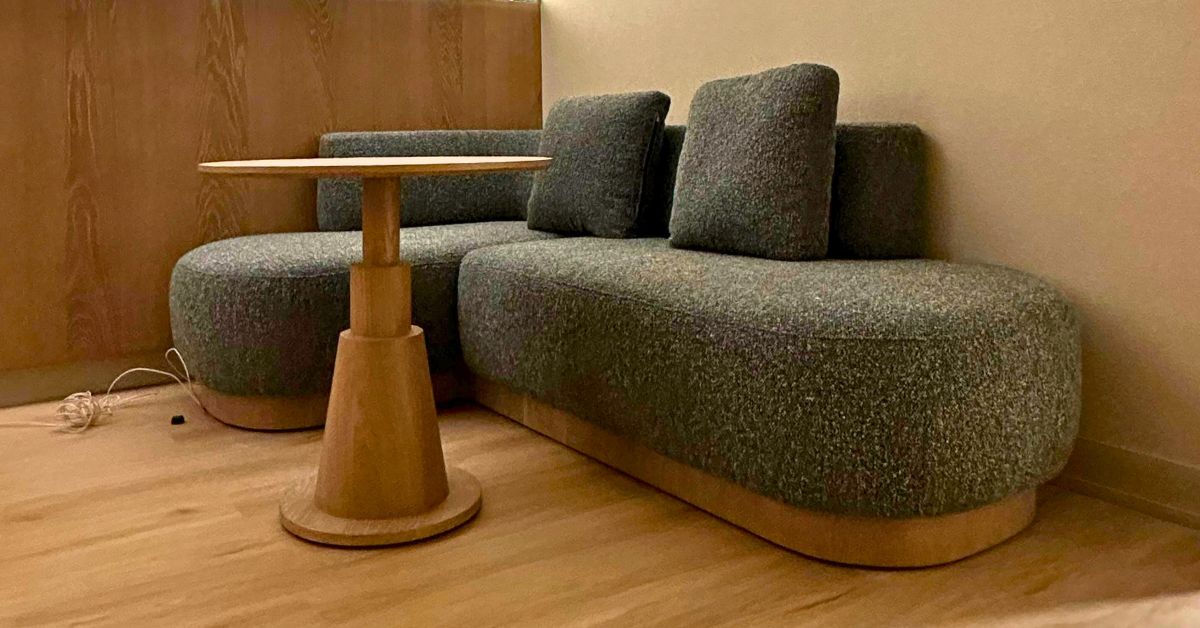
Feature photo: DoubleTree by Hilton Pennsylvania, USA; Architect / Designer: Mr. Victor Nouman & Mr. Eugenio
Arcedior manages end-to-end contract furniture projects across India and key export corridors:
India Service Areas
Ahmedabad, Mumbai, Delhi NCR, Bengaluru, Hyderabad, Pune, Chennai, Jaipur
Export Corridors
UAE (Dubai/Abu Dhabi), Saudi Arabia, US, Qatar, Oman, Tanzania, and Singapore.
We manage specs → vendor QA → logistics → on-site installation to meet your project deadlines – whether it's a 200-room property in Indore or a resort expansion in Dubai.
📞 Need assistance? Contact us or email your project specs: [email protected]
How We Manage Spec → QA → Install
At Arcedior, we not only manage sourcing but also operate contract manufacturing also.
- Specification Finalization: Density, ILD/IFD, and compliance are confirmed against project briefs.
- Vendor Vetting: Approved suppliers with ISO/ASTM-tested foam materials only.
- QA & Batch Audits: On-site inspection during production and before shipment.
- Global Logistics: Coordinated delivery schedules aligned with hotel project timelines.
- Installation Coordination: Site-level fitting, final QA sign-off, and photo documentation.
This ensures every sofa meets both design intent and performance standards without delays or spec deviations.
Conclusion
Choosing the right foam density for hotel sofas isn’t just about comfort – it’s about longevity, compliance, and guest experience. A sofa that maintains its shape and support over the years directly reflects a hotel’s quality standards.
When specifying:
- Use HR or CMHR foam between 35–50 kg/m³ (2.2–3.1 pcf).
- Always pair density with ILD/IFD for the correct feel.
- Demand ISO 845 and ASTM D3574 test data.
- Confirm fire compliance per TB117-2013 or BS 5852.
- Choose commercial-grade fabrics (≥30,000 Martindale).
With a clear specification sheet, verified QA reports, and the right logistics partner, your hospitality furniture investment will perform for years – guest after guest, season after season.
FAQs
1. Is 40-density foam good for sofas?
Yes. “40 density” in India means roughly 40 kg/m³ (≈2.5 pcf) – an excellent grade for hotel seating when paired with the right ILD (30–35 lb) and compliance certificates (TB117-2013 or BS 5852).
2. What foam density is best for hotel sofa seats?
Specify 35–50 kg/m³ (approximately 2.2–3.1 pcf) HR or CMHR foam for seat cushions, depending on traffic level. Lobby and high-use areas should target the higher end of this range (40–50 kg/m³). Always pair density specs with ILD/IFD targets for firmness and request ISO 845 and ASTM D3574 test data.
3. What’s the difference between density and firmness?
Density = material weight per volume; firmness (ILD/IFD) = how hard or soft the seat feels.
4. Do backs need the same density as seats?
No. Back foams are softer (HR28–HR32) for comfort balance. This saves cost and provides a more comfortable lean without sacrificing longevity, since backs don't bear sustained compression like seats.
5. Do I need BS 5852 if I’m in India but exporting to the UK?
Yes. Any furniture shipped to the UK must comply with BS 5852 Crib 5 for hospitality use. Ensure suppliers provide certification before dispatch.
6. How long does high-density foam last in hotels?
Good-quality HR40+ foam lasts 5–8 years under daily use, assuming proper upholstery and maintenance.